


Latest Insights
Marketing and Branding Through International Trade Fairs in Germany


German Trade Fairs & Supplier Evaluation Journey | BHOWCO
International trade fairs in Germany are widely recognised as one of the most important B2B marketing and sourcing channels in Europe. According to the AUMA Exhibition Market Statistics 2025, Germany hosted 304 trade fairs that year, attracting over 192,000 exhibiting companies and more than 12.7 million visitors. However, the difference between a successful exhibition and a costly appearance is not the booth size—it is the strategic integration of marketing, branding, and year-round presence that determines whether a trade fair presence translates into sustained business growth.
Trade fairs create visibility. Continuous presence creates international trust and long-term business opportunities. Visibility helps buyers find you. Presence helps buyers trust you. These distinctions form the foundation of effective exhibition strategy.
Why German Trade Fairs Continue to Attract International Buyers
Germany’s trade fair landscape has developed into one of the world’s leading exhibition ecosystems. With venues such as Messe Frankfurt, Hannover Messe, and ITB Berlin hosting hundreds of thousands of international participants annually, the sector demonstrates remarkable resilience and expansion.
According to the Association of the German Trade Fair Industry (AUMA), international participation remains a defining characteristic of German trade fairs. German trade fairs continue attracting exhibitors from around the world, with buyers attending specifically to evaluate new suppliers and innovations.
Several factors contribute to this sustained appeal:
- Infrastructure excellence: German exhibition centers are designed to handle large-scale international events, with logistics and transport networks that support seamless participation. For detailed information on key venues, exhibitors can consult our guide to exhibition centers in Germany.
- Industry concentration: Germany’s strength in automotive, engineering, pharmaceuticals, and technology attracts specialized buyers who attend trade fairs specifically to evaluate new suppliers.
- Cross-border participation: International exhibitors recognise that German trade fairs provide access to European procurement networks that are otherwise difficult to penetrate.
For international businesses, understanding these growth trends is essential for choosing the right trade fair. Companies that approach German trade fairs as part of a broader year-round presence strategy are generally better positioned to maintain buyer engagement after the event.
What International Buyers Look For After Leaving Your Booth
Branding at international trade fairs is not about logos or promotional materials. It is about creating a presence that communicates reliability, capability, and local commitment. European buyers evaluate brands differently than consumers do—they look for consistency, evidence of long-term market engagement, and operational competence.
The buying process continues after the exhibition. Companies that update their directory listing with current products, case studies, and contact information make it easier for buyers to evaluate suppliers during the post-event comparison process.
Key branding considerations for international exhibitors include:
- Ensuring that messaging aligns across digital platforms, printed materials, and booth displays.
- Demonstrating understanding of the German market, even if the company is headquartered elsewhere.
- Using trade fairs as a starting point for ongoing content and engagement, not as a standalone activity.
Why Buyers Don’t Make Procurement Decisions Inside the Exhibition Hall
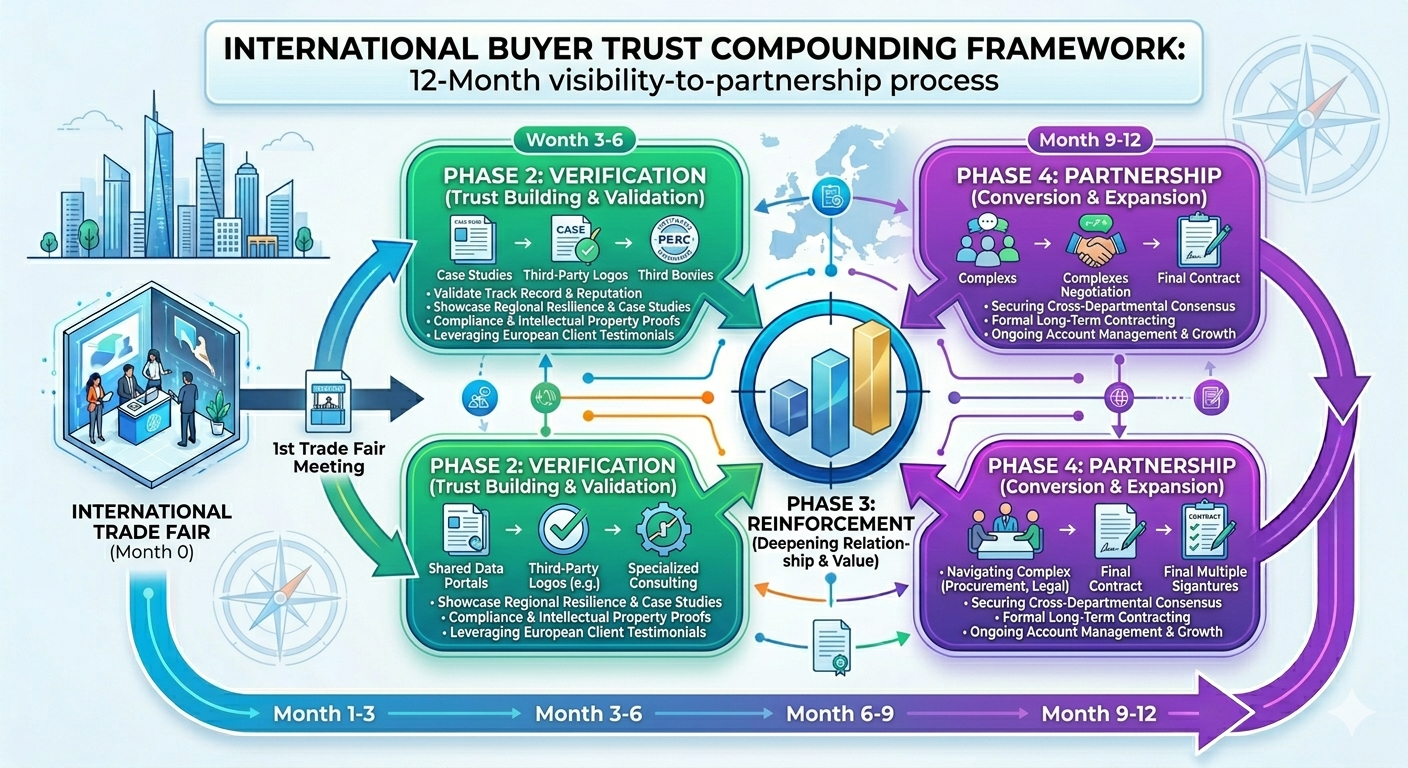
The most immediate objective for many exhibitors is lead generation and sales. Trade fairs concentrate buyers in a single location, reducing the cost and complexity of initial meetings. However, the sales process in European B2B markets is typically long-cycle, involving multiple decision-makers and thorough evaluation. Buyers don’t stop evaluating suppliers when the exhibition ends.
Trade fairs don’t shorten the buying process. They concentrate the first stage of it. The exhibition provides a concentrated environment for initial discovery and relationship-building, but the actual procurement decision unfolds over weeks or months, involving internal discussions, supplier comparisons, and risk assessments.
Effective marketing at trade fairs goes beyond handing out brochures. It involves:
- Pre-show outreach to schedule meetings with key prospects identified in advance.
- Booth design and staff training to ensure that conversations lead to actionable next steps.
- Post-show follow-up that references specific discussion points and provides requested information promptly.
Sales success is rarely achieved solely at the booth. Companies that integrate their trade fair presence with a comprehensive trade fair marketing strategy are better positioned to convert trade fair conversations into business opportunities by maintaining engagement throughout the evaluation window, rather than relying on a single interaction during the exhibition.
How Buyers Compare Suppliers After the Event
During the post-exhibition supplier evaluation phase, procurement teams systematically compare suppliers across multiple dimensions. Understanding what buyers check during the supplier evaluation journey can help exhibitors maintain presence during this critical period.
Buyers typically review:
- Website and directory presence: Updated information, clear capabilities, and professional presentation signal reliability.
- LinkedIn and professional networks: Activity and engagement on professional platforms provide evidence of market involvement.
- Certifications and standards: Relevant industry certifications reduce perceived procurement risk.
- Case studies and reference projects: Evidence of successful implementation builds credibility.
- Response speed and communication quality: Timely, professional responses during evaluation indicate future reliability.
- Local representation and support: Evidence of local infrastructure reduces cross-border procurement concerns.
- Technical documentation and specifications: Complete, accurate documentation facilitates internal supplier comparisons.
The post-exhibition supplier evaluation process is often silent. Buyers rarely announce they are evaluating. They simply observe, compare, and eliminate suppliers who fail to meet their criteria. This is why maintaining accurate and accessible information throughout the supplier evaluation journey is essential for remaining in consideration when procurement decisions are finally made.
Trade Fairs as a Source of Market Intelligence
Beyond buyer evaluation, trade fairs serve as valuable sources of market intelligence. Exhibitors gain direct feedback from potential users, observe competitor innovations, and identify emerging trends that may influence product roadmaps.
Attending industry-specific events such as Medica, Automechanika, or Anuga allows companies to benchmark their offerings against market leaders and identify gaps that represent commercial opportunities. Trade fairs also facilitate connections with research institutions and technology partners, enabling collaborative development projects that extend beyond the exhibition.
For companies seeking to align their R&D with market needs, participation in German trade fairs provides real-world validation that desktop research cannot replicate.
Networking and the Role of Continuous Presence
Networking remains one of the most frequently cited benefits of trade fair participation. German exhibitions attract not only European buyers but also decision-makers from Asia, the Americas, and the Middle East, creating opportunities for international expansion.
Effective networking requires preparation:
- Identifying target companies and individuals before the event.
- Participating in side events, seminars, and matchmaking sessions organised by exhibitors and trade associations.
- Following up strategically to convert initial conversations into long-term business relationships.
Companies that approach networking systematically often find that trade fairs open doors to distribution partnerships, joint ventures, and market entry opportunities that would otherwise require years of independent effort.
Why Local Representation Signals Credibility
One of the most frequently overlooked elements of trade fair success is local representation. Many European buyers evaluate suppliers based on evidence of commitment to the market. This does not necessarily require a physical office, but it does require visible evidence of logistical capability, after-sales support, and regional understanding.
For international exhibitors, partnering with a platform that provides year-round presence and local credibility can bridge the gap between a temporary fair presence and a sustainable market position. Companies that appear only during the exhibition week are often perceived as transient, while those with consistent presence and active exhibition centre engagement are viewed as reliable long-term partners.
While not mandatory, local representation can strengthen buyer confidence by demonstrating long-term market commitment and improving accessibility.
Strategic Considerations for International Exhibitors
Participating in German trade fairs requires more than a budget and a booth. Companies should evaluate their objectives carefully:
- Is the primary goal brand awareness, lead generation, market research, or partnership development?
- What follow-up infrastructure exists to capitalise on the attention generated during the event?
- How will the company maintain presence between trade fairs to support ongoing buyer evaluation?
Many exhibitors underestimate the post-exhibition phase, allocating substantial resources to the fair itself but failing to maintain momentum afterward. This is where choosing the right trade fair and integrating it into a long-term presence strategy becomes critical.
Frequently Asked Questions
Why do international buyers continue evaluating suppliers after German trade fairs?
European procurement teams typically operate on long decision-making cycles. A trade fair conversation is often the first step in a process that extends over weeks or months. Buyers use the post-exhibition period to verify supplier claims, compare options, and build internal consensus.
How long does the supplier evaluation process usually continue?
The supplier evaluation period varies depending on industry, procurement complexity, internal approval processes, and supplier risk assessment. Some procurement cycles conclude within weeks, while others extend over several months. The key point is that buyer evaluation rarely ends when the exhibition closes.
Should exhibitors maintain visibility after the exhibition?
Yes. Maintaining presence through updated directory profiles, regular content, and consistent information across platforms signals to buyers that the supplier remains active and committed to the market. A lack of post-event activity may reduce buyer confidence because procurement teams often continue comparing suppliers after the event.
How do buyers compare exhibitors after the event?
Buyers check supplier websites, directory listings, and any published content. They look for updated information, case studies, and evidence of ongoing market engagement. Maintaining accurate and accessible information makes it easier for procurement teams to compare and revisit potential suppliers during the post-exhibition supplier evaluation phase.
What is the main benefit of international trade fairs in Germany for branding?
The main benefit is concentrated access to qualified decision-makers in a physical environment where relationship-building is possible. Unlike digital channels, trade fairs allow for live demonstrations, immediate feedback, and personal interaction that accelerates trust development.
Do I need a local presence to succeed at German trade fairs?
While not mandatory, local representation can strengthen buyer confidence by demonstrating long-term market commitment and improving accessibility. It reduces perceived risks associated with cross-border procurement.
How does BHOWCO help exhibitors maintain presence after the fair?
BHOWCO provides a structured presence system that extends exhibitor visibility beyond the exhibition itself. Through directory listings, strategic content, and year-round positioning, we help exhibitors remain discoverable during the critical post-event supplier evaluation period.
Conclusion: From Trade Fair Moment to Year-Round Presence
German international trade fairs remain one of the most powerful tools for marketing, branding, and international business development. However, their value extends far beyond the days of the exhibition itself. The companies that achieve sustainable success are those that view trade fairs as part of a year-round presence strategy, integrating their visibility with ongoing digital engagement, local representation, and systematic follow-up.
BHOWCO exists to bridge the presence gap. A permanent directory listing keeps supplier information available throughout the buyer evaluation process, including the period between trade fairs. The exhibition is only the beginning of supplier evaluation, and continuous presence influences procurement decisions in ways that isolated trade fair appearances cannot achieve.
Trade fairs create visibility, but continuous presence creates international trust and long-term business opportunities.
For international exhibitors, success is no longer defined by what happens inside the exhibition hall. It is defined by what buyers continue to see, verify, and remember after they leave it.