

February, 2027
This is a repeating eventFebruary 10, 2026 9:00 am
BIOFACH
Event Details
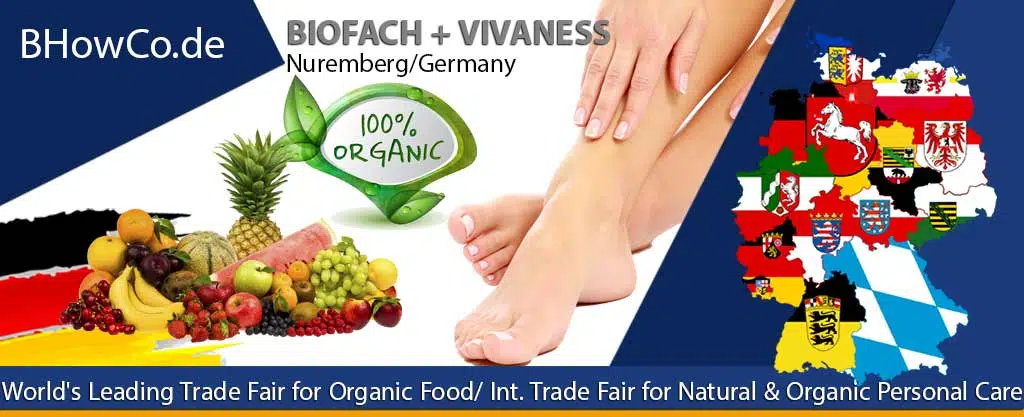
 In the global organic industry, where consumer trust is the ultimate currency and supply chains are scrutinized for their integrity, treating this fair as a simple marketplace for certified products fundamentally misjudges its role as the guardian of the sector’s values. Exhibitors who focus solely on price and product, without a deeply embedded and verifiable narrative on ethical sourcing, social responsibility, and systemic sustainability, fail to resonate with buyers for whom the organic label represents a holistic philosophy, not just a marketing attribute.
Strategic Snapshot
Biofach Nuremberg is the definitive strategic and ethical compass for the global organic industry, functioning as the central platform where the commercial future of the sector is negotiated within a rigorous framework of credibility. This trade fair is the critical filter that distinguishes authentic mission-driven brands from market entrants, demanding that suppliers demonstrate alignment with the core principles of organic agriculture, fair trade, and transparent, regenerative supply chains.
Why This Fair Matters in Germany’s Exhibition Ecosystem
As the world’s leading trade fair for organic products, its position in Nuremberg—Germany’s historic hub for quality food trading—solidifies its status as the non-negotiable summit for the sector. It attracts a unique concentration of purpose-driven buyers: specialized organic importers, supermarket sourcing teams with dedicated organic lines, and food service companies committed to sustainability. Germany’s role as Europe’s largest and most mature organic market, with its consumers’ high literacy and trust in certification, means that validation here serves as the most powerful global endorsement, opening doors to discerning international markets.
Who This Fair Is For — and Who Should Skip It
Ideal for:
- Producers, processors, and brands with certifications that go beyond the minimum (e.g., Demeter, Fairtrade, Soil Association) and a transparent supply chain story.
- Companies whose business model is intrinsically linked to organic and regenerative principles, with a clear narrative on biodiversity, soil health, and social equity.
- Suppliers prepared for in-depth conversations about farming practices, ingredient origins, and the tangible impact of their operations.
Not ideal for:
- Companies with “organic-washed” products or a superficial sustainability story that cannot withstand detailed scrutiny.
- Large conventional brands using organic as a mere line extension without a fundamental commitment to the sector’s ethos.
- Exhibitors viewing the event as a generic food fair, likely to be met with skepticism by a community that prioritizes authenticity over scale alone.
The 3–5 Day Moment vs. the 365-Day Reality
The fair creates an intense, values-aligned community where partnerships are initiated. However, the true test of these relationships occurs in the fields, factories, and logistics chains over the ensuing year. A buyer’s commitment depends on a supplier’s unwavering adherence to organic standards across entire harvests, consistent quality, and reliable logistics that often span continents and complex documentation. The spirit of the fair is powerful, but the year-round, meticulous execution of ethical and quality promises is what cements long-term loyalty in a market where a single compliance breach can destroy a brand’s reputation.
Strategic Next Step
Evaluate if your company’s operations and corporate identity are built for the philosophical alignment required by the global organic community, which values long-term partnership and systemic impact over transactional convenience. The principles for sustaining this trust-based engagement are detailed in Trade Fair Visibility Germany: 365-Day Strategy.
Explore the Ecosystem
To position Biofach within Germany’s trade fair landscape, browse the Trade shows by sector of activity. For insights into the values-driven buyer’s mindset, review German Buyer Behavior at Trade Fairs.
Strategic FAQs for Exhibitors
How does Biofach’s role as the sector’s “ethical compass” fundamentally change the nature of buyer expectations compared to a conventional food fair?
Buyers at Biofach are not just purchasing a product; they are investing in a story and a system they can trust and sell to their end consumers. They expect to engage with the “why” behind your brand: the farmers you work with, your environmental footprint, your social projects. The conversation starts with certification as a baseline but quickly delves into your philosophy, challenges, and long-term vision for a sustainable food system. Authentic storytelling backed by verifiable data is the currency, not just competitive pricing.
For an organic supplier, what provides a stronger strategic advantage: a unique, novel product or an exceptionally robust and transparent supply chain for a staple item?
While novel products generate interest, an exceptionally robust and transparent supply chain for a staple organic commodity (like quinoa, almonds, or cocoa) is often a more defensible and scalable strategic advantage. The market is flooded with novelty, but reliable, high-volume, ethically sourced staples are in constant demand by retailers building their core organic ranges. Demonstrating complete traceability, climate resilience, and fair partnership models for a key ingredient positions you as a strategic, low-risk partner for buyers’ essential inventory.
How should a company approach the diverse buyer segments, from specialized organic wholesalers to the purchasing departments of large conventional supermarket chains?
The engagement must be segmented. For the specialized organic wholesaler, emphasize deep certification (e.g., biodynamic), unique origin stories, and support for smallholder farmers. For the large supermarket chain, focus on scalable volume, consistent quality, food safety protocols, price stability, and ready-to-use marketing assets that educate conventional consumers. Your team must be fluent in both “languages,” respecting the purist’s values while addressing the volume buyer’s need for commercial reliability and consumer education.
Is Biofach relevant for “beyond organic” concepts like regenerative agriculture, upcycled ingredients, or plastic-free packaging?
Extremely relevant, as Biofach sets the agenda for the future of sustainable food. These concepts are increasingly central to the discourse. Exhibitors pioneering in these areas should position themselves as thought leaders. The strategy is to clearly articulate how your “beyond organic” practice solves a specific next-generation problem (e.g., carbon sequestration, food waste, pollution) and provide clear, science-based explanations. This positions your brand at the forefront of the industry’s evolution, attracting forward-thinking buyers.
What is a critical post-fair mistake that can break trust with a values-driven organic buyer?
The most critical mistake is a discrepancy between your fair narrative and the reality of a delivered shipment. If you championed small-scale farmer cooperatives but the subsequent shipment’s quality is inconsistent or documentation is lacking, trust is shattered. Post-fair, the buyer validates your story. Any failure in traceability paperwork, a change in sourcing without communication, or a drop in quality compared to the fair sample is seen as a breach of the ethical contract, not just a commercial error. Meticulous, transparent follow-through is non-negotiable.
Organizer
Best Image
Welcome to details
