Latest Insights
Trade Fair Participation as Infrastructure, Not Campaign


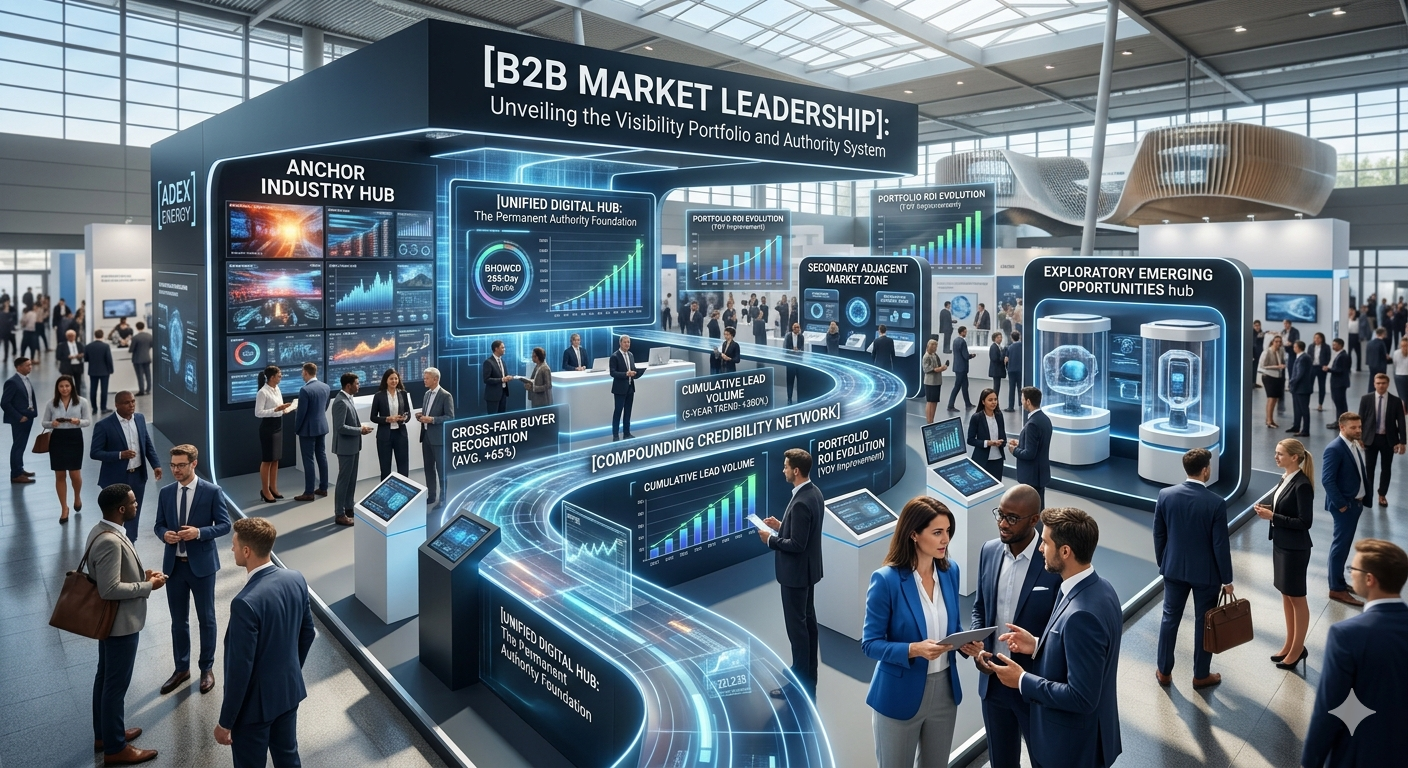
Trade Fair Ecosystem Strategy: Infrastructure, Not Campaign
Most companies approach trade fairs as campaigns. They plan for months. They execute for four days. They measure immediate results. Then they dismantle everything and start over for the next fair.
This is expensive. Exhausting. And fundamentally flawed.
Campaigns have beginnings and ends. They are designed for temporary impact. They depreciate to zero value after execution. They require constant reinvention. They never compound.
Trade fairs should not be campaigns. Trade fairs should be infrastructure.
Infrastructure is different. Infrastructure is permanent. It builds over time. It compounds in value. It supports multiple campaigns simultaneously. It creates capabilities that last for years, not days. It is an asset, not an expense.
Yet almost no exhibitors think this way. They build campaigns — temporary, event-specific, depreciating to zero. They never build infrastructure — permanent, ecosystem-wide, compounding annually. The difference explains why some exhibitors dominate while others struggle.
This article reveals how to transform trade fair participation from campaign to infrastructure. You will learn why campaign thinking destroys ROI, the components of a trade fair ecosystem strategy that builds permanent assets, and how infrastructure thinking creates competitive moats that campaigns cannot match.
Campaign vs. Infrastructure: The Strategic Shift That Changes Everything
The distinction between campaign thinking and infrastructure thinking is not semantic. It is the single most important strategic shift an exhibitor can make. Understanding this distinction transforms every decision about trade fair participation.
Campaign Thinking (Most Exhibitors)
Campaign thinking treats each fair as an isolated project with a clear start and end. Resources are allocated per event. Success is measured by immediate outcomes — booth traffic, leads collected, conversations held. When the fair ends, the campaign ends. Nothing remains.
Characteristics: Temporary, event-specific, depreciates to zero, no compounding, reinvention required each time, measured by activity metrics.
Financial treatment: Expense. Fully consumed within the period. No residual value.
Example: A company that builds a new booth from scratch for every fair, with new materials, new messaging, and new follow-up processes that are discarded after each event.
Infrastructure Thinking (Smart Exhibitors)
Infrastructure thinking treats each fair as an accelerator within a permanent system. Resources are allocated to building assets that last beyond any single event. Success is measured by cumulative outcomes — compounded credibility, cross-fair recognition, year-over-year ROI improvement. Infrastructure remains after the fair ends. It compounds in value.
Characteristics: Permanent, ecosystem-wide, appreciates over time, compounds annually, reusable across events, measured by asset value metrics.
Financial treatment: Asset. Builds value over multiple periods. Residual value increases with use.
Example: A company that maintains a permanent BHOWCO profile, reusable booth components, consistent messaging, and cumulative case study library that gains value with each fair.
The Infrastructure Advantage
The infrastructure advantage is not incremental. It is exponential. Campaign thinkers start from zero at every fair. Infrastructure thinkers build from an increasingly higher baseline. Over time, the infrastructure thinker’s starting point becomes so high that campaign thinkers cannot catch up — no matter how much they spend on any single fair.
As the Trade Fair Marketing Strategy guide explains: “Trade fairs don’t create networks — they reveal which companies have built systems to sustain them.” The same principle applies to infrastructure. Trade fairs do not create infrastructure. They reveal which exhibitors have built it.
The 5 Components of Trade Fair Ecosystem Strategy Infrastructure
Building infrastructure requires specific components. These components work together as a system. Individually, they are useful. Together, they create an asset that compounds with every fair.
Component 1: Permanent Digital Credibility Hub
A permanent, verifiable home for your brand within the exhibition ecosystem. This is not your corporate website — buyers consider that biased. It is a third-party-verified profile on a credible B2B platform that international buyers trust. Your BHOWCO 365-Day Profile serves this function.
Infrastructure value: Buyers can verify your credibility year-round. Your authority exists independently of any fair. The profile appreciates over time — an older profile is trusted more than a newer one.
Component 2: Reusable Booth Architecture
A booth design that can be reused across multiple fairs with minor adaptations. Modular components. Consistent branding. Standardised messaging frameworks. Reusable graphics and displays.
Infrastructure value: Each reuse reduces average cost per fair. Familiarity builds recognition. Consistent visuals strengthen brand recall. Reinvention is expensive. Reusability is efficient.
Component 3: Cumulative Evidence Library
A growing collection of case studies, testimonials, certifications, and proof points. Each fair adds to the library. The library never resets. It accumulates value with every client engagement.
Infrastructure value: Evidence compounds. Past case studies still have value. Current case studies have more value. The library becomes more persuasive with each addition.
Component 4: Standardised Follow-Up System
A documented, repeatable process for post-fair engagement. Pre-written email sequences. Segmentation criteria. Case study mapping. Responsibility assignments. The system improves with each use.
Infrastructure value: Consistency across fairs. Quality does not depend on who executes. Each fair makes the system better. No reinvention required.
Component 5: Cross-Fair Visibility Transfer
Systems that ensure credibility earned at one fair transfers to others. Consistent branding. Unified digital presence. Cross-promotion between fairs. Recognition tracking.
Infrastructure value: Buyers who see you at one fair recognise you at another. Recognition shortcuts trust. Trust shortens sales cycles. Sales cycles improve ROI.
A recurring pattern across German trade fairs is that exhibitors who build permanent infrastructure across these five components achieve stronger results than those who approach each fair as an isolated campaign. These five components enable that.
The BHOWCO 365-Day Profile is Component 1 — the permanent credibility hub that makes all other components more valuable. Without it, your infrastructure lacks a foundation.
Why Campaign Thinking Destroys Exhibition ROI
Campaign thinking is not just less effective than infrastructure thinking. It actively destroys ROI through several mechanisms. Understanding these destruction mechanisms helps you recognise why your current approach may be underperforming.
Destruction Mechanism 1: Zero Compounding
Campaign thinkers start from zero at every fair. Each fair requires rebuilding awareness, trust, and relationships from scratch. Past investment provides no momentum. The cost of starting from zero compounds negatively — each fair costs as much as the last, with no efficiency gains.
Infrastructure alternative: Infrastructure builds on previous investment. Each fair is easier and more effective than the last.
Destruction Mechanism 2: Reinvention Waste
Campaign thinkers reinvent everything for every fair. New booth design. New materials. New messaging. New follow-up processes. Reinvention is expensive and unnecessary. It consumes resources that could be invested in infrastructure.
Infrastructure alternative: Infrastructure is reusable. Booth components, messaging frameworks, follow-up systems are refined, not reinvented.
Destruction Mechanism 3: Fragmented Credibility
Campaign thinkers create different impressions at different fairs. Inconsistent branding. Different messaging. Variable quality. Buyers who see you at multiple fairs receive conflicting signals. Fragmented credibility is worse than no credibility.
Infrastructure alternative: Infrastructure ensures consistent branding and messaging across all fairs. Buyers receive coherent signals regardless of which fair they attend.
Destruction Mechanism 4: No Learning Transfer
Campaign thinkers do not systematically capture learning from one fair to the next. What worked? What did not? Why? Lessons are lost. Mistakes are repeated. Improvement is accidental, not engineered.
Infrastructure alternative: Infrastructure includes learning systems. Each fair improves the next. Mistakes are documented and prevented. Successes are replicated.
Destruction Mechanism 5: Depreciating Assets
Campaign thinkers have no assets that appreciate over time. Every investment depreciates to zero. There is nothing to sell. Nothing to compound. Nothing to leverage across fairs.
Infrastructure alternative: Infrastructure assets appreciate. The profile gains value with age. The case study library gains value with each addition. The system gains value with each use.
As the 365-Day Visibility System explains: “Silence after the fair is not neutral. It signals lack of commitment to the relationship.” Campaign thinking after the fair is also not neutral. It signals that you treat buyers as transactions, not relationships. Infrastructure thinking signals the opposite.
From Campaign to Infrastructure: The Transformation
Shifting from campaign thinking to infrastructure thinking requires deliberate transformation. Here is the step-by-step process.
Step 1: Audit Your Current Campaign Waste
Review your last few fairs. What did you reinvent each time? What did you discard? What would have been reusable? Many exhibitors discover that a significant portion of their fair investment is reinvention waste.
Infrastructure action: Identify components that can be made permanent. Booth elements. Messaging frameworks. Follow-up templates.
Step 2: Establish Your Permanent Credibility Hub
Create or complete your BHOWCO 365-Day Profile. This is your infrastructure foundation. Ensure it is fully populated, professionally presented, and current. Commit to maintaining it permanently, not just around fairs.
Infrastructure action: Profile becomes the central asset. All other infrastructure components connect to it.
Step 3: Design Reusable Booth Architecture
Develop a modular booth design that can be adapted to different spaces and layouts. Create reusable graphics for your core messaging. Invest in quality components that last multiple fairs.
Infrastructure action: Booth becomes an asset, not an expense. Cost per fair decreases with each use.
Step 4: Build Your Cumulative Evidence Library
Begin accumulating case studies from every client engagement. Organise by industry, region, and challenge type. Update regularly. Never delete. The library only grows.
Infrastructure action: Evidence becomes more valuable with each addition. Past case studies still provide proof of longevity.
Step 5: Document Your Follow-Up System
Create a standardised post-fair follow-up process. Write email templates. Define segmentation criteria. Map case studies to buyer types. Assign responsibilities. The system should be usable by anyone on your team.
Infrastructure action: Follow-up quality becomes consistent. Each fair improves the system through learning.
Step 6: Implement Cross-Fair Recognition Tracking
Start measuring what percentage of buyers at each fair recognise your brand from previous fairs. Use this data to optimise your visibility transfer. Increase consistency where recognition is low.
Infrastructure action: Recognition becomes a measurable asset. You can track infrastructure value over time.
Step 7: Shift Measurement from Activity to Asset Value
Stop measuring success by booth traffic and leads collected. Start measuring infrastructure value: profile age, evidence library size, recognition rates, year-over-year ROI improvement, cost per fair trend.
Infrastructure action: Measurement drives behaviour. Asset metrics incentivise infrastructure building.
This transformation takes time. Foundation building comes first. System refinement follows. Asset compounding comes later. But the shift is essential. Campaign thinking produces campaign results — which is to say, results that disappear when the campaign ends. Infrastructure thinking produces infrastructure results — which is to say, results that compound with every fair.
Infrastructure as Competitive Moat: Why Campaigns Cannot Catch Up
The most powerful argument for infrastructure thinking is the competitive moat it creates. Campaign thinkers can never catch infrastructure thinkers — not with larger budgets, not with better booths, not with more staff. Here is why.
The Time Barrier
Infrastructure takes time to build. An older profile is more credible than a newer one. A developed evidence library is more persuasive than a developing one. Cross-fair recognition requires multiple years of consistent presence. Time cannot be bypassed or bought. The infrastructure thinker’s temporal advantage is insurmountable.
Campaign limitation: No amount of spending can accelerate time. The infrastructure thinker’s seniority is a permanent advantage.
The Accumulation Barrier
Infrastructure assets accumulate value. Each fair adds to the asset. Case studies accumulate. Recognition accumulates. Credibility accumulates. The infrastructure thinker’s starting point rises every year. The campaign thinker starts from zero every year. The gap widens with each fair.
Campaign limitation: Starting from zero is expensive. The infrastructure thinker’s accumulated advantage grows over time.
The Consistency Barrier
Infrastructure ensures consistent execution. Booth quality does not vary. Messaging does not drift. Follow-up quality is standardised. Campaign thinkers reinvent each time. Quality varies. Mistakes are repeated. Consistency is a form of reliability that buyers trust.
Campaign limitation: Reinvention introduces variability. Variability signals unreliability. Unreliability erodes trust.
The Cost Barrier
Infrastructure becomes cheaper per use over time. Reusable booth components. Standardised systems. Cumulative assets. Campaign thinkers pay full price for every fair. Their cost per fair remains constant or increases. Infrastructure thinkers’ cost per fair decreases over time.
Campaign limitation: The cost advantage of infrastructure compounds. The infrastructure thinker can outspend the campaign thinker on strategic elements while spending less overall.
The Recognition Barrier
Infrastructure thinkers build cross-fair recognition. Buyers see them at multiple events. Recognition shortcuts trust. Trust shortens sales cycles. Campaign thinkers are new faces at every fair. They must build recognition from zero each time.
Campaign limitation: Recognition is a form of accumulated trust. Trust accumulated over years cannot be purchased in weeks.
These barriers are why infrastructure thinkers dominate their categories. Not because they are smarter or luckier. Because they built systems that compound. Campaign thinkers cannot replicate these systems quickly. By the time they try, the infrastructure thinker’s moat is already too wide.
Measuring Infrastructure Value: Beyond Booth Traffic
Campaign thinking measures activity: booth traffic, business cards, conversations. Infrastructure thinking measures asset value. Here are the metrics that matter.
Metric 1: Infrastructure Asset Value
The cumulative value of your permanent assets: profile age, evidence library size, recognition rates, system maturity. This metric increases over time. It should be tracked regularly.
Target: Infrastructure value increasing year over year.
Metric 2: Cost Per Fair Trend
Total cost divided by number of fairs. This metric should decrease over time as reusable infrastructure reduces per-fair costs. Campaign thinkers’ cost per fair remains constant or increases.
Target: Cost per fair decreasing year over year.
Metric 3: Cross-Fair Recognition Rate
Percentage of buyers at one fair who recognise your brand from a previous fair. This measures whether your infrastructure is creating portfolio-wide visibility.
Target: Recognition rate increasing year over year.
Metric 4: Year-Over-Year ROI Improvement
ROI from the same fair compared to the previous year. Campaign thinkers often see flat or declining ROI. Infrastructure thinkers see improving ROI as assets compound.
Target: ROI improving year over year for the same fair.
Metric 5: Infrastructure Leverage Ratio
Total ROI divided by infrastructure investment. This measures how effectively your permanent assets are generating returns. Higher ratios indicate infrastructure is working.
Target: Leverage ratio increasing year over year.
As the German Buyer Behavior guide explains: “German trade fairs are global networking hubs where you can connect with decision-makers from 100+ countries.” Your infrastructure determines whether those connections recognise your brand as a leader or ignore it as noise.
Case Study: Campaign Thinker vs. Infrastructure Thinker
Let us examine two exhibitors over four years. Both have comparable products and total budgets. Their thinking could not be more different.
Company A: Campaign Thinker
Company A approaches every fair as a new campaign. New booth design each year. New materials. New messaging. New follow-up. No permanent infrastructure. No cumulative assets. Each fair starts from zero.
Year 1: Fair X. Significant cost. ROI: Negative. No assets remain.
Year 2: Fair Y (different). Significant cost. ROI: Negative. No carryover from Year 1.
Year 3: Fair X again. Significant cost. ROI: Slightly less negative. No recognition from Year 1. No compounding.
Year 4: Company A reduces fair budget. Conclusion: “Trade fairs do not work for our industry.” Total investment: Significant. Total ROI: Negative.
Company B: Infrastructure Thinker
Company B treats trade fairs as infrastructure. They establish a BHOWCO profile. Build reusable booth components. Accumulate evidence library. Standardise follow-up systems. Commit to the same anchor fair consistently.
Year 1: Anchor Fair A. Cost includes infrastructure foundation. ROI: Modestly positive. Infrastructure foundation built.
Year 2: Anchor Fair A again. Cost reduced (infrastructure reuse savings). ROI: Strongly positive. Recognition emerging from Year 1.
Year 3: Anchor Fair A again. Cost further reduced. ROI: Very strong. Recognition well established. Buyers seek them out.
Year 4: Anchor Fair A plus one secondary fair. Cost efficient. ROI: Exceptional. Infrastructure fully mature. Cumulative returns far exceed Company A’s negative outcome.
The Infrastructure Difference
Company A spent significantly and achieved negative ROI. Company B spent comparably over four years and achieved exceptional cumulative ROI. The difference is not budget. It is infrastructure. Company A’s campaign thinking destroyed value. Company B’s infrastructure thinking created value that compounded annually.
The cost of campaign thinking is not just poor ROI. It is the opportunity cost of the infrastructure you could have built instead.
Frequently Asked Questions About Trade Fair Ecosystem Strategy
What is the difference between campaign thinking and infrastructure thinking?
Campaign thinking treats each fair as an isolated project with temporary impact. It depreciates to zero, requires reinvention, and never compounds. Infrastructure thinking treats each fair as an accelerator within a permanent system. It builds assets that appreciate over time, enables reuse, and compounds annually. Campaign thinkers start from zero at every fair. Infrastructure thinkers build from an increasingly higher baseline.
Why does campaign thinking destroy exhibition ROI?
Campaign thinking destroys ROI through five mechanisms: zero compounding (starting from zero each time), reinvention waste (paying to reinvent the wheel), fragmented credibility (inconsistent buyer signals), no learning transfer (repeating mistakes), and depreciating assets (no residual value). These mechanisms ensure that each fair costs as much as the last while delivering diminishing returns.
What are the five components of trade fair infrastructure?
The five components are: permanent digital credibility hub (BHOWCO profile), reusable booth architecture (modular, consistent), cumulative evidence library (growing case studies), standardised follow-up system (repeatable processes), and cross-fair visibility transfer (recognition systems). Together, these components create an asset that compounds with every fair.
How does infrastructure create a competitive moat?
Infrastructure creates a moat through five barriers: time barrier (age cannot be bypassed), accumulation barrier (assets compound), consistency barrier (reliability signals trust), cost barrier (per-fair costs decrease), and recognition barrier (cross-fair familiarity). Campaign thinkers cannot overcome these barriers quickly. By the time they try, the infrastructure thinker’s advantage is insurmountable.
How does BHOWCO support trade fair ecosystem strategy?
BHOWCO provides the permanent digital credibility hub that makes all other infrastructure components possible. Your 365-Day Profile is the foundation of your infrastructure. It ensures buyers can verify your credibility year-round. It supports evidence accumulation. It enables cross-fair recognition. Without BHOWCO, building trade fair infrastructure is significantly more difficult.
How do I measure infrastructure value?
Measure five metrics: infrastructure asset value (profile age, evidence size, recognition rates), cost per fair trend (decreasing year over year), cross-fair recognition rate (increasing year over year), year-over-year ROI improvement (improving for same fair), and infrastructure leverage ratio (increasing year over year). These metrics capture compounding effects that campaign metrics miss.
Campaigns end. Infrastructure endures.
Campaign thinkers build temporary presence that disappears when the fair ends. They measure activity, not assets. They reinvent constantly. They start from zero every time. They never compound. They wonder why their ROI never improves.
Infrastructure thinkers build permanent systems that compound with every fair. They measure asset value, not activity. They reuse and refine. They build from an increasingly higher baseline. They compound annually. Their ROI improves every year.
Your competitors will continue with campaign thinking. They will spend heavily per fair, achieve poor ROI, and conclude trade fairs do not work. You can choose differently. You can build infrastructure that compounds. You can create a competitive moat that campaigns cannot cross. You can transform trade fair participation from an expense into an asset.
Stop running campaigns. Start building infrastructure.
→ Select your infrastructure anchor fair
→ Understand buyer verification psychology
→ Master strategic fair marketing
→ Build your permanent infrastructure foundation