Latest Insights
Why International Exhibitors Fail After European Trade Fairs


Why International Exhibitors Fail After European Trade Fairs
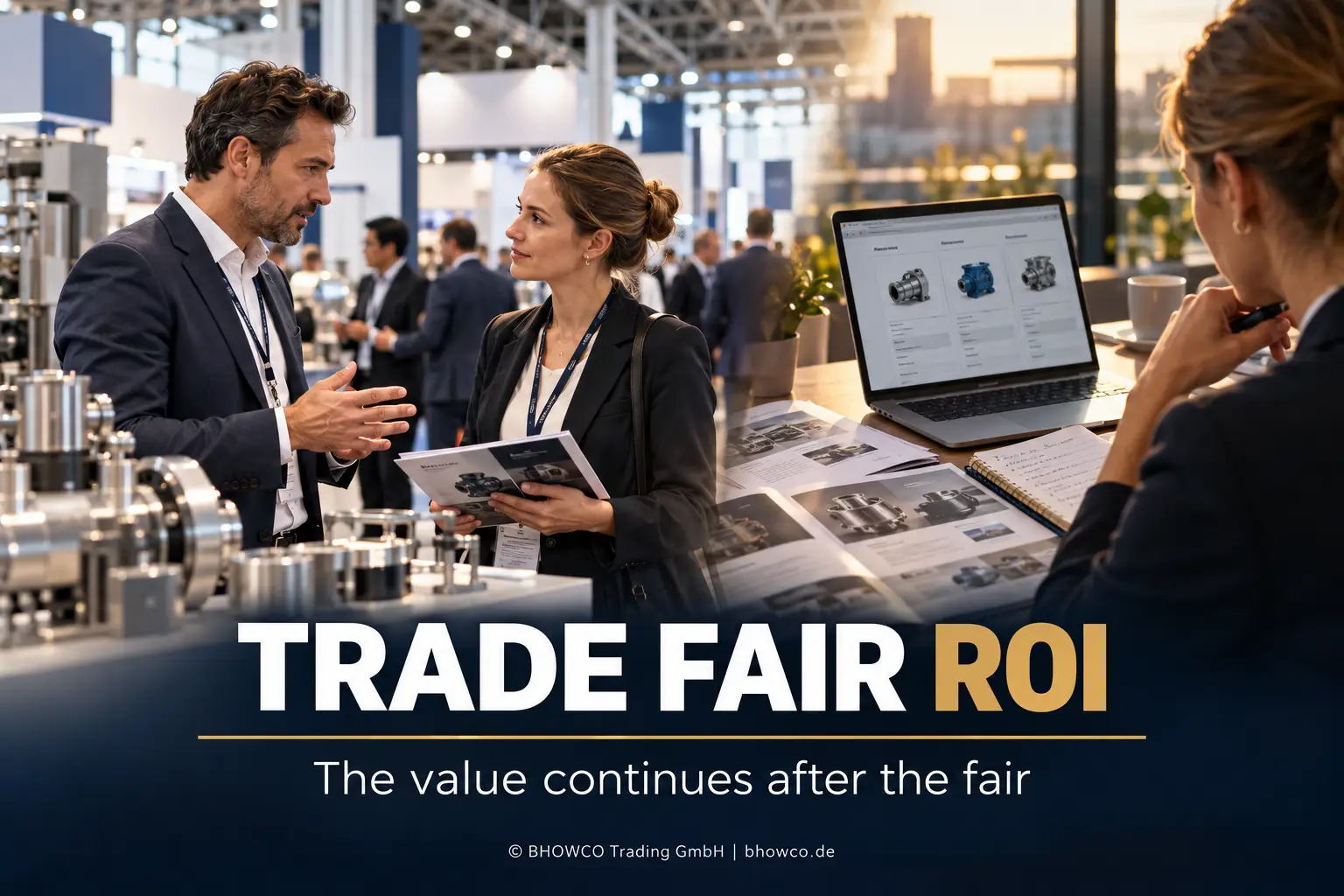
Every year, thousands of international exhibitors invest significant budgets in European trade fairs. They design impressive booths, ship products across borders, and send their best teams to locations like Hannover, Frankfurt, and Milan. Then, months later, they wonder why no business materialized. The exhibition felt successful. Conversations were positive. But somehow, the results never arrived. Trade fairs create visibility. Continuous presence creates international trust and long-term business opportunities. This article examines why international exhibitors fail after European trade fairs — and what separates those who succeed from those who don’t.
Here’s an observation from years of watching exhibitor behavior across major exhibition centers: failure rarely happens at the booth. It happens in the months after. The exhibition itself is usually fine. What comes next is the problem.
Quick Diagnostic: Are You at Risk of Post-Exhibition Failure?
Answer these questions honestly about your last European trade fair:
- ☐ Do you have a clear, written follow-up process that extends beyond 30 days? (Yes/No)
- ☐ Can European buyers find your company online between trade fairs? (Yes/No)
- ☐ Do you understand the typical procurement timeline in your target market? (Yes/No)
- ☐ Is your company profile updated on European exhibition platforms year-round? (Yes/No)
- ☐ Do you have a permanent presence (digital or physical) in the European market? (Yes/No)
The more “No” answers, the higher your risk of joining the majority of international exhibitors who see little return from their trade fair investment.
The Pattern That Predicts Failure
After observing dozens of international exhibitors across multiple exhibition cycles, a clear pattern emerges. Successful exhibitors and unsuccessful exhibitors often do the same things during the trade fair. They both have nice booths. They both collect leads. They both send an initial follow-up email.
The divergence happens after week two.
Unsuccessful international exhibitors follow a predictable script: send one or two follow-up emails, receive no response, assume the leads were low quality, and stop. Then they do nothing until the next trade fair. Their visibility collapses completely between events.
Successful international exhibitors do something different. They understand that silence from European buyers is rarely rejection. It’s usually evaluation happening internally. They maintain what experienced exporters call “ambient visibility” — a low-intensity but consistent presence that keeps their name in front of procurement teams without being pushy.
For a deeper understanding of how European buyers actually behave, read this guide to buyer behavior at trade fairs.
The Four Specific Reasons International Exhibitors Fail
Based on observation, four specific gaps separate successful international exhibitors from those who fail to see ROI from European trade fairs.
1. The Timeline Gap
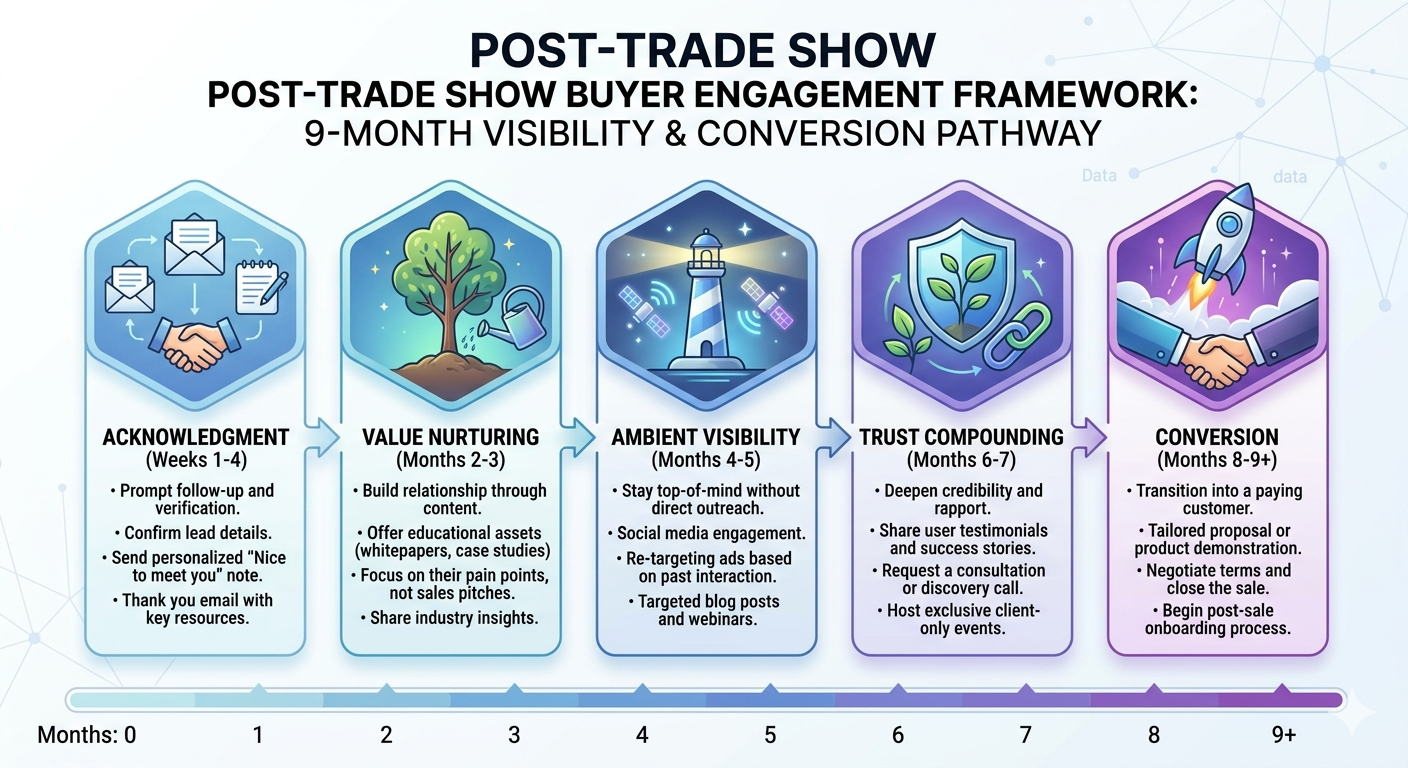
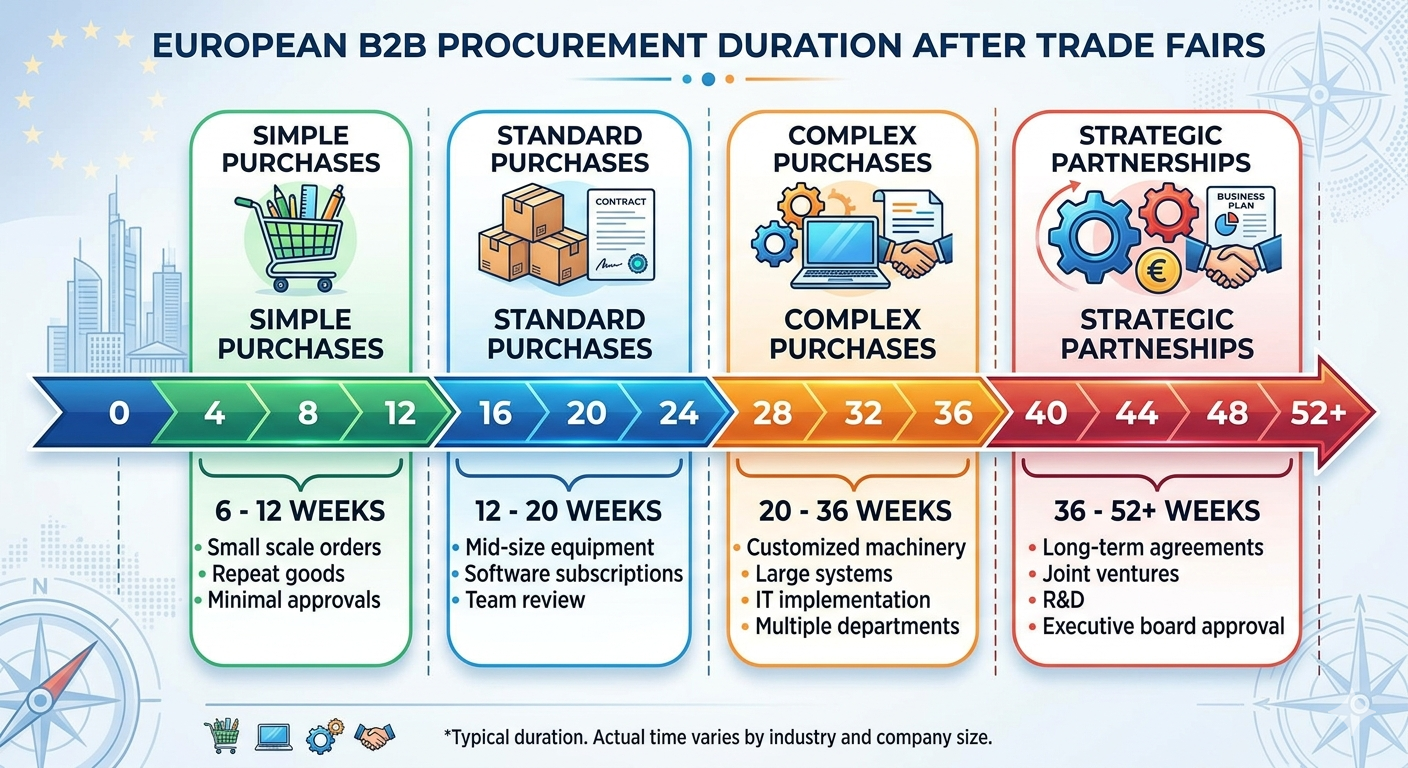
European procurement teams typically operate on evaluation cycles that extend over weeks or months. Many international exhibitors expect decisions within weeks. When those decisions don’t arrive, exhibitors assume failure and stop all activity. But the buyer hasn’t rejected them. The buyer simply isn’t ready yet. By the time the buyer reaches evaluation stage, the exhibitor has already gone silent and disappeared from search results.
What successful exhibitors do: They schedule follow-up touchpoints at regular intervals. They don’t expect quick decisions. They plan for procurement timelines.
2. The Visibility Gap
Most international exhibitors have excellent visibility during the trade fair week and limited visibility at other times. When European buyers search for them between exhibitions — which they do during silent evaluation — they find outdated profiles, no recent activity, and no evidence of ongoing market commitment. Trust erodes silently.
What successful exhibitors do: They maintain permanent directory listings that stay active year-round. See how continuous visibility works for international exhibitors.
3. The Trust Gap
Cross-border buyers face real risks: language barriers, time zone differences, customs delays, and post-sale support questions. A single trade fair conversation rarely overcomes these concerns. Trust requires repeated exposure over time. International exhibitors who disappear after the trade fair never build the repetition needed to earn trust.
What successful exhibitors do: They stay visible between trade fairs through content, directory updates, and ecosystem participation. Each visibility touchpoint compounds trust gradually.
A recurring pattern across European procurement is that buyers consistently value year-round discoverability in supplier selection.
4. The Process Gap
Many international exhibitors treat trade fair follow-up as a short-term campaign rather than a long-term process. They have no system for tracking which leads are in active evaluation versus dormant. They have no way to remain visible to buyers who aren’t ready to respond. They rely entirely on email, which fails when buyers don’t reply.
What successful exhibitors do: They build systems that don’t require buyer replies. Permanent directory profiles, regular content updates, and consistent ecosystem presence ensure visibility even when buyers are silent.
For practical guidance on maintaining visibility between trade fairs, see how trade fair visibility works year-round.
What Successful International Exhibitors Do Differently
The difference between failure and success isn’t budget or booth size. It’s behavior after the trade fair ends. Here’s what successful international exhibitors actually do:
- They expect silence and have a plan for it
- They maintain visibility between follow-up messages
- They update their directory profiles monthly, not annually
- They publish short market observations regularly
- They remain discoverable throughout the procurement cycle
- They understand that trust compounds slowly through repeated exposure
Before your next European trade fair, make sure you’ve completed all preparation steps with the exhibitor checklist for trade fairs.
The Cost of Invisibility
When international exhibitors fail after European trade fairs, the cost isn’t just the wasted exhibition budget. It’s the opportunity cost of markets that could have been entered, relationships that could have been built, and revenue that could have been generated. The exhibition itself was an investment. The failure is in not protecting that investment with post-show visibility.
Visibility fades without continuity. Buyer trust depreciates without reinforcement. International exhibitors who understand this succeed. Those who don’t repeat the same expensive pattern year after year.
For help selecting which European trade fairs deserve your investment, read how to choose the right trade fair for your strategy.
Frequently Asked Questions
Why do international exhibitors struggle with European trade fair ROI?
Most international exhibitors fail not at the booth, but in the months after. They don’t align with European procurement timelines, they let visibility collapse between trade fairs, and they mistake buyer silence for rejection. The exhibition itself is usually fine. The post-exhibition strategy is the problem.
What percentage of international exhibitors succeed after European trade fairs?
Industry observation suggests a minority of international exhibitors achieve meaningful long-term ROI from European trade fairs. The difference between success and failure correlates strongly with post-exhibition visibility practices — not booth quality or lead volume.
Can small international exhibitors compete with larger companies at European trade fairs?
Yes. Small exhibitors who maintain consistent year-round visibility often outperform larger competitors who disappear after the trade fair. European buyers value reliability and ongoing presence over booth size. A smaller budget with better post-show visibility typically wins against a larger budget with no follow-through.
How long should international exhibitors stay visible after a trade fair?
Visibility should never fully stop. At minimum, maintain discoverable directory profiles year-round. For best results, publish regular market observations and update your company profile monthly. European procurement cycles can extend over months. Your visibility should match that timeline.
What’s the most common mistake international exhibitors make?
Stopping all visibility activity after the trade fair ends. Many exhibitors believe the exhibition itself generates lasting attention. It doesn’t. The exhibition creates initial awareness. Continuous presence turns that awareness into buyer trust. Stopping visibility stops trust accumulation.
How does BHOWCO help international exhibitors succeed?
BHOWCO provides a permanent exhibition ecosystem where international exhibitors maintain discoverable profiles year-round. Unlike temporary trade fair participation, BHOWCO ensures your company remains visible, credible, and accessible throughout the entire European buyer decision cycle. Explore how BHOWCO supports international exhibitors.
- Why do exhibitors struggle? – Post-exhibition strategy fails, not the booth.
- What percentage succeed? – A minority. Visibility practices determine success.
- Can small exhibitors compete? – Yes. Consistency beats size.
- How long to stay visible? – Year-round. Match procurement cycles.
- Most common mistake? – Stopping visibility after the fair.
- How does BHOWCO help? – Permanent year-round visibility.
Conclusion: Failure Is Not Inevitable
International exhibitors who fail after European trade fairs don’t fail because their products are wrong or their booths are weak. They fail because their post-exhibition visibility collapses. They disappear exactly when buyers are silently evaluating. They mistake patience for disinterest. They stop being findable at the moment they need to be most visible.
Trade fairs create visibility. Continuous presence creates international trust and long-term business opportunities. The international exhibitors who succeed are not the ones with the largest booths. They are the ones who remain visible, relevant, and discoverable throughout the year — including the months when nothing seems to be happening.
BHOWCO exists to bridge that gap. Your next European trade fair investment deserves protection. Year-round visibility is how you protect it.
See how continuous exhibition visibility works for international exhibitors