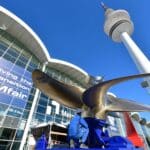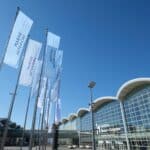

Messe Hamburg | International Hub for B2B Trade Fairs & Congresses
Messe Hamburg | Hamburg, Germany
Germany's Second-Largest City's Premier Exhibition and Congress Venue — Where Maritime, Energy, and Hospitality Industries Meet.
Not merely a venue. A vibrant inner-city event campus with 87,000 m² of exhibition space, 11 halls, and the newly renovated CCH – Congress Center Hamburg — one of Europe's largest congress centres.
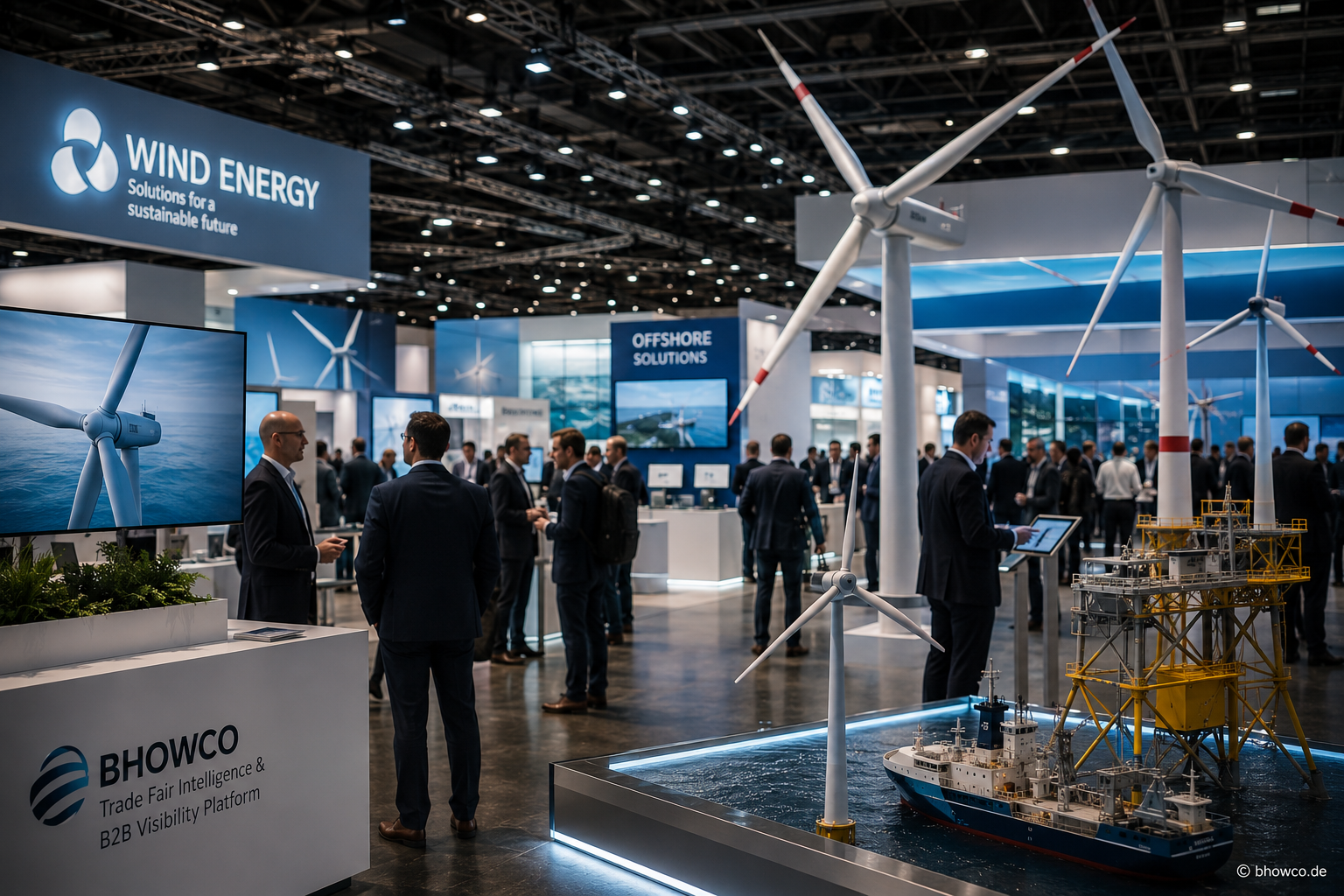
To approach Messe Hamburg as simply a physical location for temporary events ignores its strategic function as a permanent business ecosystem in Germany's second-largest city. Located in the heart of Hamburg — between the university and the famous Reeperbahn district — the venue offers a unique combination of urban vibrancy and green spaces, adjacent to the "Planten un Blomen" botanical garden. With 11 exhibition halls offering over 87,000 m² of space, and the newly renovated CCH – Congress Center Hamburg providing 12,000 m² of exhibition space and 12,000 seats, this is one of Europe's most versatile event campuses. Home to world-leading events like SMM (the leading international maritime trade fair), WindEnergy Hamburg (world's leading wind energy expo), and INTERNORGA (Europe's leading hospitality trade show), Hamburg Messe provides international exhibitors with direct access to the maritime, energy, and hospitality industries — all in one of Europe's most diverse and attractive cities.
Venue Overview: Versatile Event Infrastructure
- Location: Messeplatz 1, 20357 Hamburg — in the heart of Germany's second-largest city, between the university and the Reeperbahn district.
- Total Exhibition Space: 11 halls offering over 87,000 m² of exhibition space, plus additional open-air grounds. CCH – Congress Center Hamburg provides 12,000 m² of exhibition space, 12,000 m² of foyer space, and 12,000 seats across 50 halls and rooms.
- Global Standing: A leading international venue for maritime, energy, and hospitality industries — home to SMM (world's leading maritime trade fair), WindEnergy Hamburg (world's leading wind energy expo), and INTERNORGA (Europe's leading hospitality trade show).
- Key Events: SMM (maritime industry), WindEnergy Hamburg (wind energy), INTERNORGA (hospitality and foodservice), GET NORD (electrical and HVAC trades), and many more.
These metrics confirm Hamburg Messe as a validation platform for international B2B credibility — particularly in maritime, energy, and hospitality sectors — where your participation signals commitment to global markets.
Data source: Hamburg Messe – Company Profile | Hamburg Messe – Hall Data
Strategic Advantages: Why Global Exhibitors Choose Hamburg Messe
Hamburg Messe is not just a venue; it is a strategic business decision infrastructure. The advantages extend beyond square meters:
- Unique Inner-City Location: Situated in the heart of Hamburg — Germany's second-largest city, Europe's third-largest seaport, and a media, innovation, and international trade hub. The adjacent "Planten un Blomen" botanical garden connects the exhibition campus with the city's green spaces.
- World-Leading Events: Home to SMM (the leading international maritime trade fair), WindEnergy Hamburg (world's leading wind energy expo), and INTERNORGA (Europe's leading hospitality trade show).
- Newly Renovated CCH: The CCH – Congress Center Hamburg — one of Europe's largest congress centres — reopened after comprehensive renovation, offering 12,000 m² of exhibition space, 12,000 m² of foyer space, and 12,000 seats across 50 halls and rooms.
- Excellent Accessibility: Two train stations, airport connections, three rapid-transit and underground stations, several bus lines, and highway ramps nearby — plus countless hotels in the immediate vicinity.
- Diverse Event Portfolio: Over 300 employees organizing a wide range of major national and international events — from world-leading industry fairs to political party conferences, cultural events, and corporate gatherings.
World-Leading Trade Fairs
- Maritime Industry: SMM — the leading international maritime trade fair, bringing together the global shipping, shipbuilding, and marine technology industries.
- Renewable Energy: WindEnergy Hamburg — the world's leading expo for wind energy, showcasing onshore and offshore wind technology.
- Hospitality & Foodservice: INTERNORGA — Europe's leading trade show for foodservice, hospitality, communal catering, bakeries, and confectioners.
- Electrical & HVAC Trades: GET NORD — a leading trade fair for electrical and HVAC (sanitation, heating, and air conditioning) trades.
- Digital Logistics: LogiNext Germany — the industry meeting hub for digital logistics innovations.
International & Regional Relevance
- Global Maritime Hub: Hamburg's status as Europe's third-largest seaport makes SMM a uniquely relevant global maritime platform.
- Energy Transition Leadership: Germany's Energiewende (energy transition) positions WindEnergy Hamburg as a critical global event for renewable energy professionals.
- German Hospitality Market: INTERNORGA provides unparalleled access to the German and European hospitality and foodservice industry.
Brand authority lock: Exhibiting at SMM — the world's leading maritime trade fair — signals your global credibility in the maritime industry. Participation at WindEnergy Hamburg positions your brand at the forefront of the global energy transition.
Exhibitor Value Analysis: Who Benefits Most?
Hamburg Messe is not suitable for every exhibitor. It is ideal for those seeking focused, specialized access to the maritime, energy, hospitality, and trades sectors — not general consumer audiences or mega-fair scale.
- Maritime & Shipping Companies: SMM provides unparalleled global access to the shipping, shipbuilding, and marine technology industries — ideal for manufacturers, suppliers, and service providers.
- Renewable Energy Firms: WindEnergy Hamburg connects with the global wind energy industry — essential for companies in onshore and offshore wind technology.
- Hospitality & Foodservice Brands: INTERNORGA offers access to the European hospitality and foodservice market — a must for suppliers to hotels, restaurants, and catering businesses.
- Electrical & HVAC Trades: GET NORD provides a focused platform for the electrical and HVAC trades in the German market.
- Corporate Event Organizers: The versatile campus with 11 halls and the CCH offers ideal conditions for large-scale corporate events, product launches, and conferences.
Competitive environment warning: Hamburg Messe is a specialized venue with strong international leadership in maritime, energy, and hospitality. Without pre-fair visibility and post-fair lead nurturing, your investment may not yield measurable ROI. This is why BHOWCO's 365-day visibility framework is critical.
Year-Round Visibility: Beyond Physical Exhibition Days
A 3-5 day presence at Hamburg Messe cannot establish lasting brand authority in the global B2B market. The decision cycles of maritime, energy, and hospitality industry buyers range from 6 to 24 months. Therefore:
Pre-Event Visibility (Months -12 to -1): Establish digital presence in German and international search results targeting your specific industry audience. Leverage Hamburg's reputation as a global maritime, media, and innovation hub in your marketing.
On-Site Activation (3-5 days): Validate your claims. Demonstrate product quality and industry-specific expertise. Network with pre-scheduled buyers from across Europe and globally.
Post-Event Credibility (Months +1 to +12): Convert leads using published fair participation as social proof. Leverage Hamburg Messe's world-leading event portfolio and the city's international reputation in your ongoing marketing.
Evidence of strategic failure: Treating Hamburg Messe appearances as isolated campaigns without integrating them into a 12-month continuous visibility and lead nurturing strategy.
Strategic Recommendation: Is Hamburg Messe Right for You?
Recommendation: Exhibit if your business meets 3 of these 4 criteria — (1) You sell to maritime, energy, hospitality, or trades sectors, (2) You seek access to global markets through world-leading industry events, (3) You value an inner-city location with excellent infrastructure and a vibrant urban environment, (4) Your brand benefits from association with Hamburg's international reputation as a maritime and innovation hub.
Best suited industries: Maritime and shipping, renewable energy, hospitality and foodservice, electrical and HVAC trades, logistics and digital innovation.
Brand positioning strength: Excellent for companies seeking global leadership positioning in maritime (SMM), energy (WindEnergy Hamburg), or hospitality (INTERNORGA) sectors.
International market expansion value: High for specific sectors — SMM, WindEnergy Hamburg, and INTERNORGA attract strong international participation. The venue's location in Hamburg — Germany's global gateway city — adds significant international credibility.
Long-term strategic advantage: Repeated participation in Hamburg Messe events builds relationships with global industry leaders. The newly renovated CCH and the venue's inner-city location add long-term value and appeal.
Strategic Contact & Venue Information
- 📍Address: Messeplatz 1, 20357 Hamburg, Germany
- 📞Phone: +49 40 3569-0
- ✉️Email: info@hamburg-messe.de
- 🌐Official Website: hamburg-messe.com
- 🏛️Ownership: 100% owned by HGV (Hamburger Gesellschaft für Vermögens- und Beteiligungsmanagement mbH) — the management and holding company of the City of Hamburg.
Strategic FAQs for International Exhibitors
Is Hamburg Messe suitable for first-time international exhibitors?
Yes, particularly in maritime (SMM), energy (WindEnergy Hamburg), and hospitality (INTERNORGA) sectors. The focused, specialized event environment makes it more accessible for first-time international exhibitors compared to mega-fairs. Use a moderate booth + professional host/interpreter + pre-booked meetings to test your market fit in global markets.
Which industries gain the most from this venue?
Maritime and shipping (SMM), renewable energy (WindEnergy Hamburg), hospitality and foodservice (INTERNORGA), electrical and HVAC trades (GET NORD), and digital logistics (LogiNext Germany).
Is Hamburg Messe useful for global brand positioning?
Yes for specific sectors. SMM is the world's leading maritime trade fair with strong international participation. WindEnergy Hamburg is the world's leading wind energy expo. INTERNORGA is Europe's leading hospitality trade show. Use this venue for focused, industry-specific positioning in these global sectors.
How can exhibitors maximize ROI?
Three non-negotiable actions: (1) Pre-fair marketing targeting your specific industry audience through specialized media and LinkedIn, (2) On-site meeting discipline with focus on quality leads, (3) Post-fair nurture sequence using Hamburg's international reputation and the venue's world-leading event status as social proof.
Final decision filter: Exhibit at Hamburg Messe or elsewhere?
Choose Hamburg Messe if: Your target buyers are in maritime, energy, hospitality, or trades sectors — and you value an inner-city location with excellent infrastructure and global connectivity. Consider other venues if: You need mega-fair scale, general consumer audiences, or your industry is not represented in Hamburg Messe's portfolio.
Ready to leverage Hamburg Messe's global platform and inner-city location for your brand?
Membership includes strategic consultation and verified exhibitor intelligence. Not all applicants are approved.
Professional Reference Notice
Information related to Hamburg Messe is based on official public data. International exhibitors should always verify current details directly with the organizer. Strategic recommendations reflect BHOWCO's independent B2B analysis based on the venue's world-leading event portfolio and inner-city location.
HAMBURG TRADE FAIRS CALENDAR
INTERNATIONAL EXHIBITIONS
July 2026
No Events
August 2026
No Events
September 2026
Event Details
Event Details

SMM Hamburg
01. – 04. September 2026 | Hamburg, Germany
Official Website: https://www.smm-hamburg.com/
Overview
SMM Hamburg serves the global maritime technology and shipbuilding ecosystem, connecting system integrators, equipment manufacturers, naval architects, classification societies, and service providers with shipowners, shipyards, fleet operators, and energy companies. The exhibition attracts over 50,000 visitors from more than 100 countries annually, including C-level executives from global shipping conglomerates, procurement directors from major shipyards, technical evaluators, and regulatory representatives.
International exhibitors participate to present propulsion technologies, energy efficiency solutions, emission abatement systems, maritime software, and mission-critical components for the commercial and naval maritime sectors. The relevance of participation depends on whether exhibitors can meet the expectations of professional buyers who evaluate system reliability, certification readiness, total cost of ownership, and long-term asset value across vessel lifecycles spanning 25 years or more.
Why This Trade Fair Matters
Strategic decisions in the maritime industry are influenced by shipowners, shipyard procurement teams, technical directors, classification societies, and financial institutions — many of whom attend SMM to assess new technologies, evaluate supplier capability, and validate strategic roadmaps for fleet renewal and energy transition.
These stakeholders evaluate suppliers based on technology readiness level, classification certification, global service network capability, total cost of ownership modeling, and regulatory compliance readiness. The exhibition provides a concentrated environment where suppliers can engage with multiple decision-influencing roles across the global maritime value chain simultaneously.
Beyond immediate conversations, SMM offers long-term value through market intelligence, partnership identification, competitor monitoring, and industry positioning. International exhibitors can follow discussions around regulatory developments, energy transition pathways, digitalization trends, and geopolitical factors affecting maritime investment decisions. The exhibition should be viewed as one stage in a longer technology validation and fleet planning process rather than a standalone sales opportunity.
Is This Trade Fair Right for You?
Ideal For
System integrators and manufacturers of propulsion technologies, energy efficiency solutions, and emission abatement systems are relevant exhibitors when they have proven reliability, classification society certification, and a clear value proposition for regulatory compliance and fuel savings. These companies are commercially prepared because shipowners and shipyards expect to see demonstrated technology readiness, documented performance data, and global service network capability.
Specialist suppliers of mission-critical naval and offshore components with the highest certifications, proven reliability, and established global service networks are well-positioned for procurement discussions. Developers of maritime software for vessel optimization, fleet management, autonomous operations, and digital twins that demonstrably reduce operational expenditure or improve safety typically find productive engagement with technical evaluators.
Engineering firms and consultancies specializing in newbuild design, retrofit planning, and regulatory compliance for IMO, EU ETS, and regional regulations can engage with fleet operators and shipyards on strategic planning projects. Companies with the financial stability to support guarantees required for vessel installation and the capacity to navigate 2-3 year sales cycles are best aligned with the exhibition’s commercial environment.
May Not Be Suitable For
Suppliers of generic industrial equipment without specific maritime certification, documentation, and corrosion protection standards may find it difficult to establish credibility with professional buyers. Companies with a purely transactional sales model, unprepared for complex multi-stakeholder decision processes and extended commercial cycles, typically struggle to convert interest into commercial relationships.
Start-ups without a clear path to classification society approval, pilot projects with industry partners, or the financial stability to support guarantees required for vessel installation may find the exhibition environment commercially challenging without substantial preparation and partnership development.
Business Opportunities
- Discuss propulsion system integration with shipyard technical teams evaluating newbuild and retrofit projects
- Present energy efficiency and emission abatement solutions to fleet operators managing regulatory compliance and operational expenditure
- Connect with classification societies and regulatory representatives on certification requirements and approval pathways
- Identify partnership opportunities with system integrators, engineering firms, and project developers for vessel installations
- Evaluate competing approaches to maritime energy transition, digitalization, and vessel optimization
- Monitor regulatory and technology discussions affecting future product requirements and market-entry strategies
- Engage with financial institutions and investors evaluating technology bankability for vessel financing
- Understand total cost of ownership expectations through direct engagement with shipowner technical and commercial teams
Exhibitor Perspective
Effective participation at SMM depends more on technical credibility, certification readiness, and total cost of ownership modeling than on booth size alone. Professional visitors arrive with specific questions about technology readiness, classification certification, service network capability, and risk mitigation. They expect exhibitors to demonstrate understanding of regulatory requirements, vessel integration challenges, and lifecycle cost implications.
A technically impressive product without classification society certification, proven reliability data, or clear financing support may generate initial interest but rarely advances procurement discussions. Before investing in exhibition space, suppliers should evaluate whether their technology can meet the rigorous validation and certification requirements that maritime buyers expect.
Exhibitors should treat SMM as the beginning of a technology validation and fleet planning process rather than expecting immediate procurement decisions during exhibition days. The decision cycle typically involves multiple stakeholders — technical teams, procurement, operations, finance, and regulatory compliance — and can extend across 2-4 years. Maintaining consistent engagement throughout this cycle and providing detailed technical documentation, pilot data, and certification evidence can help suppliers continue discussions and develop professional relationships with potential buyers.
For international exhibitors, SMM should be integrated into a 365-day visibility strategy where exhibition conversations are supported by ongoing technical communication, regulatory engagement, and relationship development with shipowners, shipyards, and classification societies. The value should be measured through qualified technical discussions, specification progress, movement within procurement processes, and partnership development rather than immediate sales volume during the event.
Before You Exhibit
Define specific objectives for each stakeholder group. Shipowners, shipyards, classification societies, and technical evaluators have different evaluation criteria. Prioritize organizations where your solution addresses an identifiable technical or commercial challenge rather than approaching the visitor list as a general lead database.
Prepare comprehensive technical and certification documentation. Classification society approval evidence, technology readiness data, performance verification results, total cost of ownership models, and regulatory compliance roadmaps are common evaluation criteria that professional buyers expect to review during assessment discussions.
Research attending shipowners, shipyards, and technology partners. Identify target organizations and relevant decision-makers connected to SMM. Schedule pre-fair meetings rather than relying on chance encounters during the event.
Develop role-specific messaging. Different stakeholders ask different questions. Shipyards focus on installability and integration complexity, shipowners on operational savings and ROI, classification societies on certification and testing, and financial institutions on bankability and guarantees. Preparing distinct talking points for each persona improves communication effectiveness.
Plan a structured follow-up timeline for long-cycle engagement. Preparing detailed technical documentation, certification evidence, pilot data, and commercial proposals in advance allows faster response to post-event requests. This responsiveness is critical given the extended fleet planning and technology validation cycles typical in maritime procurement.
Continue Your Research
German and European maritime organizations evaluate suppliers through a structured technical and commercial qualification process that international companies often misunderstand. Understanding procurement culture, certification expectations, and total cost of ownership modeling is essential before investing in SMM exhibitor participation. Understanding German B2B Buyer Behaviour in Maritime and Industrial Sectors explains how procurement decisions are made and what international suppliers should prepare.
Many exhibitors focus all their resources on exhibition days and lose momentum afterward. However, maritime technology validation and fleet planning cycles typically extend across many years. Building Long-Term Visibility After a German Trade Fair explains how to maintain communication and technical credibility throughout the extended decision cycle.
International exhibitors often underestimate the preparation required for German and European maritime exhibitions. From certification documentation to total cost of ownership modeling, structured planning significantly influences participation quality. Maritime Technology Exhibitor Checklist for German Trade Fairs helps technology and equipment companies prepare technical documentation, certification evidence, and post-event follow-up before entering German exhibitions.
FAQ
Strategic FAQs for Exhibitors
For a green technology, is it better to target shipyards or shipowners at SMM?
Target both, but with different narratives. For shipyards, focus on installability, integration complexity, and how your solution fits into their standard designs or construction slots. For shipowners, focus on operational savings (OPEX), return on investment (ROI), crew training requirements, and how it future-proofs the asset against evolving regulations. The most successful technologies are those specified by owners and efficiently installed by yards.
How should a digital solution (AI, software) be presented to resonate with traditional maritime buyers?
Anchor it in solving a concrete, high-cost operational pain point. Instead of “AI-powered analytics,” demonstrate “a system that reduces fuel consumption by 5% through optimized trim and routing, as verified in a 12-month trial with XYZ Shipping.” Use case studies with hard metrics. Emphasize cybersecurity certification, data ownership clarity, and integration with existing bridge and engine room systems.
What is more important than having the most innovative product?
Having the most bankable and serviceable product. Maritime is conservative for a reason: failures at sea are catastrophic. Proven reliability, a global service network with 24/7 support, and clear financing options (through partnerships with leasing companies or yard credits) often outweigh a slight performance advantage in an unproven technology.
What is the critical error in discussing costs with shipowners?
Focusing solely on capex (purchase price). The maritime mindset is governed by total cost of ownership (TCO). You must be prepared to model the total lifecycle cost, including installation, maintenance, parts, training, and the financial impact of potential downtime. A higher capex with a lower TCO and reduced risk is a compelling argument.
Why is participation in technical conferences and committee meetings during SMM as important as the booth?
This is where you demonstrate thought leadership and gain early insight into regulatory and technical trends. Presenting a well-received technical paper or participating in a panel positions your engineers as peers, building trust far more effectively than sales brochures. It’s also where you identify the key influencers and specifiers who may not visit your stand.
Messe Hamburg Center
Messeplatz 1, 20357 Hamburg, Germany.Messe Hamburg Center

Best Image
Welcome to details
Time
Strategic Consultation
Worried About Vanishing After the Trade Show?
Most international exhibitors disappear after 3-5 days. We help you use German trade fairs as a strategic launchpad to build a 365-day visibility system that builds lasting credibility.
Transform exhibitions into a measurable strategic process.
Event Type
Health Guidelines for this Event
Event Reviews
There are no reviews for this event
Event Details
Event Details

WindEnergy Hamburg
22. – 25. September 2026 | Hamburg, Germany
Official Website: https://www.windenergyhamburg.com/
Overview
WindEnergy Hamburg serves the global wind energy industry, connecting turbine OEMs, component suppliers, logistics specialists, digital solution providers, and financial services with project developers, utility executives, government energy officials, and institutional investors.
The exhibition attracts over 30,000 professional visitors from more than 100 countries annually, including C-suite executives from utilities and developers, sovereign wealth fund managers, government energy officials, and technical evaluators from the wind energy sector.
International exhibitors participate to present turbine platforms, subsystem technologies, logistics solutions, digital services, and project finance capabilities for the global wind energy market. The relevance of participation depends on whether exhibitors can meet the expectations of professional buyers who evaluate levelized cost of energy performance, serial production capability, supply chain resilience, and financial bankability.
Why This Trade Fair Matters
Strategic decisions in the wind energy industry are influenced by project developers, utility executives, government energy officials, institutional investors, and technical evaluators — many of whom attend WindEnergy Hamburg to assess new technologies, evaluate supplier capability, and make investment decisions for multi-gigawatt project pipelines.
These stakeholders evaluate suppliers based on levelized cost of energy performance, serial production capability, supply chain resilience, quality control systems, financial stability, and operational track record. The exhibition provides a concentrated environment where suppliers can engage with multiple decision-influencing roles across the global wind energy value chain simultaneously.
Beyond immediate project interest, WindEnergy Hamburg offers long-term value through market intelligence, partnership identification, competitor monitoring, and industry positioning. International exhibitors can follow discussions around offshore wind logistics, turbine scaling, digital lifecycle management, sustainability requirements, and project finance structures that shape the future of wind energy development. The exhibition should be viewed as one stage in a longer project development and supply chain qualification process rather than a standalone sales opportunity.
Is This Trade Fair Right for You?
Ideal For
Turbine OEMs and major subsystem suppliers — blades, nacelles, towers, foundations — are relevant exhibitors when they can demonstrate proven levelized cost of energy advantages, serial production scalability, and documented operational track records from operating fleets. These companies are commercially prepared because project developers and investors expect to see demonstrated performance, quality control evidence, and supply chain resilience documentation.
Specialists in offshore wind logistics, installation vessels, port infrastructure, and heavy-lift engineering can engage with project developers and turbine manufacturers seeking execution capability for large-scale offshore projects. Providers of digitalization and lifecycle management solutions — predictive maintenance AI, digital twins, asset performance software, and robotic inspection systems — that optimize the 30-year operational phase are increasingly relevant as the industry shifts toward operational efficiency.
Financial services, insurance firms, and consultancies offering de-risking instruments, due diligence, and market intelligence for multi-billion-euro investments can connect with project developers and investors seeking financial advisory and risk mitigation. Suppliers who can demonstrate understanding of global certification requirements, serial production challenges, and long-term operational reliability are better equipped for the detailed technical and financial evaluations that characterize wind energy procurement decisions.
May Not Be Suitable For
Suppliers of generic industrial components without specific certification for the extreme environmental and dynamic loads of wind applications may find it difficult to establish credibility with professional buyers. Early-stage technology startups without pilot project data, independent certification, or a clear path to integration within the established industry supply chain may need substantial preparation before exhibiting.
Companies with a purely local or small-scale focus, unprepared for the global, industrial-scale procurement processes and multi-year sales cycles that dominate the event, may find the commercial environment challenging. Suppliers without financial stability documentation, serial production capability evidence, or supply chain resilience planning may find procurement discussions limited to price competition rather than value demonstration.
Business Opportunities
- Present turbine platforms and subsystem technologies to project developers and utility executives evaluating levelized cost of energy and serial production capability
- Discuss offshore wind logistics and installation capability with developers and turbine OEMs planning large-scale offshore projects
- Connect with institutional investors and financial advisors exploring project finance and de-risking instruments
- Identify partnership opportunities with logistics specialists, engineering firms, and digital service providers
- Evaluate competing approaches to turbine scaling, offshore logistics, digital lifecycle management, and sustainability
- Monitor regulatory and energy policy discussions affecting project pipelines and investment decisions
- Explore global project opportunities through direct engagement with international developers and government energy officials
- Understand supply chain qualification requirements through direct engagement with OEM procurement teams
Exhibitor Perspective
Effective participation at WindEnergy Hamburg depends more on serial production evidence, supply chain resilience documentation, and financial stability than on booth size alone. Professional visitors arrive with specific questions about levelized cost of energy performance, production capacity, quality control systems, supply chain resilience, and financial bankability.
They expect exhibitors to demonstrate understanding of global certification requirements, serial production challenges, and the operational realities of wind energy project development. A technically impressive turbine without documented serial production capability, supply chain resilience, or financial stability may generate interest but rarely secures project commitments. Before investing in exhibition space, suppliers should evaluate whether their company is ready for the capital-intensive, long-term partnerships that define this sector.
Exhibitors should treat WindEnergy Hamburg as the beginning of a project development and supply chain qualification process rather than expecting immediate procurement commitments during exhibition days. The evaluation cycle typically involves multiple stakeholders — technical teams, procurement, finance, operations, and executive leadership — with distinct criteria for performance, reliability, and financial viability. Maintaining consistent engagement throughout this cycle and providing detailed technical documentation, production evidence, and financial information can help suppliers continue discussions and develop professional relationships with potential buyers.
For international exhibitors, WindEnergy Hamburg should be integrated into a 365-day visibility strategy where exhibition conversations are supported by ongoing production capability demonstration, supply chain development, and relationship building with project developers, utilities, and investors. The value should be measured through qualified project discussions, supply chain progress, partnership development, and financial credibility rather than immediate sales volume during the event.
Before You Exhibit
Define specific objectives for each stakeholder group. Project developers, utility executives, investors, and technical evaluators have different evaluation criteria. Prioritize organizations where your solution addresses an identifiable project requirement or supply chain opportunity rather than approaching the visitor list as a general lead database.
Prepare comprehensive technical, operational, and financial documentation. Levelized cost of energy data, serial production capability evidence, quality control documentation, supply chain resilience planning, financial stability information, and operational track record documentation are common evaluation criteria that professional buyers expect to review during assessment discussions.
Research attending developers, utilities, and investors. Identify target organizations and relevant decision-makers connected to WindEnergy Hamburg. Schedule pre-fair meetings rather than relying on chance encounters during the event.
Develop stakeholder-specific messaging. Different stakeholders ask different questions. Project developers focus on levelized cost of energy and project execution, utilities on operational reliability and asset performance, investors on financial viability and risk mitigation, and technical evaluators on certification and performance verification. Preparing distinct talking points for each persona improves communication effectiveness.
Plan a structured follow-up timeline for project development and supply chain qualification. Preparing detailed technical documentation, production evidence, and financial information in advance allows faster response to post-event inquiries. This responsiveness is critical given the project development and supply chain qualification cycles typical in wind energy decisions.
Continue Your Research
European wind energy project developers and investors evaluate suppliers through a structured technical and financial qualification process that international companies often misunderstand. Understanding procurement culture, project finance expectations, and supply chain requirements is essential before investing in WindEnergy Hamburg exhibitor participation. Understanding German B2B Buyer Behaviour in Energy and Infrastructure explains how project decisions are made and what international suppliers should prepare.
Many exhibitors focus all their resources on exhibition days and lose momentum afterward. However, wind energy project development and supply chain qualification cycles typically extend across many months. Building Long-Term Visibility After a German Trade Fair explains how to maintain communication and commercial credibility throughout the extended project development cycle.
International exhibitors often underestimate the preparation required for German and European wind energy exhibitions. From technical documentation to financial information, structured planning significantly influences participation quality. Wind Energy Exhibitor Checklist for German Trade Fairs helps OEMs, component, and service companies prepare technical documentation, operational evidence, and post-event follow-up before entering German exhibitions.
FAQ
Strategic FAQs for Exhibitors
For a digital/service company, how do you prove value to an industry focused on massive hardware?
Connect your software or service directly to preventing revenue loss. Show how your predictive maintenance platform avoids a 3-week downtime event, or how your site assessment tool de-risks billion-euro investment decisions. Your product’s value is the millions in lost generation or capital cost overruns it prevents.
How can a smaller innovator in a niche field (e.g., corrosion protection, drone inspection) engage with major OEMs?
Target the OEM’s strategic challenge, not their general procurement. Instead of selling “a coating,” sell “a proven 25% extension in offshore service intervals for electrical systems.” Approach their R&D or advanced engineering teams with data from independent tests or pilot projects that solve a specific, high-cost pain point in their existing fleet or future designs.
How should a component supplier’s value proposition evolve from technical specs to project finance?
Quantify your contribution to reducing LCOE and increasing asset availability. Demonstrate how your longer-lasting gearbox, more efficient blade, or reliable sensor directly lowers operational expenditure (OPEX) and boosts annual energy production (AEP). Frame your product as a financial instrument that improves the project’s internal rate of return (IRR).
What is the single most important criterion for a project developer selecting a technology partner?
Unambiguous evidence of serial production capability and quality control. The ability to deliver hundreds of identical, high-reliability units on time is more valued than a marginal efficiency gain in a prototype. Case studies from operating fleets and robust warranty terms are key trust signals.
Why is demonstrating a clear circularity and end-of-life strategy becoming a procurement requirement?
With the first generation of turbines now reaching retirement, regulators and investors demand sustainable lifecycle management. Having a plan for blade recycling, component refurbishment, and material recovery is no longer optional—it’s a critical part of the environmental, social, and governance (ESG) criteria that unlock financing and secure permits for new projects.
Messe Hamburg Center
Messeplatz 1, 20357 Hamburg, Germany.Messe Hamburg Center

Best Image
Welcome to details
Time
Strategic Consultation
Worried About Vanishing After the Trade Show?
Most international exhibitors disappear after 3-5 days. We help you use German trade fairs as a strategic launchpad to build a 365-day visibility system that builds lasting credibility.
Transform exhibitions into a measurable strategic process.
Event Type
Health Guidelines for this Event
Event Reviews
There are no reviews for this event
October 2026
No Events
November 2026
No Events
December 2026
No Events
January 2027
No Events
February 2027
No Events
March 2027
Event Details
Event Details

INTERNORGA
13. – 17. March 2026 | Hamburg, Germany
Official Website: https://www.internorga.com/en/

Strategic Snapshot
INTERNORGA is the definitive annual summit for the global commercial hospitality and out-of-home food service ecosystem. Its strategic function is to act as the industry’s primary trend validation and business model laboratory, where new concepts in food, beverage, technology, and sustainability are stress-tested for commercial scalability. It is where the operational backbone of hospitality meets consumer-facing innovation, making it critical for companies that enable profitability, efficiency, and differentiation in a fiercely competitive market.
Why This Fair Matters in Germany’s Exhibition Ecosystem
Hosted in Hamburg, Germany’s vibrant gateway to the world and a city with a renowned culinary and hospitality scene, INTERNORGA leverages the country’s reputation for high-quality engineering, systematic business processes, and culinary craftsmanship. The fair’s extensive conference programme (International Foodservice Forum) and prestigious awards (INTERNORGA Future Award, Next Chef Award) amplify its role as an intellectual authority. It attracts the industry’s commercial decision-makers: owners of restaurant groups, procurement managers for hotel chains, innovation directors for institutional catering, and bakery franchisors—all engaged in making capital investments and concept decisions that will define their competitive edge for years. Germany’s blend of tradition and efficiency makes validation here a powerful signal of a solution’s robustness and commercial sense.
Who This Fair Is For — and Who Should Skip It
Ideal for:
- Providers of integrated technology solutions: POS systems, inventory management, kitchen automation, and customer experience platforms.
- Suppliers of high-efficiency professional kitchen equipment, sustainable packaging, and energy management systems for large-scale operations.
- Innovators in food & beverage concepts, premium ingredients, and health-conscious or experience-driven menu solutions.
- Companies offering business services for hospitality: financing, franchise models, staff training systems, and marketing concepts.
Not ideal for:
- Suppliers of generic, unbranded commodities or small-scale artisanal products without a clear path to commercial scaling.
- Companies focused solely on the consumer retail market with no dedicated B2B channel or support for professional kitchens.
- Exhibitors with a purely transactional mindset, unable to discuss total cost of ownership, kitchen workflow integration, or concept support.
- Brands unfamiliar with the intense operational pressures, margin structures, and regulatory environment of the professional hospitality sector.
The 3–5 Day Moment vs. the 365-Day Reality
INTERNORGA generates an intense, multi-sensory explosion of trends and business opportunities. For five days, your product’s innovation, integration potential, and contribution to the guest experience are evaluated by the industry’s most commercially astute operators. This peak of exposure is crucial for launching new concepts and entering high-level supply chain considerations.
The strategic failure occurs in the “concept implementation gap.” A supplier impresses with a trend-aligned product but then fails to maintain a supportive, authoritative presence during the months-long process of menu development, staff training, and operational integration that follows. In an industry defined by razor-thin margins and fleeting consumer trends, post-fair disappearance is interpreted as a lack of commitment to partnership and operational success, causing operators to seek more reliable, long-term allies.
Thus, the true value is not in samples tasted, but in using the fair as the starting point for a year-round engagement as a business partner, providing continuous concept support, operational training, and case studies that prove your role in driving profitability, not just supplying a product.
Strategic Next Step
Before planning your exhibit, define your value within a complete hospitality “business concept”: Does your solution save critical labour hours, enable a premium pricing strategy, or reduce operational risk? To understand how to build this continuous commercial authority and transition from a supplier to a profit-enabling partner, review the framework in our analysis of the 365-Day Trade Fair Visibility Strategy.
Explore the Ecosystem
German Buyer Behavior Trade Fairs
Exhibitor Checklist for German Trade Fairs
Strategic FAQs for Exhibitors
How should a company leverage the concurrent conferences and award ceremonies at INTERNORGA?
They are not side events; they are the core credibility engines. Speaking at the International Foodservice Forum positions your company as a thought leader on industry challenges. Entering (or winning) the INTERNORGA Future Award provides an objective, third-party validation of your innovation that is far more powerful than any sales claim. Your exhibition presence should directly reference and showcase this thought leadership and award-winning status, creating a virtuous circle of authority.
For a technology provider, is it better to target large hotel chains or independent restaurateurs?
The strategy must differ. For chains, focus on system integration, scalability, security, and robust reporting for headquarters. For independents, focus on simplicity, all-in-one solutions, upfront cost, and direct impact on the guest experience (like table ordering). Your booth and messaging should have distinct zones or staff specialised for each segment, as their pain points, decision processes, and budgets are worlds apart.
What is a common mistake F&B ingredient suppliers make when presenting trends like “low-ABV” or “functional drinks”?
Presenting only the ingredient or a finished beverage, without the commercial toolkit. Operators need the complete package: the trend insight, a costed recipe card with exact margins, a signature serve concept with glassware, staff training tips, and marketing visuals for their menu. If you only provide the component, you leave the operator with unsold work. The supplier who provides the turnkey profitability model wins the business.
How can a bakery equipment manufacturer stand out in a sector focused on digital and snack trends?
Connect your hardware directly to those digital and commercial trends. Don’t just show an oven; show how its precise control and connectivity enable a new line of premium, consistent “grab-and-go” artisan snacks with traceable baking data. Demonstrate how it integrates with production planning software to reduce waste. Frame your machine as the enabling physical asset that makes a trendy, profitable new business model operationally possible and efficient.
How do successful exhibitors use INTERNORGA to build relationships beyond the German-speaking market?
They utilise Hamburg’s status as an international port city and the fair’s “Global Platform” claim. They ensure their key staff are fluent in English and other major languages. They actively participate in the international conferences and networking lounges like “OFF THE RECORD” to meet global hotel groups and foodservice consultants. They showcase case studies from different world regions to prove global applicability. The goal is to use the German event as a highly credible showcase to attract and initiate relationships with international decision-makers who view German engineering and concepts as a quality benchmark.
Messe Hamburg Center
Messeplatz 1, 20357 Hamburg, Germany.Messe Hamburg Center

Best Image
Welcome to details
Time
Event Type
Health Guidelines for this Event
Event Reviews
There are no reviews for this event
April 2027
No Events
May 2027
No Events
June 2027
No Events
Hamburg
Exhibition
Center
Trending Articles
SMM Hamburg Exhibitor List 2026 – Maritime Compliance & Shipbuilding Guide
SMM Hamburg Exhibitor List 2026 Last updated: July 2026 – The SMM Hamburg exhibitor list…