Latest Insights
Germany Trade Fair Ecosystem – Where Buyers Continue Researching Suppliers


Germany Trade Fair Ecosystem – Where Buyers Continue Researching Suppliers
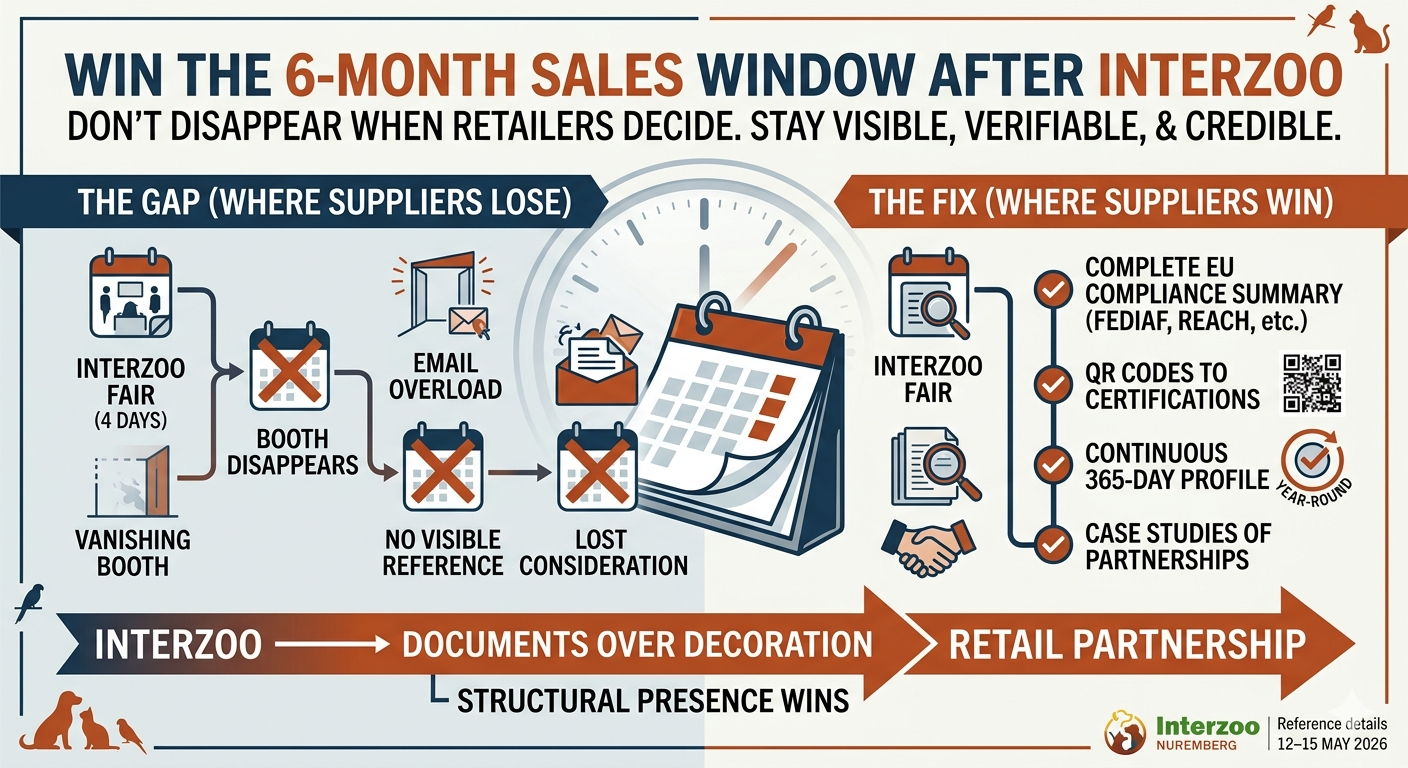
Your booth at Hannover Messe was well-prepared. The team was professional. Conversations felt productive. Then you packed up and flew home. Most exhibitors assume the work ends there. It doesn’t — buyers keep researching, comparing, and deciding long after the fair closes, and few exhibitors stay visible during that window.
Trade fairs create visibility. Continuous presence builds the trust that turns visibility into contracts. This article looks at where international buyers continue evaluating suppliers after a German trade fair ends, and why disappearing from view during that period costs opportunities exhibitors never see.
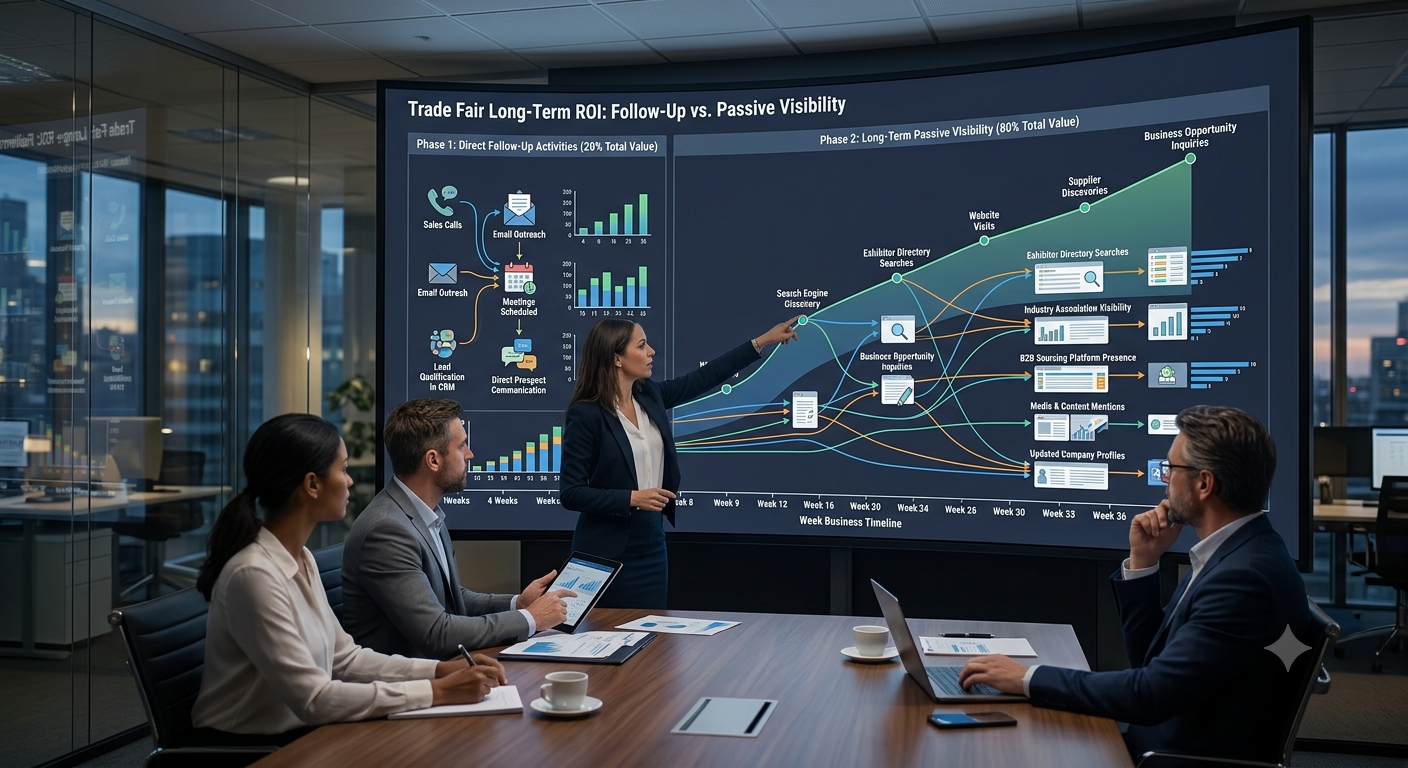
The trade fair is not the destination — it’s the entry point. The real evaluation happens afterward, across directories, association databases, and supplier verification platforms, typically over several weeks to months depending on the industry and deal size.
Quick Self-Check: Are You Still Visible After the Fair?
A few honest questions worth asking after your last exhibition:
- Can international buyers find an updated company profile on German exhibition platforms today?
- Does your directory presence show any activity from the past 30 days?
- Have you published anything — even a short update — since the fair ended?
- Would a buyer find consistent information about your company across every platform where you appear?
- Do you have a permanent presence in this ecosystem, or only a booth that existed for a few days?
If your honest answer to most of these is “no,” it’s worth assuming buyers researching you right now are finding very little — and that a visible competitor is filling that gap.
The Trade Fair Ecosystem — Where Post-Fair Decisions Actually Happen
The German trade fair ecosystem isn’t a single event — it’s an interconnected network of platforms where buyers research, verify, and compare suppliers before making procurement decisions, active well beyond the exhibition days themselves. Most international exhibitors are only active during the 3-5 days of the fair itself; the ecosystem around it keeps running without them.
That ecosystem includes several layers buyers commonly rely on:
| Ecosystem Layer | What Buyers Use It For |
|---|---|
| Exhibition Directories (AUMA, official Messe portals) | Verify legitimacy, check participation history, find contact details |
| Industry Association Databases (VDMA, ZVEI, BDI) | Check membership status, certifications, industry standing |
| B2B Supplier Platforms (BHOWCO, Wer liefert was, IndustryStock) | Search alternatives, compare specifications, read references |
| Digital Show Guides & Apps | Revisit exhibitor information post-fair, schedule follow-ups |
| Procurement Verification Services (Creditreform, Dun & Bradstreet) | Check financial stability, credit standing, legal status |
Germany’s trade fair ecosystem is one of the world’s largest, with hundreds of thousands of international exhibitors and visitors participating annually. This scale underlines how much of the buyer evaluation process is inherently cross-border and ongoing — not limited to the show floor.
Read more in our guide to buyer behavior at trade fairs.
A General Pattern in Post-Fair Buyer Research
Based on how B2B procurement cycles are commonly described across industries — and they vary significantly by sector and deal size — buyer research after a trade fair tends to move through broad phases:
Early weeks — Return to operations. Buyers are back at their desks handling backlog. Active supplier research hasn’t started yet. Sending an aggressive follow-up here often gets ignored.
Following weeks — Initial verification. Buyers start basic checks: does this company still exist online, is anything recent published, is the directory profile current?
Middle stretch — Deeper comparison. Buyers who pass initial checks move to serious comparison — visiting B2B platforms, checking references, comparing specifications against competitors.
Later stretch — Credential verification. Shortlist candidates get checked against association memberships, certifications, and credit standing.
Final stretch — Decision and outreach. Buyers reach out to whichever suppliers remained visible and consistent throughout this window.
Exact timeframes vary by industry — some B2B cycles resolve in weeks, others take many months — but the sequence itself (verification → comparison → validation → outreach) is a useful lens for planning your own post-fair visibility.
For practical guidance on maintaining visibility through this window, read how trade fair visibility works year-round.
Why Directory-Verified Suppliers Tend to Win More Attention
A few reasons continuous, verifiable presence tends to matter more than buyers admit outright:
- Continuous presence signals stability: A supplier with a year-round, active directory presence reads as established. A supplier who only appears during the fair week can read as temporary or opportunistic.
- Third-party verification transfers trust: Platforms that vet their listed suppliers lend some of that credibility to you — buyers don’t have to verify you entirely from scratch.
- Updated profiles signal activity: A profile updated recently reads as an active, engaged supplier; one untouched for years reads as abandoned.
- Consistency reduces perceived risk: Matching information across platforms signals professionalism. Inconsistencies raise questions — sometimes about competence, sometimes about legitimacy.
Building a Permanent Presence, Not Just a Booth
Establishing a lasting position in this ecosystem generally comes down to five practical habits:
1. Permanent Directory Presence — A BHOWCO directory listing gives buyers somewhere to find you during their research window. Keep it updated.
2. Association Membership Visibility — Joining relevant German industry associations (VDMA, ZVEI, BDI, etc.) and displaying that membership signals commitment to the market, not just a one-off appearance.
3. Ongoing Content Presence — Publishing occasional market observations between fairs signals continued engagement, and gives buyers something to find while researching.
4. Consistent Information Across Platforms — Company details should match everywhere — directories, association listings, your own site, social media.
5. Active Participation — Updating profiles, responding to inquiries promptly, keeping certifications current. Being listed is a start; staying active is what actually builds trust.
For more, see how to stay visible between trade fairs and the exhibitor checklist for German trade fairs.
Frequently Asked Questions
Conclusion: The Fair Is the Entrance, Not the Destination
Buyers keep researching, verifying, and comparing suppliers for weeks or months after every major exhibition — the exact window depends on the industry. Most international exhibitors go quiet right after the fair, and rarely learn why buyers stopped responding. Often, the product wasn’t the problem — the absence was.
Permanent directory presence, association visibility, consistent content, and active participation aren’t extras — they’re what keeps a trade fair investment working long after the booth comes down.
Set up a permanent BHOWCO directory listing to stay visible while buyers are still deciding.