

September, 2027
HUSUM Wind
Event Details
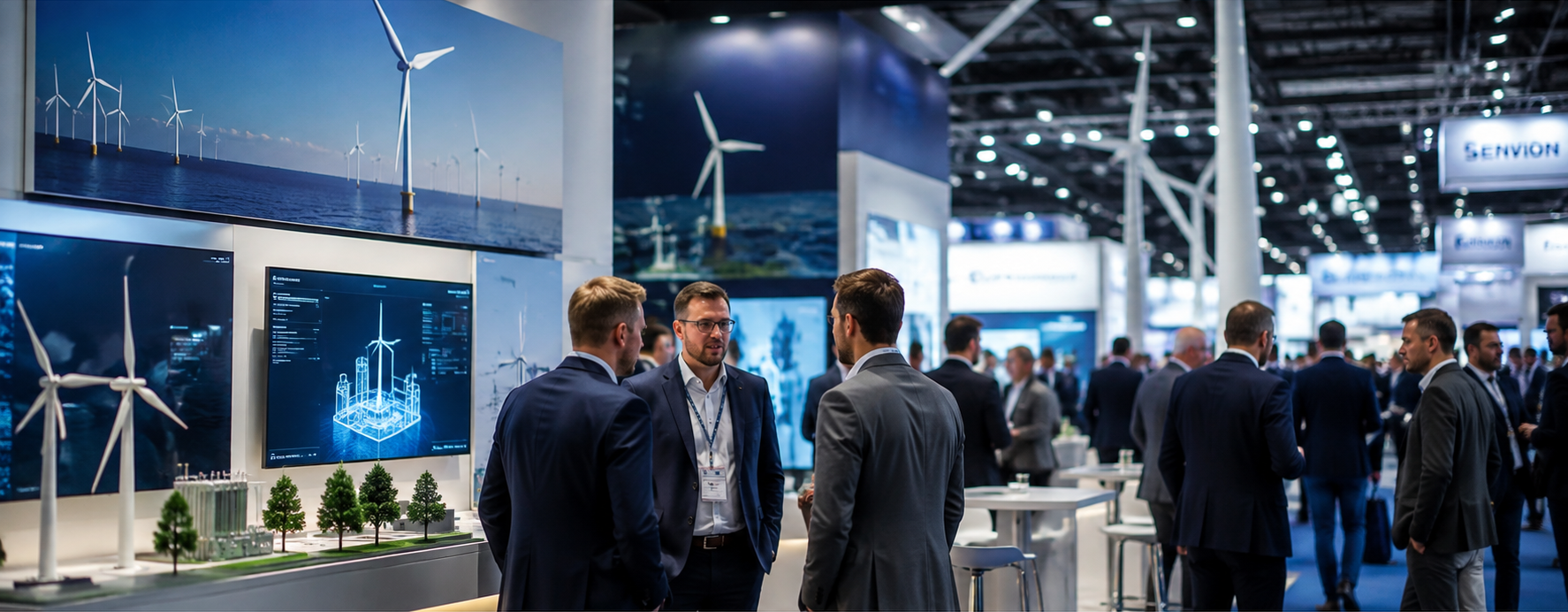
Professional B2B discussions and wind-energy technology presentations at an international trade fair environment.
HUSUM WIND 2027
Wind-project decisions require more than comparing turbine specifications. Development, operations,  grid integration, storage, maintenance, financing, and long-term asset performance must often be considered as parts of the same project environment. HUSUM WIND 2027 is relevant to professionals who need to examine these connected areas within the wind-energy sector.
Why This Trade Fair Matters
For professionals with active wind-energy projects, HUSUM WIND creates an opportunity to compare how different suppliers address development, repowering, grid integration, operations, and long-term asset performance. Visitors can examine whether technologies and service models fit the technical and commercial requirements of new projects or existing wind assets. For companies monitoring the sector, the exhibition also provides a concentrated view of how current offerings respond to operational and energy-system challenges.
Source: HUSUM WIND Official Website — HUSUM WIND | Start
Exhibition Background & Industry Context
HUSUM WIND reflects the transition of wind energy from an equipment-focused sector into a broader project and asset ecosystem. Its scope includes onshore and offshore wind, digitalisation, repowering, recycling, and financial services, allowing visitors to examine both new-project requirements and the long-term operation of existing wind assets.
Source: HUSUM WIND Official Website — HUSUM WIND | Start
Is This Trade Fair Right for You?
Relevance depends on your role within the wind-energy ecosystem and whether your work involves project development, component supply, asset operations, grid integration, storage, hydrogen, financing, or related technical services.
Ideal For
Professionals likely to find the event relevant include:
- Wind-farm developers and project owners
- Operations and maintenance (O&M) and asset-performance teams
- Turbine and component procurement specialists
- Grid, storage, and hydrogen-integration professionals
- Repowering and lifecycle-extension project stakeholders
- Project-finance and insurance specialists
- Technical consultants and service providers
These professionals can assess technologies, compare service models, and examine how different solutions address operational, financial, and integration challenges.
May Not Be Suitable For
HUSUM WIND may be less suitable for professionals seeking broad coverage of solar, building-energy, or consumer-energy technologies without a direct connection to wind projects. It may also offer limited value to visitors whose priority is finished consumer products rather than project development, technical systems, asset operation, or energy infrastructure.
Industries & Business Areas Represented
- Wind-project development and operation
- Turbine and component manufacturing
- Asset management and maintenance
- Grid and energy-system services
- Project finance and technical consulting
These business areas connect the technical, operational, and financial requirements involved in developing, operating, maintaining, and upgrading wind-energy assets.
Source: HUSUM WIND Official Website — HUSUM WIND | Start
Products & Solutions You Can Explore
Product and solution areas presented by the organiser include:
- Wind-energy plants and components
- Operation and maintenance services
- Planning and project-development services
- Digital technologies for wind-energy applications
- Energy-storage and sector-coupling solutions
- Hydrogen technologies and services
- Repowering and recycling solutions
- Financing and insurance services
Source: HUSUM WIND Official Website — HUSUM WIND | Start
Business Opportunities
- Compare turbine, component, and O&M providers against operating references, component availability, service coverage, and maintenance requirements for new or repowering projects
- Assess monitoring tools intended to improve turbine availability and maintenance planning
- Identify development, engineering, grid-connection, financing, and operations partners for wind projects or repowering programmes
- Assess whether storage, sector-coupling, or hydrogen approaches fit the technical configuration and commercial objectives of specific wind-energy projects
- Examine how financing and insurance conditions affect new wind projects, repowering programmes, and operational risk
How to Prepare for a Productive Visit
- Define your project or operational priorities: Identify whether your focus is on new development, repowering, asset performance, storage, hydrogen, or energy-market participation.
- Build a comparison framework: Define the technical, operational, and commercial criteria you will use to compare each supplier category.
- Divide the exhibitor landscape by your priorities: Before the event, group companies by technology area, service type, project phase, and operational relevance to structure your visit.
- For turbine and component suppliers: Compare operating references, reliability evidence, serviceability, and component availability.
- For digital platforms: Examine data integration, cybersecurity, interoperability, and reporting capabilities.
- For storage providers: Assess system compatibility, control architecture, and project application.
- Plan meetings across the project chain: Prioritise discussions with technology providers, O&M partners, grid specialists, financiers, and technical advisors relevant to the same project or asset portfolio.
Review the organiser’s current exhibitor directory and group relevant companies by technology area, service type, or business objective before planning meetings.
Exhibitor Perspective
Wind-energy suppliers should be prepared for questions about reliability, service capability, project references, supply continuity, and lifecycle support alongside technical performance. Exhibitors should not assume that complex technical, financial, or project evaluations will be completed during the event. Their role is to provide enough evidence and clarity for discussions to continue after the exhibition.
For a deeper exhibitor perspective, explore the HUSUM WIND strategic exhibitor guide and examine how suppliers can maintain professional presence while developers, operators, and project partners continue evaluating alternatives.
Continue Your Research
Whether your next step involves comparing wind-energy events, preparing technical supplier discussions, or planning an exhibition presence, these resources support a more structured decision.
When comparing renewable-energy events, use our guide to choose the right wind-energy trade fair for your priorities.
Understanding how German industrial buyers evaluate suppliers can help you prepare more focused conversations during technical exhibitions.
Companies considering participation can use this checklist to prepare for a German wind-energy exhibition, including evidence planning, meeting preparation, and structured follow-up.
At HUSUM WIND, a productive visit depends on comparing lifecycle evidence, service capability, asset-performance requirements, and project relevance across the wind-energy ecosystem.
