Latest Insights
Why Post-Exhibition Follow-Up Is Critical for B2B Sales


Why Post-Exhibition Follow-Up Is Critical for B2B Sales
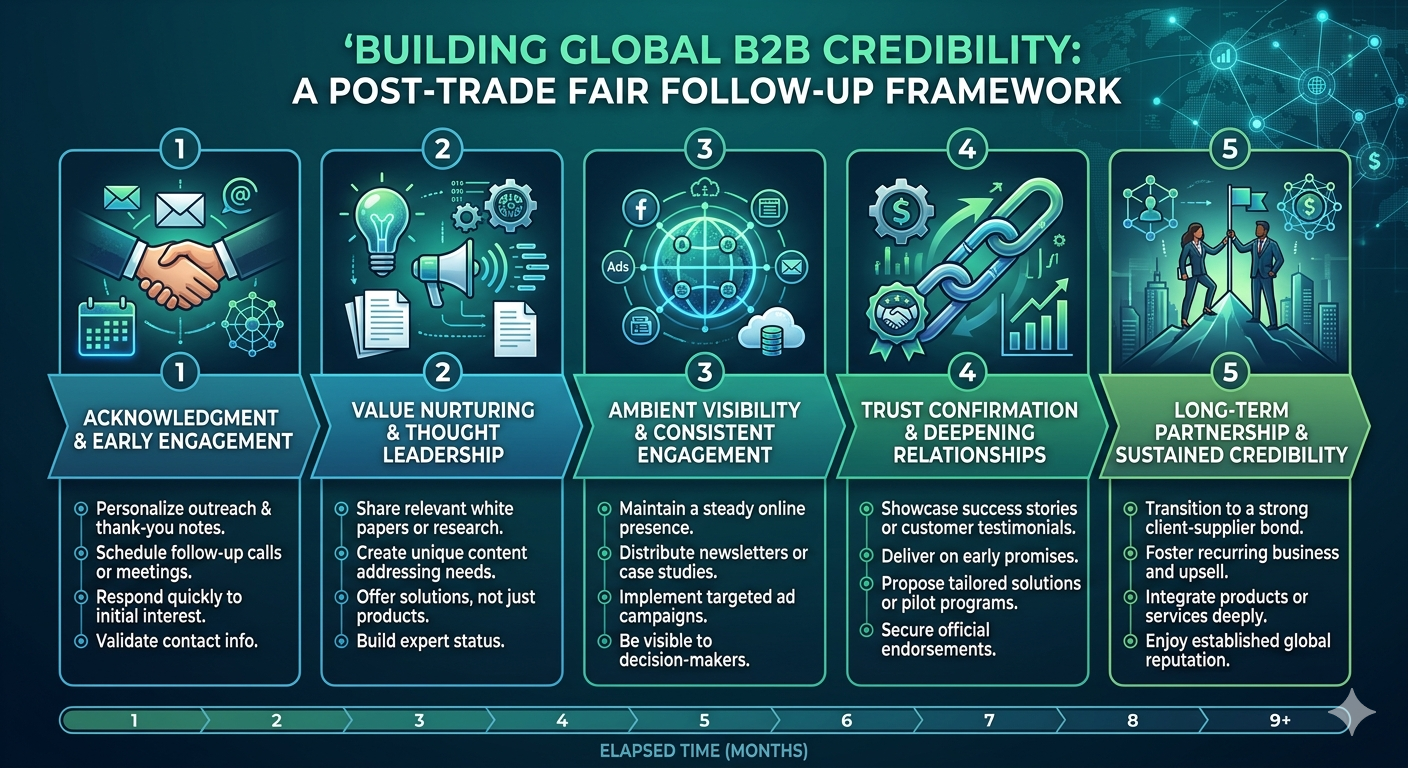
You invested in the booth. You paid for travel and logistics. Your team spent days talking to potential buyers. Then the exhibition ended — and so did your momentum. Without structured post-exhibition follow-up, most of that investment quietly evaporates. Trade fairs create visibility. Continuous presence creates international trust and long-term business opportunities. This article explains why post-exhibition follow-up is critical for B2B sales and how to structure it for real results.
Here’s a reality that experienced B2B exporters learn quickly: the trade fair doesn’t close deals. What happens in the weeks and months after the trade fair closes deals. The booth gets attention. The follow-up converts attention into revenue. Without the second, the first is just expensive brand awareness.
Quick Reality Check: Is Your Post-Exhibition Follow-Up Working?
Answer these questions about your current approach:
- ☐ Do you have a structured follow-up process that extends beyond 30 days? (Yes/No)
- ☐ Do you customize follow-up messages based on conversation quality? (Yes/No)
- ☐ Do you track which follow-up activities actually lead to conversations? (Yes/No)
- ☐ Do you have visibility touchpoints between your follow-up messages? (Yes/No)
- ☐ Do you know the typical procurement timeline for your target buyers? (Yes/No)
If you answered “No” to three or more questions, your post-exhibition follow-up is likely leaving significant revenue on the table.
The Cost of Weak Post-Exhibition Follow-Up
The math is straightforward but rarely calculated. Consider a typical international exhibitor investing a significant amount in a European trade fair — booth, travel, materials, and team time. They generate many quality leads. Without structured follow-up, what happens to those leads?
Weeks 1-2: A generic “nice to meet you” email goes out. Maybe a brochure attachment. Most buyers delete it or ignore it. They’re busy clearing post-event work.
Weeks 3-4: A second email. Sometimes a call. No response. The team gets discouraged.
Weeks 6-8: Follow-up stops entirely. The leads sit in the CRM, marked “cold.” The exhibition is written off as low ROI.
The exhibition wasn’t the problem. The follow-up was. The buyers didn’t disappear. The exhibitor’s visibility did.
A recurring pattern across European procurement is that buyers consistently evaluate follow-up quality as a signal of supplier reliability. Poor follow-up suggests poor operations. Good follow-up signals professionalism and commitment.
For a deeper understanding of how buyers behave during this period, read this guide to buyer behavior at trade fairs.
Why B2B Follow-Up Is Different from B2C
Consumer follow-up is fast. Buy now. Limited time. Discount ends tomorrow. B2B follow-up doesn’t work that way, and trying to make it work that way is a common mistake.
B2B procurement involves multiple decision-makers, longer evaluation cycles, and higher stakes. A single purchase order might require approval from engineering, purchasing, compliance, and finance. Each department has its own timeline. None of them respond well to aggressive sales pressure.
Effective post-exhibition follow-up for B2B sales respects this reality. It doesn’t demand immediate decisions. It provides value, maintains visibility, and stays present during the long, quiet evaluation period. When the internal consensus finally forms, the supplier who remained visible gets the call.
This is why post-exhibition follow-up is not a campaign. It’s a system. And systems need infrastructure.
The Three Layers of Effective Post-Exhibition Follow-Up
Based on observation of successful B2B exhibitors, effective follow-up has three distinct layers. Most exhibitors only have the first layer. Some have the first two. Very few have all three.
Layer 1: Direct Communication (What Most Exhibitors Do)
This is the obvious layer: emails, phone calls, and messages sent directly to buyers. It’s necessary but insufficient on its own. Direct communication fails when buyers don’t respond — which they often don’t during evaluation. A buyer who ignores your emails can still be influenced by the other two layers.
Best practice: Schedule multiple direct touchpoints over an extended period. Remove sales pressure. Provide value. Reference specific conversation details when possible.
Layer 2: Ambient Visibility (What Few Exhibitors Do)
This layer works when buyers are silently evaluating but not replying to emails. It includes updated directory profiles, recent content, and consistent online presence. Buyers see this layer even when they ignore your direct messages. It builds trust without requiring engagement.
Best practice: Maintain a permanent directory listing that you update monthly. Publish short market observations every 30-45 days. Ensure your company appears active and engaged year-round.
Layer 3: Findability Infrastructure (What Almost No Exhibitors Have)
This is the foundational layer that makes the other two possible. It’s the permanent, discoverable presence that ensures buyers can find you when they’re ready — even if you’ve stopped actively reaching out. A directory listing that works year-round. Profiles that remain updated. Information that stays consistent across platforms.
Best practice: Build your findability infrastructure before your next trade fair. See how year-round visibility creates findability.
For practical guidance on maintaining visibility between exhibitions, see how trade fair visibility works year-round.
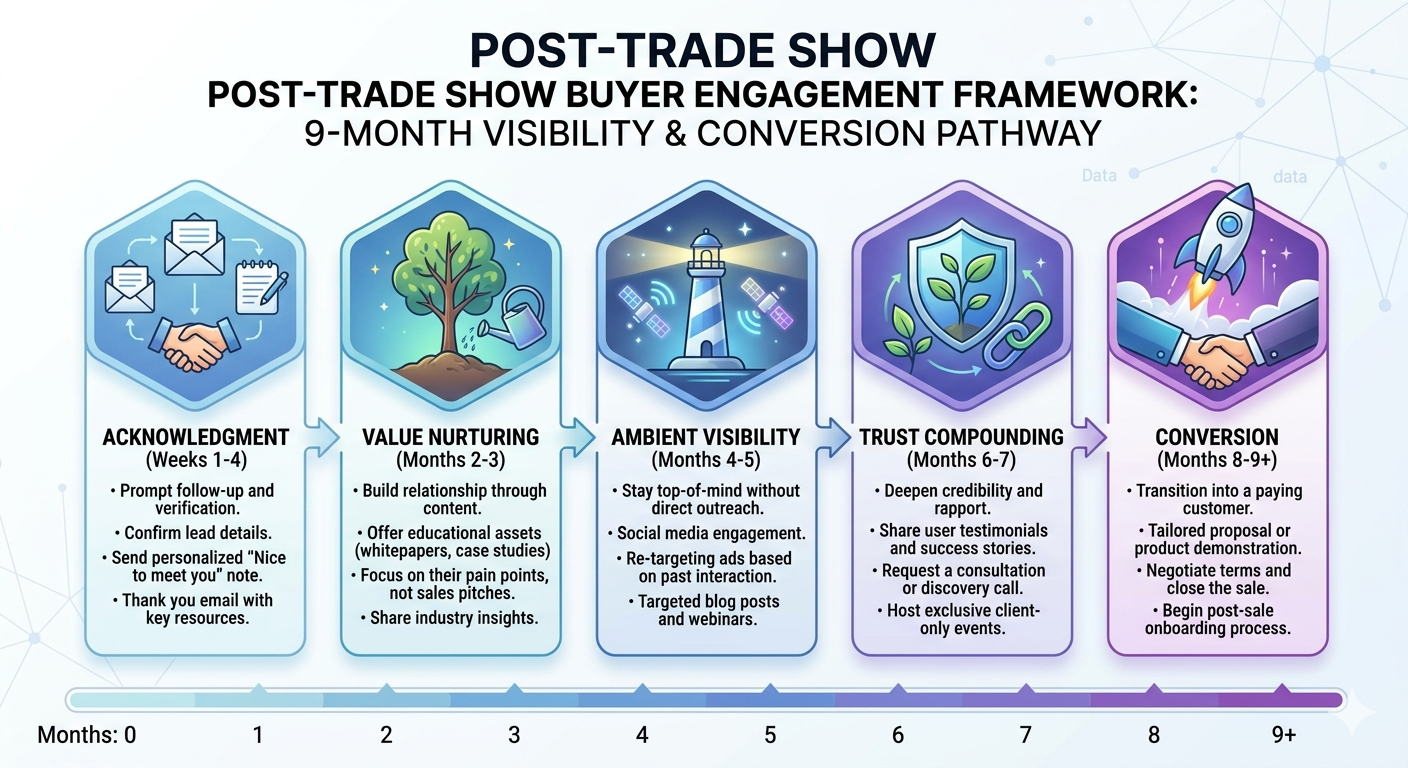
The Post-Exhibition Follow-Up Timeline That Works
Based on observation of successful B2B follow-up sequences across multiple industries, here is a timeline that consistently performs better than average.
Days 1-4: The Acknowledgment
Brief, personalized, no attachments. “Great meeting you. Here’s where you can find our information when you’re ready.” That’s it. This message exists to establish that you listened and to provide a low-pressure way to stay connected.
Days 10-14: The Value Message
Share something genuinely useful related to your conversation. A trend observation. A relevant case study. A tool that solves a problem they mentioned. No request. No meeting ask. Just value.
Days 25-35: The Context Update
Briefly reference the trade fair conversation and share how your thinking has evolved since then. “You mentioned X. Since the trade fair, we’ve been seeing Y. Thought you’d find this relevant.”
Days 50-70: The Silent Reactivation
By this point, buyers who were going to respond probably have. For those still silent, shift your message. “No need to reply. Just letting you know we’re still active in the market. Our updated profile is here when your team reaches evaluation stage.”
Days 90-120: The Long-Term Check-In
One final message for buyers in long procurement cycles. “Following up from our conversation at [trade fair]. If your timeline has shifted, we understand. We’ll continue maintaining our market presence. Feel free to reach out when the timing works better.”
Before your next exhibition, ensure you’ve completed all preparation steps with the exhibitor checklist for trade fairs.
What to Measure in Post-Exhibition Follow-Up
Most exhibitors measure the wrong things. Email open rates don’t predict revenue. Click-through rates don’t measure trust. Here are three metrics that actually matter for B2B follow-up.
Inbound inquiry rate from trade fair leads: How many leads eventually contact you without you chasing them? This measures whether your visibility infrastructure is working.
Profile view data on directory listings: Are buyers finding your profile during the evaluation window? This tells you whether you’re discoverable when it matters.
Response pattern over time: Do responses cluster around specific weeks? This reveals your buyers’ actual procurement timeline and helps you optimize future follow-up.
For help selecting which trade fairs deserve your follow-up investment, read how to choose the right trade fair for your strategy.
Frequently Asked Questions
How many follow-up messages should I send after a trade fair?
Aim for multiple direct messages over an extended period. The first within days, then spacing them out progressively. Between direct messages, maintain ambient visibility through directory profiles and content so buyers see you even when they don’t reply to emails.
What’s the biggest mistake in post-exhibition follow-up?
Stopping follow-up after a few attempts. Many B2B buyers evaluate over an extended period. If you stop early, you disappear exactly when buyers are starting to make decisions. The solution is not more aggressive messaging — it’s longer patience and continuous visibility between messages.
Should I call trade fair leads or just email?
For cross-border B2B, email typically works better for early follow-up. Phone calls can feel intrusive during early evaluation. Later, a single call may work for leads that showed strong intent. But never rely on calls alone — your visibility infrastructure should work without requiring buyer replies.
How do I follow up with leads who never responded?
Don’t chase harder. Shift your strategy. Send messages that explicitly say “no need to reply.” Focus on being visible through directory profiles and content rather than demanding engagement. Many silent leads become customers months later — not because of a great email, but because the supplier remained findable.
How does BHOWCO help with post-exhibition follow-up?
BHOWCO provides the ambient visibility layer that works between your direct follow-up messages. When buyers silently evaluate and ignore emails, your updated BHOWCO profile ensures they still find recent activity and current information. See how BHOWCO strengthens your follow-up strategy.
- How many follow-ups? – Multiple messages over time, plus ambient visibility.
- Biggest mistake? – Stopping too early.
- Should I call? – Email works better early. Calls later for strong leads.
- How to follow up silent leads? – Shift to passive visibility.
- How does BHOWCO help? – Ambient visibility between messages.
Conclusion: Follow-Up Is Where Investment Turns Into Revenue
Post-exhibition follow-up is not an administrative task to complete after the real work of exhibiting. It is the real work. The trade fair creates attention. Follow-up converts attention into trust. Trust converts into revenue. Skip any step, and the investment weakens.
Trade fairs create visibility. Continuous presence creates international trust and long-term business opportunities. Your post-exhibition follow-up strategy should reflect this reality: patient, value-driven, and backed by permanent discoverability. The exhibitors who win long-term B2B sales are not the ones with the best booths. They are the ones who remain visible through the entire procurement cycle — including the long, quiet weeks when nothing seems to be happening.
Build your follow-up infrastructure with a permanent BHOWCO directory listing