Latest Insights
How Long Does European B2B Procurement Take After Trade Fairs


How Long Does European B2B Procurement Take After Trade Fairs
You met buyers at the exhibition. Weeks passed. No response. You started wondering if something went wrong. Nothing went wrong. You simply underestimated how long European B2B procurement actually takes. Trade fairs create visibility. Continuous presence creates international trust and long-term business opportunities. This article explains how long European B2B procurement takes after trade fairs — and why patience paired with continuous visibility is the only strategy that works.
Here’s a truth that experienced international exporters learn the hard way: European procurement teams are not slow. They are thorough. A purchase order that takes months is not delayed. It is following a normal timeline. Exhibitors who understand this build systems that last. Exhibitors who fight this timeline burn out and blame the market.
Quick Reality Check: Is Your Timeline Aligned With European Procurement?
Answer these questions honestly:
- ☐ Do you expect decisions within weeks after a trade fair? (Yes/No)
- ☐ Do you stop follow-up after a short period of no response? (Yes/No)
- ☐ Do you know the typical procurement cycle for your specific industry? (Yes/No)
- ☐ Does your visibility plan extend months after the trade fair? (Yes/No)
- ☐ Have you mapped the decision-makers involved in your typical sale? (Yes/No)
If you answered “Yes” to the first two questions and “No” to the last three, your expectations are misaligned with European B2B reality. This misalignment is expensive.
The Real Timeline: What Observation Shows
Based on observation of hundreds of cross-border B2B transactions following trade fair participation, European procurement follows a predictable but lengthy pattern. The timeline varies by industry, company size, and purchase complexity. But the general shape is consistent.
Simple Purchases (Existing suppliers, standard products, low risk): Typically measured in weeks to a few months
Standard Purchases (New suppliers, configured products, medium risk): Often extends over several months
Complex Purchases (New categories, custom solutions, high risk): Can take many months or longer
Strategic Partnerships (Long-term agreements, joint development): Often extends to a year or more
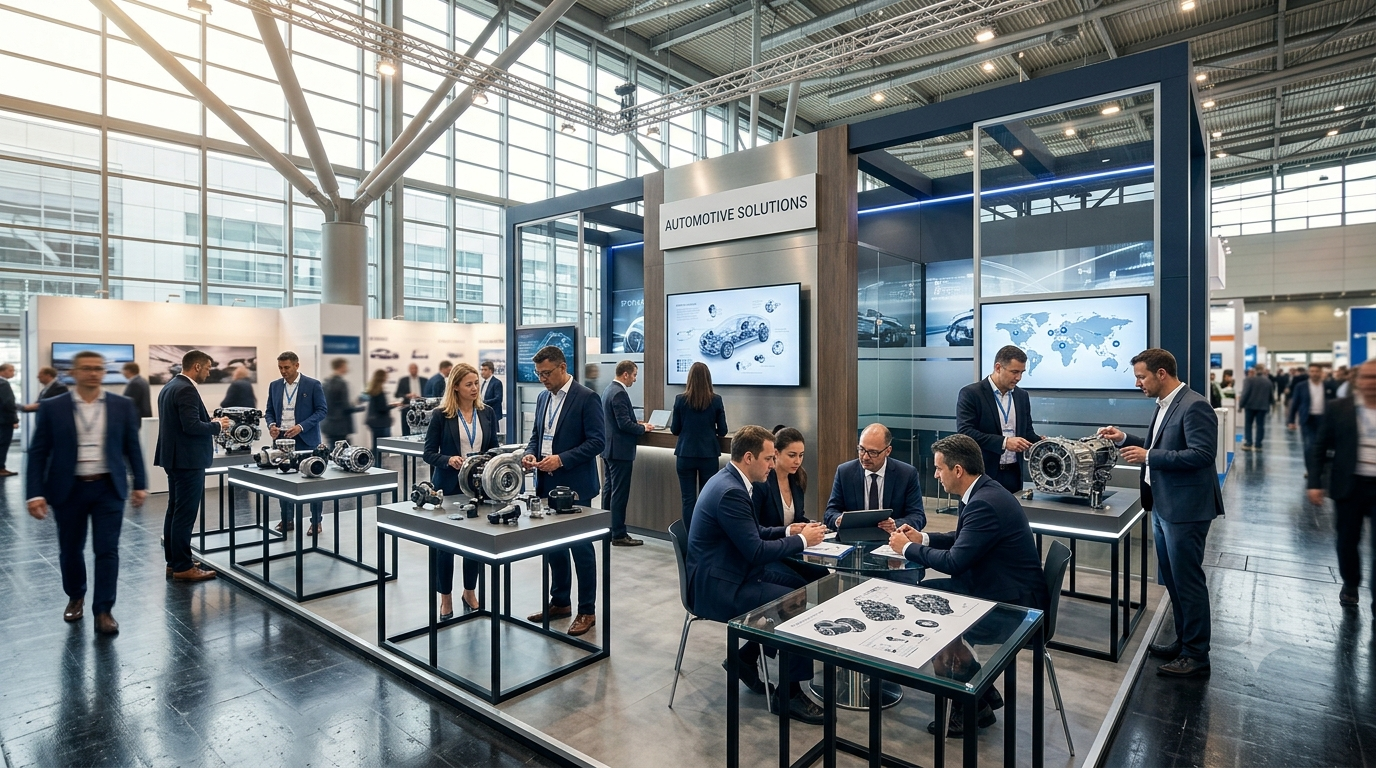
A recurring pattern across European procurement is that buyers attend trade fairs to identify potential suppliers for future procurement cycles — not immediate needs. The buyer you met at the trade fair may be planning for a contract that starts many months later. Your follow-up timeline should reflect this reality.
For a deeper understanding of how buyers behave during this period, read this guide to buyer behavior at trade fairs.
Why European B2B Procurement Takes Longer
International exhibitors from faster-paced markets often struggle with European timelines. The frustration is understandable. But the timeline is not broken. It is different. Here is why.
Multiple decision-makers: European B2B purchases typically involve engineering, procurement, quality, compliance, and finance. Each department has its own review process. Each review takes time. Coordination between departments adds more time.
Risk aversion: European companies prioritize supplier reliability over speed. A slower decision that avoids problems is preferred over a faster decision that introduces risk. Thorough verification is valued. Shortcuts are viewed with suspicion.
Budget cycles: Many European companies operate on annual or semi-annual budget cycles. A trade fair conversation may align with budget planning for the next fiscal year. The buyer is interested. The money is not available yet.
Silent evaluation: European procurement teams rarely provide status updates during evaluation. They do not send “still thinking” emails. They evaluate silently, often for months, then reach out when ready. Exhibitors who mistake silence for rejection stop visibility exactly when patience would have paid off.
For practical guidance on maintaining visibility through these long cycles, see how trade fair visibility works year-round.
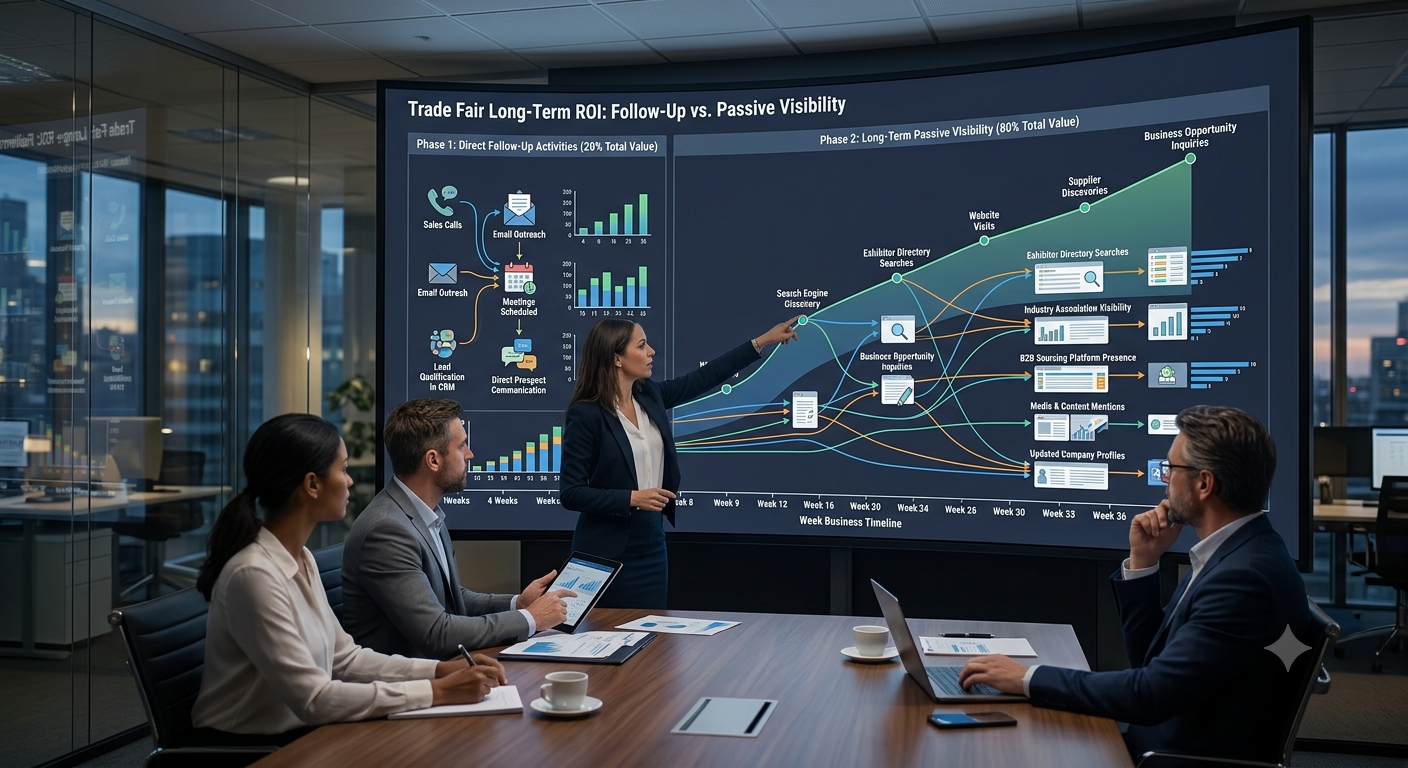
The Week-by-Week Reality of European B2B Procurement
Based on observation, here is what actually happens inside European procurement teams after a trade fair. This is not theory. This is observable pattern.
Weeks 1-4: Post-Event Catch-Up
Buyers return to offices with backlogs. Trade fair notes sit untouched. No evaluation happens. This is not rejection. This is reality. Exhibitors who panic and send aggressive follow-up during this window appear desperate, not professional.
Weeks 5-10: Initial Sorting
Buyers begin reviewing notes and scanning badges. They identify a portion of exhibitors as “potential.” The rest are archived. Your initial follow-up quality influences whether you make the potential list. But even if you make the list, no decisions happen yet.
Weeks 11-16: First Verification
Buyers check online presence. They look for updated directory profiles, recent activity, and consistent information. Exhibitors who disappeared early are removed from consideration at this stage. Exhibitors with strong visibility advance.
Weeks 17-24: Internal Alignment
Buyers who advanced begin internal discussions. Engineering reviews specifications. Procurement checks commercial terms. Compliance verifies certifications. This internal process is invisible to suppliers but critical. No amount of follow-up emails speeds it up.
Weeks 25-36: Decision or Deferral
Some buyers make decisions. Others defer to next budget cycle. The key insight: exhibitors who remained visible throughout this entire timeline win the decisions. Exhibitors who disappeared early are forgotten.
Before your next trade fair, ensure you’ve completed all preparation steps with the exhibitor checklist for trade fairs.
What This Timeline Means for Your Follow-Up Strategy
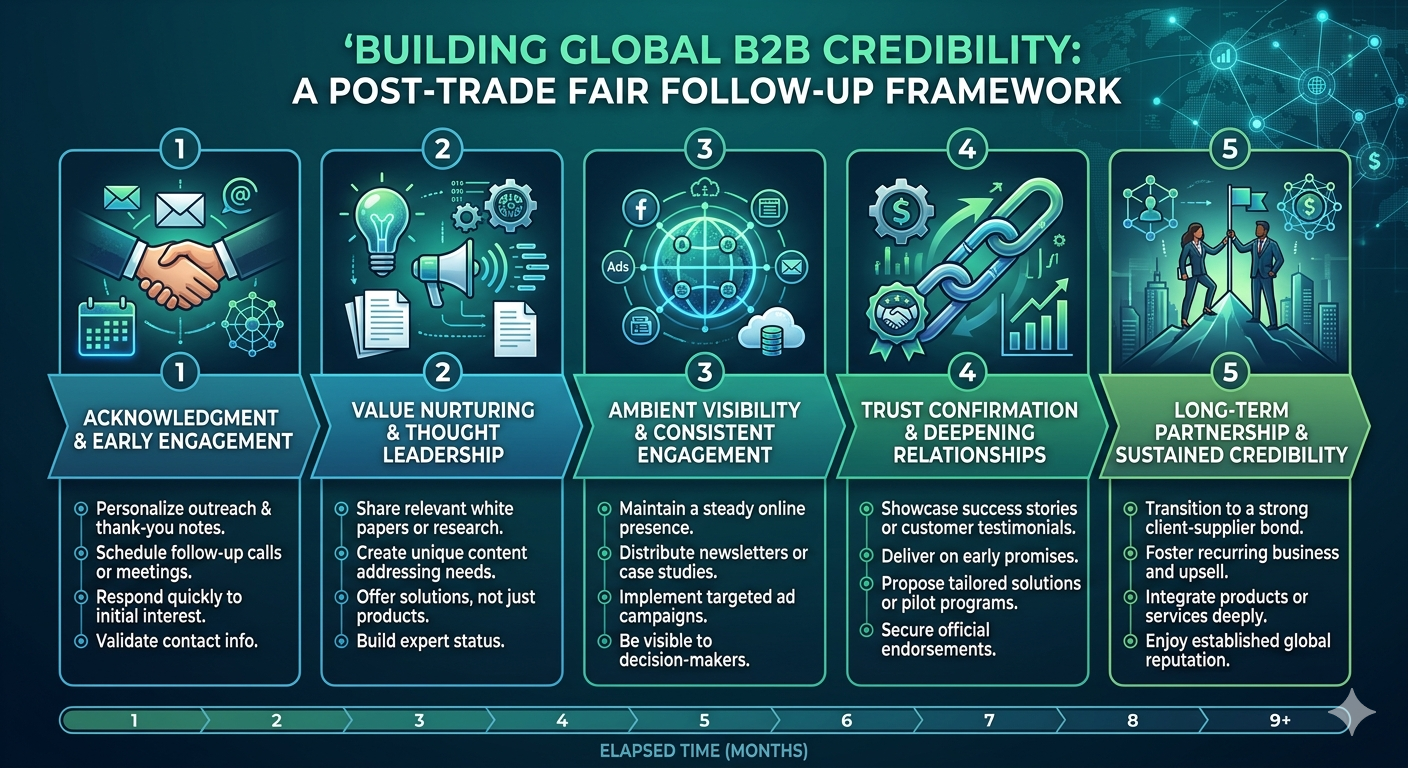
If European B2B procurement takes months, your follow-up strategy must match this timeline. Here is what changes when you align with reality.
You stop expecting quick responses. No response at week 2 is normal. No response at week 8 is normal. No response at week 16 is still normal for complex purchases. Panic is not a strategy. Patience is.
You extend your follow-up window. Not days. Not weeks. Months of structured, patient visibility. Direct messages at appropriate intervals. Ambient visibility through directory profiles continuously.
You focus on discoverability, not just outreach. When buyers finally enter active evaluation, they search. Your permanent directory listing ensures they find updated information. Without this, even perfect follow-up fails.
You stop interpreting silence as rejection. Silence during early weeks is not rejection. It is evaluation happening internally. The buyer hasn’t said no. They simply aren’t ready to say yes. Your job is to remain visible until they are ready.
For help selecting which trade fairs attract buyers with realistic timelines, read how to choose the right trade fair for your strategy.
The Cost of Impatience
Exhibitors who cannot tolerate European procurement timelines make expensive mistakes. They stop follow-up early. They assume the trade fair failed. They skip the next exhibition cycle. Meanwhile, their competitors who remained visible win contracts from the same leads.
The trade fair didn’t fail. The timeline was normal. The exhibitor’s patience failed.
European B2B procurement is not broken. It is different. Exhibitors who accept this difference build systems that work within it. Exhibitors who fight it waste exhibition investments and blame the market.
Frequently Asked Questions
Is it normal to hear nothing for months after a European trade fair?
Yes, completely normal for complex B2B purchases. European procurement teams evaluate silently. They rarely provide status updates. No response does not mean rejection. It often means internal evaluation is still happening. Exhibitors who remain visible during this silence are the ones who get calls when evaluation completes.
How can I speed up European B2B procurement after a trade fair?
You cannot meaningfully speed up established procurement processes. Attempts to rush often backfire, signaling desperation or lack of professionalism. The best strategy is accepting the timeline and ensuring you remain visible throughout. Speed is not a competitive advantage in European B2B. Reliability is.
Does industry affect European B2B procurement timelines?
Yes significantly. Automotive and industrial equipment often take longer. Consumer goods may be shorter. Medical devices and pharmaceuticals can take extended periods due to regulatory requirements. Research your specific industry’s typical timeline before planning follow-up.
How do I know if silence means rejection or just evaluation?
You cannot know for certain. The professional approach is assuming evaluation until proven otherwise. Continue maintaining visibility through directory profiles and occasional value messages. If a buyer has truly rejected you, continued professional visibility causes no harm. If they are still evaluating, visibility keeps you in consideration.
Should I exhibit every year to stay visible during long procurement cycles?
Not necessarily. Annual exhibition participation is expensive. Many successful international exhibitors maintain year-round visibility through permanent directory listings and content, then exhibit periodically. The key is continuous presence — not continuous exhibition spending. Directory visibility fills the gaps between exhibitions.
How does BHOWCO help with long European B2B procurement cycles?
BHOWCO provides permanent directory visibility that lasts the entire procurement cycle — months or longer. When buyers finally enter active evaluation, your updated BHOWCO profile ensures they find recent activity and current information. See how BHOWCO supports long procurement timelines.
- Is silence normal? – Yes, for complex B2B purchases.
- Can I speed up procurement? – No. Accept the timeline.
- Does industry affect timeline? – Yes significantly.
- How to know if silence means rejection? – Assume evaluation.
- Should I exhibit every year? – Not necessarily. Directory visibility fills gaps.
- How does BHOWCO help? – Permanent visibility for long procurement cycles.
Conclusion: Patience Is Not Passive
European B2B procurement takes time. Simple purchases take weeks to months. Complex purchases take many months. Strategic partnerships can take a year or more. This timeline is not broken. It is how serious buyers protect their organizations from risk.
Trade fairs create visibility. Continuous presence creates international trust and long-term business opportunities. The exhibitors who win European contracts are not the ones who rush. They are the ones who accept the timeline, build systems that last, and remain visible through the long, quiet months of silent evaluation.
BHOWCO exists to provide that continuous presence. Your permanent directory listing works while procurement teams evaluate, while budgets align, and while decisions slowly take shape.