Latest Insights
Why Buyers Revisit Exhibitor Websites After Trade Fairs


Why Buyers Revisit Exhibitor Websites After Trade Fairs
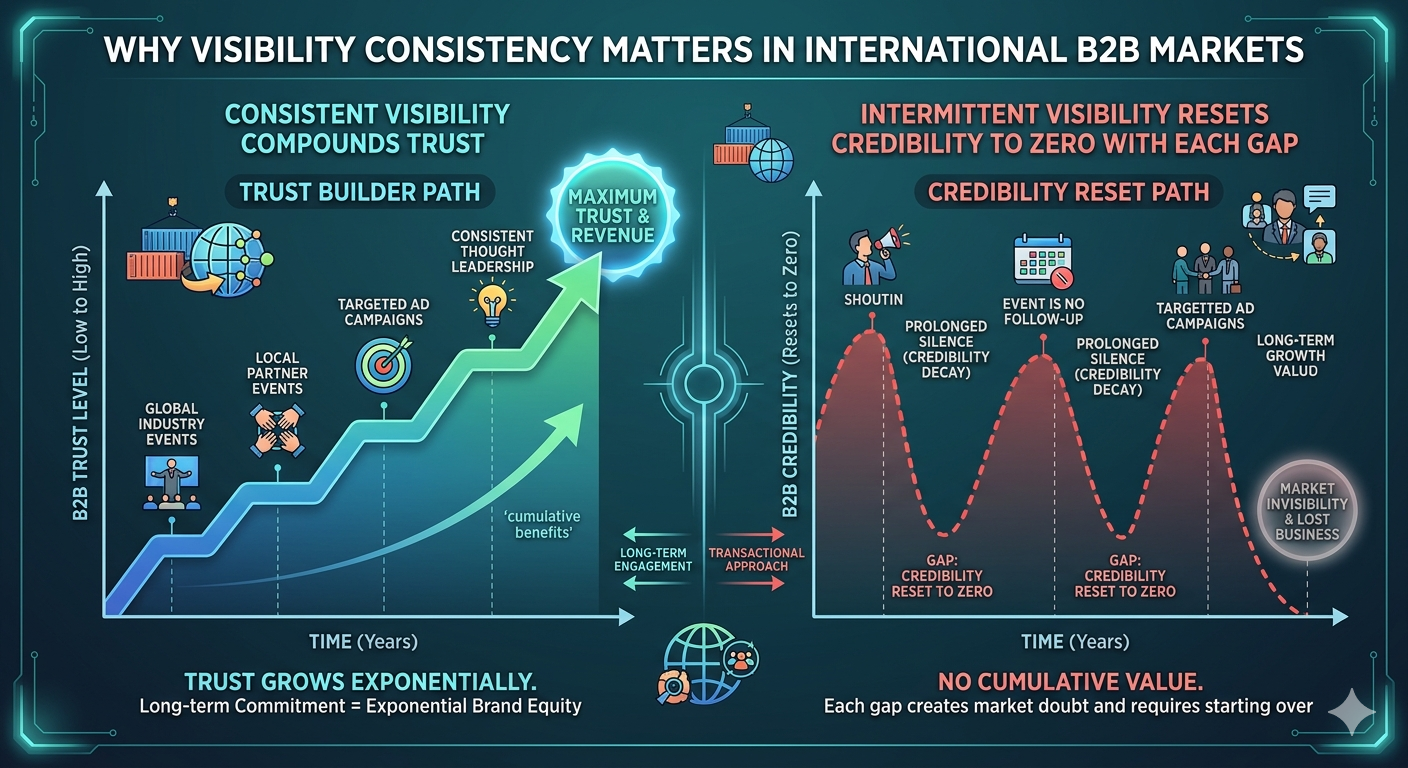
You met a buyer at a trade fair. The conversation was good. They scanned your badge or took your brochure. Then they went back to their office. What did they do next? In most cases, they visited your website. Exhibitor websites are a primary post-trade fair resource — buyers go to your website to verify, validate, and decide. Trade fairs create visibility. Continuous presence creates international trust and long-term business opportunities. This article explains why buyers revisit exhibitor websites after trade fairs and what your website must have to convert those visits into contracts.
Here is a truth that experienced international exporters learn over time: your website is not a brochure. It is your most important post-trade fair sales tool. Buyers visit it multiple times during their evaluation window. Each visit is an opportunity to build trust or lose it. Many exhibitor websites are not prepared for these visits.
Quick Website Audit: Is Your Site Ready for Post-Trade Fair Visitors?
Answer these questions from a buyer’s perspective:
- ☐ Is your website updated with information from the current year? (Yes/No)
- ☐ Can buyers find European client references or case studies? (Yes/No)
- ☐ Is your contact information clear and includes local market details? (Yes/No)
- ☐ Does your site load quickly and work well on mobile devices? (Yes/No)
- ☐ Is there evidence of recent activity (news, insights, updates) from the past 60 days? (Yes/No)
Each “No” is a reason for buyers to eliminate you from consideration. Each “Yes” keeps you in the running.
The Post-Trade Fair Website Visit Pattern
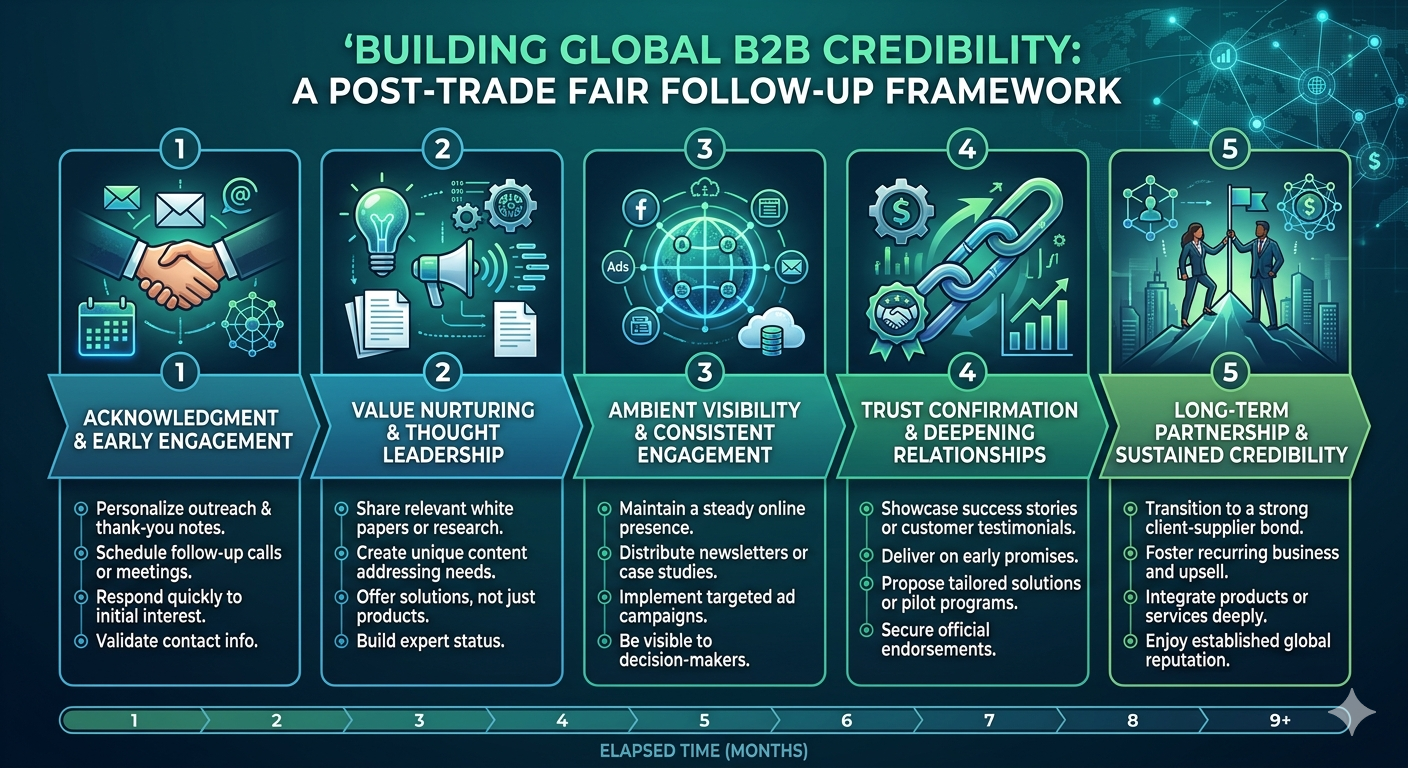
Based on observation of buyer behavior across multiple industries, the post-trade fair website visit pattern follows a predictable sequence. Understanding this pattern helps you prepare your site for each phase.
First Visit (Days 1-7): Quick verification. The buyer checks that your website exists, looks professional, and matches the memory of your booth. This visit is typically brief. If the site looks outdated or unprofessional, the buyer may eliminate you immediately.
Second Visit (Weeks 2-4): Deeper exploration. The buyer reads product pages, checks specifications, and looks for European client references. If information is missing or hard to find, the buyer may move to competitors.
Third Visit (Weeks 6-12): Verification of ongoing presence. The buyer checks for recent updates, news, or insights. They want to know if your company is still active in their market. If the last update was before the trade fair, they may assume you are not serious.
Fourth Visit (Weeks 12-24): Final decision preparation. The buyer downloads specifications, reviews case studies, and checks contact information. If everything is available and current, you advance to shortlist. If not, you may be eliminated.
A recurring pattern across international trade fairs is that buyers consistently visit exhibitor websites multiple times during the post-fair evaluation window. Your website is not a static brochure. It is a dynamic trust-building tool that works while you sleep.
For a deeper understanding of how buyers behave during this window, read this guide to buyer behavior at trade fairs.
Why Buyers Revisit Exhibitor Websites (The 5 Reasons)
Based on observation and procurement interviews, here are five specific reasons buyers revisit exhibitor websites after trade fairs:
1. Credibility Verification: The buyer wants to confirm that your company is legitimate, professional, and capable. They look for: professional design, clear contact information, European client references, case studies, and certifications. Missing any of these creates doubt.
2. Specification Checking: The buyer needs technical details they did not collect at the booth. They look for: product specifications, technical drawings, compliance documentation, and installation requirements. If this information is not easily accessible, they may move to a competitor who provides it.
3. Update Monitoring: The buyer wants to see if your company is actively engaged in their market. They look for: recent news, market insights, new product announcements, and post-trade fair updates. Outdated information suggests your company is not serious about the European market.
4. Competitor Comparison: The buyer is comparing you against other suppliers. They look for: unique selling propositions, differentiators, pricing indications, and value-added services. Your website must make comparison easy and favorable.
5. Team and Support Evaluation: The buyer wants to know who they will work with. They look for: team profiles, local support contacts, service response commitments, and after-sales support information. Anonymous websites often lose to those with visible teams.
What Your Exhibitor Website Must Have After a Trade Fair
To convert post-trade fair visits into contracts, your exhibitor website must have specific content. Based on observation of successful international exhibitors, here is the checklist:
Recent Updates (Within 30 Days): Post-trade fair summary, new market observations, or company news. This signals ongoing engagement. Staying visible between trade fairs starts with your website.
European Client Evidence: Case studies from European clients, testimonials, or reference lists. This proves local capability and reduces perceived risk.
Clear Local Contact Information: Phone number with local hours, service area description, and local partnerships. For guidance, read why local presence matters in European B2B markets.
Easy-to-Find Specifications: Product details, technical documentation, and compliance information in a logical structure. Buyers should find what they need with minimal effort.
Permanent Directory Profile Integration: Your BHOWCO directory listing should link to your website and vice versa. This creates multiple discovery paths for buyers.
For practical guidance on maintaining visibility, read how trade fair visibility works year-round.
What Successful Exhibitors Do Differently
Here is what successful international exhibitors actually do with their websites after trade fairs — based on observation, not theory:
- They update their website within days of the trade fair ending
- They add a “post-show report” or “key takeaways” page visible from the homepage
- They ensure all product information is current and complete
- They display European client references prominently
- They publish regular insights (every 30-45 days) to give buyers fresh content
- They make contact information easy to find on every page
Before your next trade fair, ensure you have completed all preparation steps with the exhibitor checklist for German trade fairs.
The Cost of an Unprepared Website
An outdated or poorly prepared website destroys trade fair investment. Consider what happens:
- Buyer visits your site after a promising conversation at the trade fair
- They find outdated information, no European references, and no recent updates
- They conclude your company is not serious about their market
- They eliminate you from consideration and move to a competitor
- You never know why you lost the opportunity
The trade fair booth did its job. Your website failed. The cost is not just the lost contract. It is the wasted exhibition investment.
For help selecting which trade fairs deserve your website preparation investment, read how to choose the right trade fair for your strategy.
Frequently Asked Questions
- Why do buyers revisit websites? – Five reasons: verification, specifications, updates, comparison, team evaluation.
- When to update after a fair? – Within days. Buyers visit soon after.
- What do European buyers look for? – Client references, local contact info, recent updates, specifications, team profiles.
- How many visits? – Multiple visits over the evaluation window.
- How does BHOWCO help? – Permanent directory presence linking to your website.
Conclusion: Your Website Is Your Most Important Post-Trade Fair Asset
Buyers revisit exhibitor websites after trade fairs to verify, validate, and decide. Your website is not a static brochure. It is a dynamic trust-building tool that works during the procurement evaluation window. If your website is outdated, missing European references, or lacking recent updates, buyers may eliminate you — often without ever telling you why.
Trade fairs create visibility. Continuous presence creates international trust and long-term business opportunities. Your website is a critical component of that continuous presence. It must be updated, professional, and focused on what European buyers need to see.
BHOWCO exists to complement your website with permanent directory visibility. Together, they ensure that when buyers search between trade fairs, they find evidence of your credibility, commitment, and capability.
Complement your exhibitor website with a permanent BHOWCO directory listing