Latest Insights
Why European Buyers Ignore Cold Outreach After Exhibitions


Why European Buyers Ignore Cold Outreach After Exhibitions
You sent the follow-up emails. You made the calls. You left voicemails. Nothing came back. The silence is frustrating, but here is the truth: European buyers are not ignoring you personally. They are ignoring cold outreach that arrives at the wrong time, in the wrong format, with the wrong expectations. Trade fairs create visibility. Continuous presence creates international trust and long-term business opportunities. This article explains why European buyers ignore cold outreach after exhibitions — and what actually works instead.
Here is a reality that experienced international exporters learn over time: a buyer who does not respond to your email has not rejected you. They have simply categorized your message as low priority, arrived during their post-event backlog, or lacking the context they need to act. The difference between ignored outreach and responded-to outreach is rarely the product. It is the timing and the approach.
Quick Diagnostic: Is Your Outreach Being Ignored?
Answer these questions honestly about your current approach:
- ☐ Do you send follow-up emails within 48 hours of the exhibition? (Yes/No)
- ☐ Do you personalize each message based on conversation details? (Yes/No)
- ☐ Do you include a sales ask (meeting, call, demo) in every message? (Yes/No)
- ☐ Do you stop outreach after a few unanswered emails? (Yes/No)
- ☐ Do you have a way to stay visible to buyers who never reply? (Yes/No)
If you answered “Yes” to the third or fourth question, your outreach is likely being ignored for predictable reasons.
The Reality of the European Buyer’s Inbox
Consider what happens immediately after a major trade fair. A European buyer returns to their office to find weeks of accumulated work. Emails from colleagues, reports from their team, operational issues that could not wait. Your follow-up message arrives during this backlog. It is not that they do not want to respond. It is that they cannot respond yet.
A recurring pattern across European procurement is that buyers receive many follow-up messages from exhibitors after a major trade fair. The majority are generic, sales-oriented, and arrive in the first week. Many are deleted or archived without being read. The few that are opened are often flagged for “later” — and later never comes.
This is not because buyers are rude or disorganized. It is because cold outreach that demands a response during their busiest weeks is structurally mismatched with their reality.
For a deeper understanding of how buyers behave during this period, read this guide to buyer behavior at trade fairs.
Five Reasons European Buyers Ignore Cold Outreach
Based on observation of procurement behavior across multiple industries, here are five specific reasons European buyers ignore cold outreach after exhibitions.
1. The Outreach Arrives During the Backlog Window (Weeks 1-4)
European buyers are clearing operational work, not evaluating suppliers. Your email arrives when they have no bandwidth to respond. Many exhibitors interpret this silence as disinterest and stop outreach entirely. The buyer was not disinterested. They were simply busy. By the time they finally have capacity, your outreach may have stopped.
What works: Send a brief acknowledgment within days, then wait. Do not send sales messages during the backlog window. Use this time to update your directory profile instead.
2. The Outreach Is Generic and Sales-Oriented
“Dear Sir or Madam, thank you for visiting our booth. Please find attached our brochure.” Messages like this are ignored because they offer nothing of value. The buyer has no reason to respond. They receive many similar messages from other exhibitors.
What works: Reference a specific conversation. Mention something unique about their challenge. Remove all sales pressure. Offer value without asking for anything in return.
3. The Outreach Asks for Too Much, Too Early
A meeting request in week two. A demo booking in week three. A pricing request in week four. These asks arrive when the buyer is not ready. The buyer cannot say yes, so they say nothing. Silence is easier than explaining that procurement has not even started internal evaluation yet.
What works: Remove all asks from your first messages. Send only value. Wait before suggesting a conversation.
4. The Outreach Stops Too Early
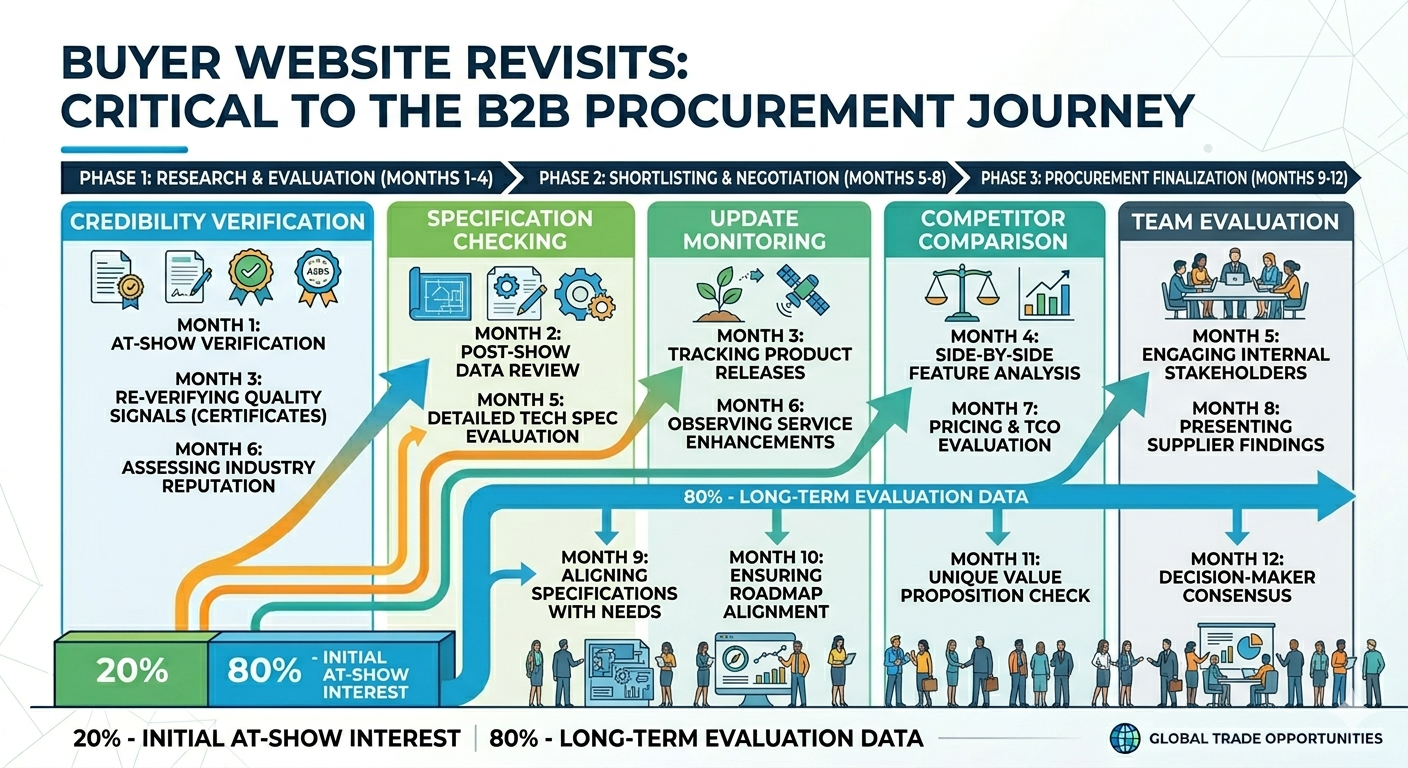
Many international exhibitors send a few follow-up messages, receive no response, and stop. But European procurement timelines often extend beyond the immediate post-fair period. By the time the buyer reaches evaluation stage, the exhibitor may have already disappeared. The buyer searches for them, finds no recent activity, and moves to a competitor who remained visible.
What works: Extend your outreach window. Reduce frequency but maintain ambient visibility through directory profiles between messages.
5. The Buyer Cannot Find Supporting Information When They Search
A buyer receives your email, remembers a positive conversation, and decides to research you later. When later arrives, they search for your company. Your directory profile is outdated. Your website shows no recent activity. No content has been published since the trade fair. The buyer concludes you are not actively engaged in their market. Trust erodes. They move on.
What works: Maintain updated profiles year-round. Publish short market observations regularly. See how year-round visibility builds trust.
What Works Better Than Cold Outreach
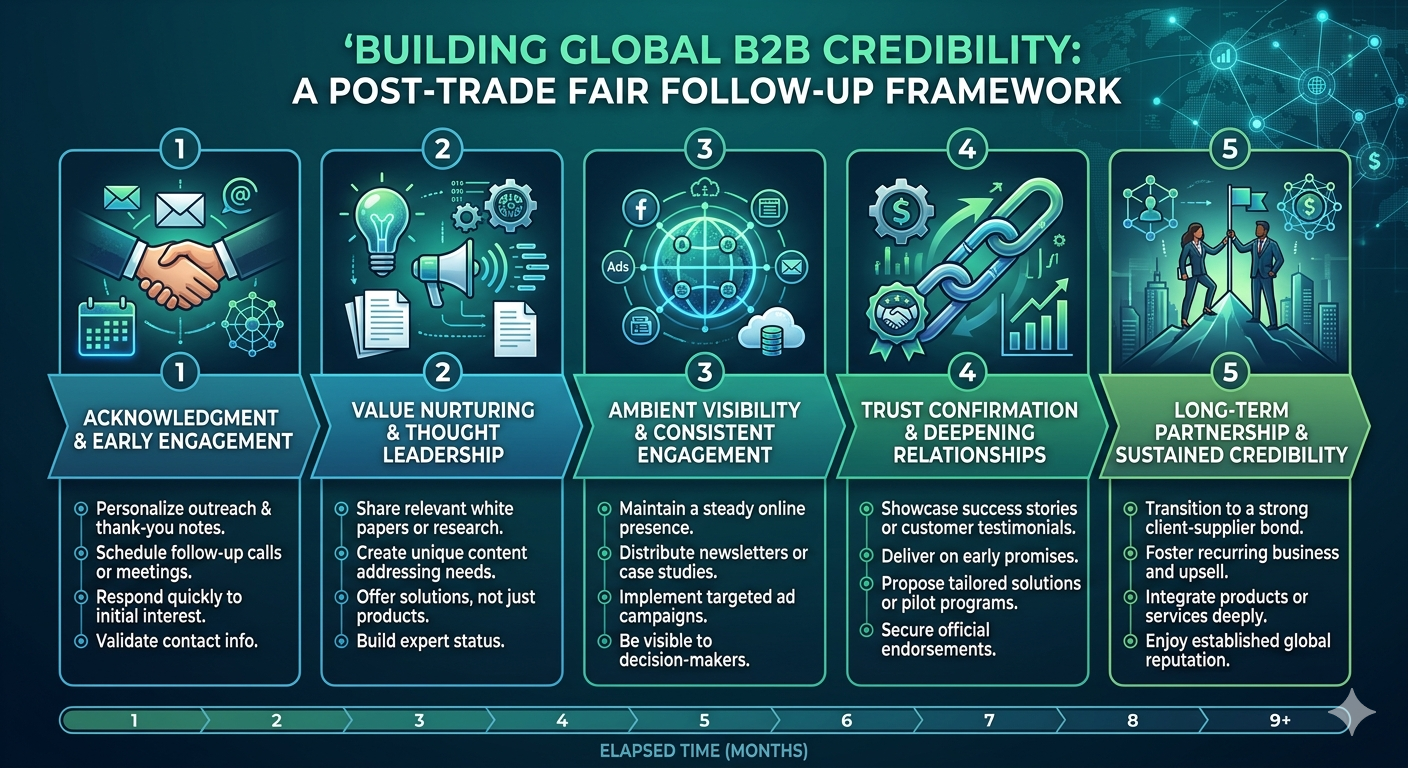
If cold outreach is largely ignored after exhibitions, what actually works? Based on observation of successful international exhibitors, the answer is not better emails. It is a combination of patient timing, value-driven messages, and passive visibility.
Patient timing: Align your outreach with procurement timelines. Acknowledgment early. Value messages later. No sales pressure. No demands.
Value-driven messages: Every message should contain something useful that requires nothing in return. A market observation. A relevant case study. A tool that solves a problem they mentioned. This positions you as a resource, not a vendor.
Passive visibility: Most of your “follow-up” should happen without direct outreach. Updated directory profiles. Regular content. Consistent online presence. Buyers see this even when they ignore your emails. It builds trust silently.
For practical guidance on maintaining this approach, read how trade fair visibility works year-round.
What Successful Exhibitors Do Differently
Here is what experienced international exhibitors actually do — based on observation, not theory:
- They do not expect responses to their early messages
- They remove all sales pressure from early follow-up
- They maintain updated directory profiles between trade fairs
- They publish regular market observations as passive follow-up
- They measure success over the long term, not immediately
- They understand that silence is not rejection — it is evaluation
Before your next trade fair, ensure you have completed all preparation steps with the exhibitor checklist for German trade fairs.
The Shift from Outreach to Discoverability
The most important shift you can make is moving from a mindset of “outreach” to a mindset of “discoverability.” Outreach asks buyers to respond on your timeline. Discoverability ensures they find you on their timeline.
European buyers do not want to be chased. They want to find you when they are ready. Your job is to be findable — with updated profiles, recent content, and consistent presence — while they spend time evaluating.
For help selecting which trade fairs attract the right buyers, read how to choose the right trade fair for your strategy.
Frequently Asked Questions
- Why is cold outreach ignored? – Backlog timing, generic messages, early asks, early stop, missing searchable information.
- How many emails? – Multiple touchpoints over an extended period, plus passive visibility.
- When to send first message? – Within days, acknowledgment only, no sales ask.
- What if no response? – Shift to passive visibility. Do not chase harder.
- How does BHOWCO help? – Passive visibility that works when direct outreach is ignored.
Conclusion: Stop Chasing, Start Being Findable
European buyers ignore cold outreach after exhibitions not because they are disinterested, but because most outreach arrives at the wrong time, asks for too much too early, and stops before evaluation begins. The solution is not better emails or more aggressive follow-up. It is a shift from chasing to being findable.
Trade fairs create visibility. Continuous presence creates international trust and long-term business opportunities. The exhibitors who win European buyers are not the ones who send the most emails. They are the ones who remain visible, discoverable, and valuable throughout the long, quiet months of silent evaluation — so that when buyers are finally ready, they find you without you having to chase.
BHOWCO exists to make you findable. Your permanent directory listing works while buyers ignore your emails, while they silently evaluate, and while they wait until they are ready.
Stop chasing. Start being findable with a permanent BHOWCO directory listing