Latest Insights
Why Trade Fair ROI Depends on Post-Exhibition Strategy

Why Trade Fair ROI Depends on Post-Exhibition Strategy
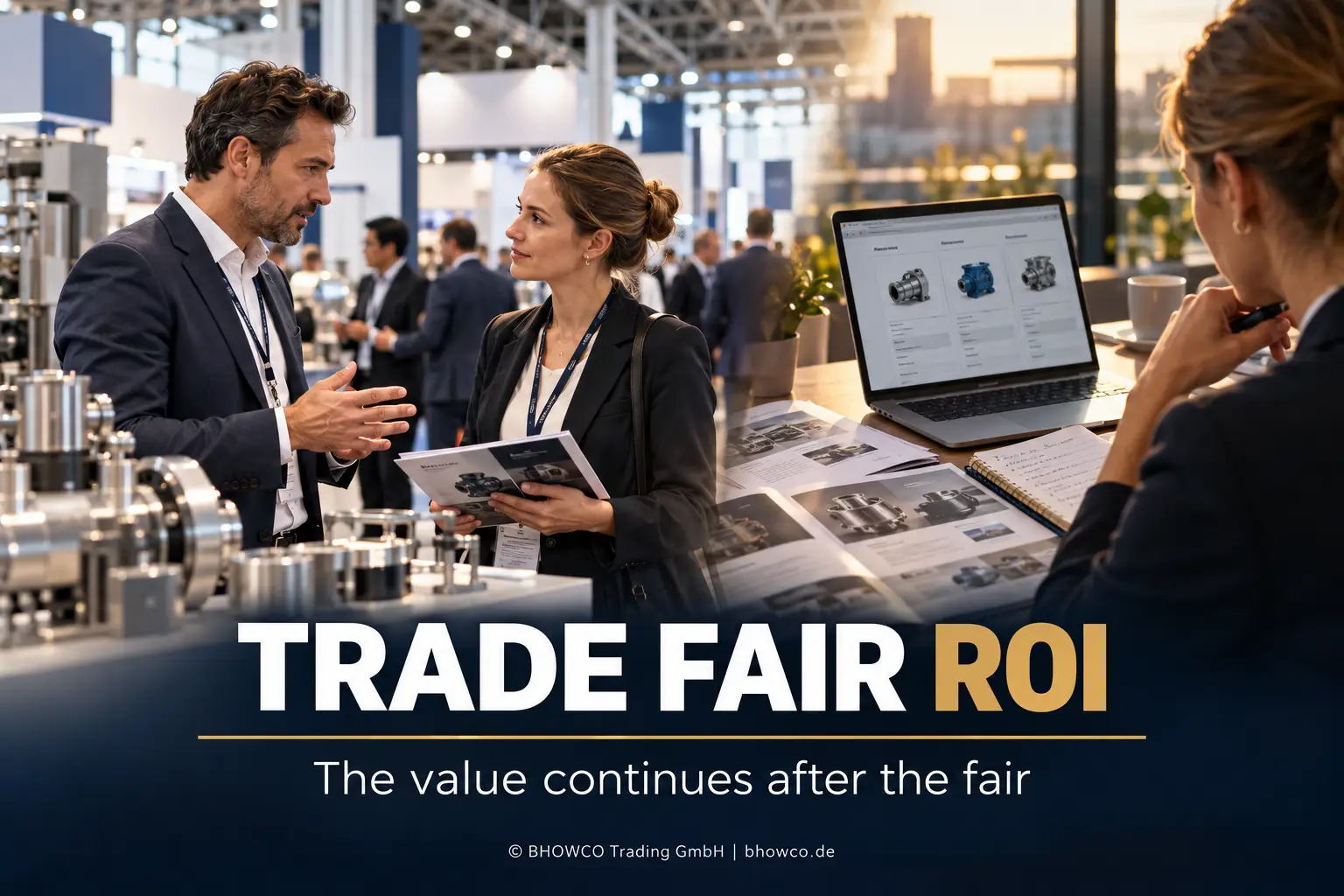
You invested a significant amount in a major European trade fair. The booth was excellent. The team was prepared. Conversations felt promising. Then, months later, no contracts. The exhibition is written off as low ROI. But was the trade fair the problem? Or what happened after? Trade fair ROI depends almost entirely on post-exhibition strategy — not booth size, not location, not giveaway quality. Trade fairs create visibility. Continuous presence creates international trust and long-term business opportunities. This article explains why post-exhibition strategy determines trade fair ROI and how to build a system that actually generates returns.
Here is a truth that experienced international exporters learn over time: the trade fair itself delivers a portion of the potential value. A larger portion comes from what happens in the months after the fair ends. Exhibitors who understand this invest in post-show infrastructure. Exhibitors who do not blame the trade fair for their own disappearance.
Quick ROI Diagnostic: Where Does Your Exhibition Value Go?
Answer these questions about your last trade fair:
- ☐ Do you track lead conversion at 3, 6, and 12 months? (Yes/No)
- ☐ Does your follow-up process extend beyond 60 days? (Yes/No)
- ☐ Can buyers find your updated company information between trade fairs? (Yes/No)
- ☐ Do you know the typical procurement timeline for your target buyers? (Yes/No)
- ☐ Do you have a system for year-round visibility, not just trade fair preparation? (Yes/No)
If you answered “No” to three or more questions, your trade fair ROI is significantly lower than it could be. The missing value is in post-exhibition strategy.
The Value Distribution of Trade Fair Investment
Based on observation of hundreds of international exhibitors, the value distribution of trade fair investment follows a consistent pattern:
A portion of value comes from the trade fair itself: Brand awareness, initial conversations, lead collection, market intelligence. This is what exhibitors see and feel during the event. It is real but incomplete.
A larger portion of value comes from post-exhibition activity: Lead nurturing, trust building through continuous visibility, alignment with procurement timelines, conversion of silent evaluators into clients, and long-term relationship development.
Most exhibitors invest the majority of their budget in the trade fair itself. They spend very little on the infrastructure that generates ongoing returns. Then they wonder why ROI is disappointing.
A recurring pattern across international trade fairs is that exhibitors with structured post-exhibition strategies tend to achieve stronger ROI than those without. The difference is not booth quality. It is what happens after the booth is packed up.
For a deeper understanding of how buyers behave during the post-exhibition window, read this guide to buyer behavior at trade fairs.
Why Post-Exhibition Strategy Determines Trade Fair ROI
Trade fair ROI is not determined by how many leads you collect. It is determined by how many of those leads become clients. And that conversion happens almost entirely after the trade fair ends.
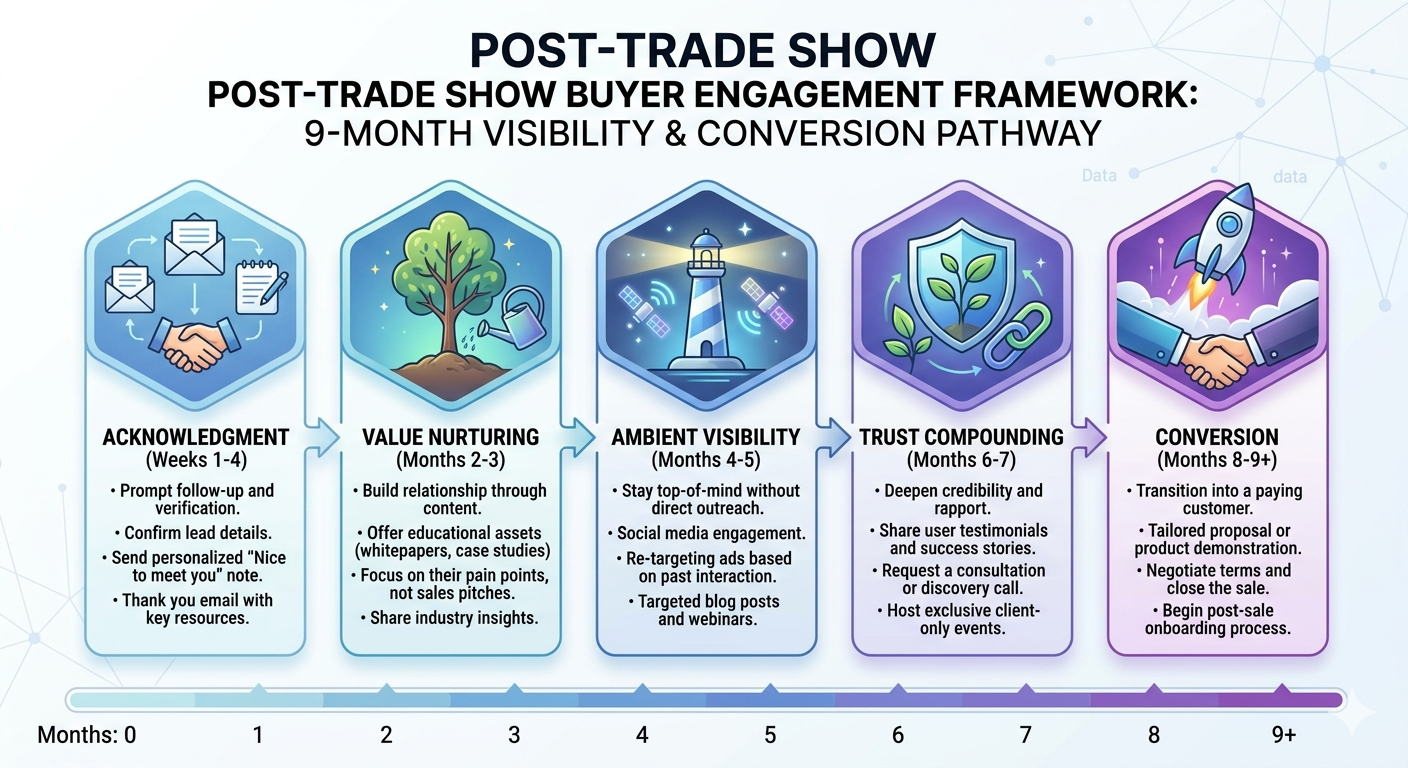
Procurement timelines do not align with trade fair schedules: European buyers often take weeks or months to begin serious evaluation. By that time, many exhibitors have stopped all follow-up activity. The buyer is ready. The exhibitor has disappeared. ROI evaporates.
Trust requires repeated exposure: A single trade fair conversation does not build enough trust for a contract. Buyers need to see your company multiple times over months. Without post-exhibition visibility, trust may never reach the threshold required for purchase.
Silent evaluation happens when exhibitors are invisible: Buyers silently evaluate suppliers for weeks after a trade fair. They search online, check directory profiles, and observe activity. Exhibitors who have stopped all visibility during this window fail the evaluation. Their ROI suffers.
Competitors who stay visible win: Your competitors may not be better at trade fairs. They may be better at staying visible after trade fairs. They win contracts from leads you both met because they remained findable during the evaluation window.
Post-exhibition visibility helps buyers continue evaluating a supplier, but visibility and inquiries are not financial ROI. To calculate the return from an exhibition, account for total participation costs and the contribution margin of business attributable to the fair. For the calculation, a worked example and practical review points, read our guide to measuring and protecting trade fair ROI.
The Post-Exhibition Strategy Framework for Trade Fair ROI
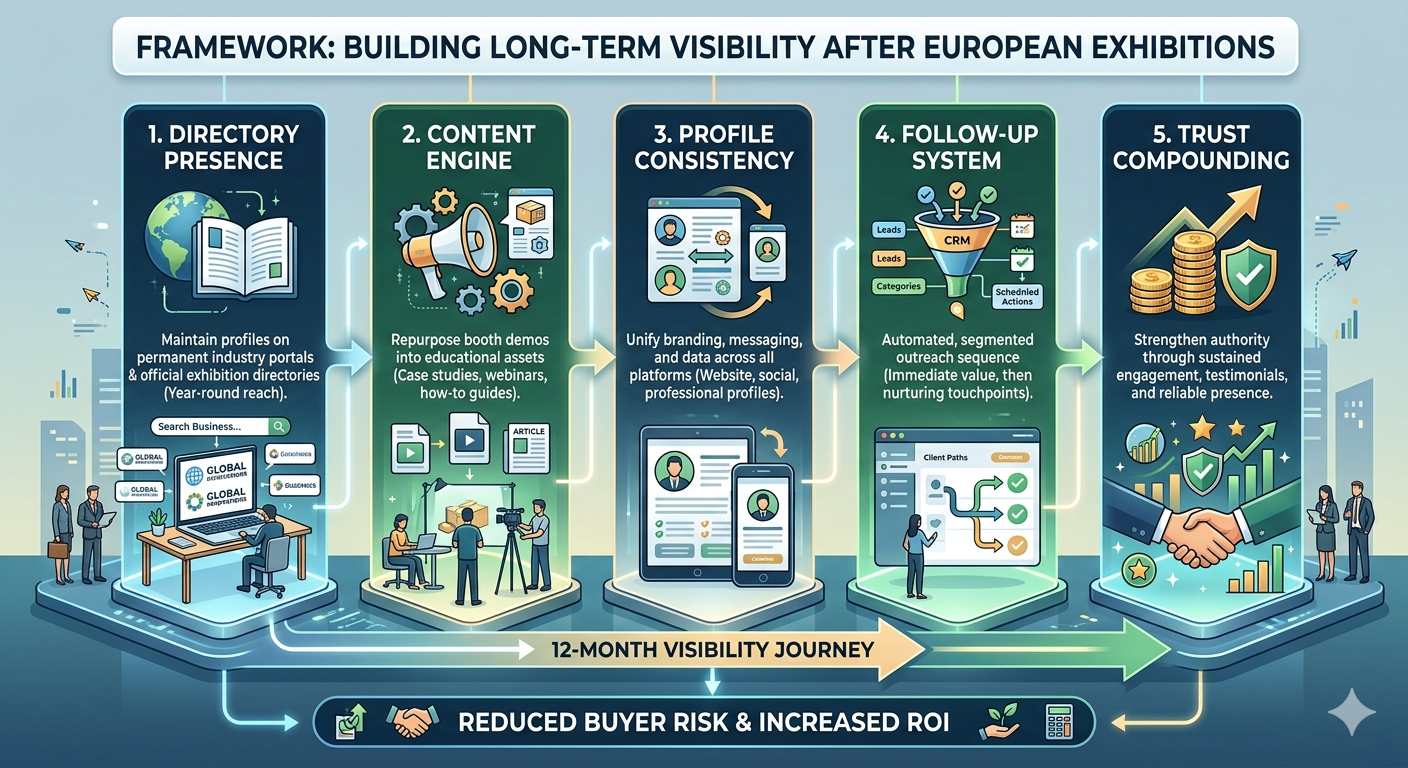
To protect and maximize trade fair ROI, you need a post-exhibition strategy with five components. Based on observation of successful international exhibitors, here is the framework:
1. Permanent Directory Visibility
Buyers search between trade fairs. Your profile must be there when they look. A permanent BHOWCO directory listing ensures you remain discoverable during the entire procurement cycle.
2. Structured Follow-Up Timeline
Not just a few emails. A structured sequence of touchpoints over an extended period. Each message with decreasing pressure and increasing value.
3. Regular Content Updates
Publish short market observations regularly. This signals ongoing market engagement and gives buyers fresh information to find when they search.
4. Consistent Profile Information
Your website, directory profiles, and social media must match. Inconsistent information destroys trust and reduces ROI.
5. Patient Procurement Alignment
Align your expectations with European procurement timelines. Do not expect quick decisions. Measure success over the long term.
For practical guidance on maintaining visibility, read how trade fair visibility works year-round.
What Successful Exhibitors Do Differently
Here is what successful international exhibitors actually do to maximize trade fair ROI — based on observation, not theory:
- They allocate a meaningful portion of their trade fair budget to post-exhibition infrastructure
- They measure ROI at 6 and 12 months, not immediately after the fair
- They maintain directory profiles year-round, not just before the fair
- They publish regular content between exhibitions, not just in preparation
- They have a follow-up system that outlasts buyer evaluation timelines
- They treat the trade fair as the beginning of a process, not the end
Before your next trade fair, ensure you have completed all preparation steps with the exhibitor checklist for German trade fairs.
The Cost of No Post-Exhibition Strategy
Without a post-exhibition strategy, trade fair ROI follows a predictable path:
- Initial optimism, initial follow-up, no responses yet
- Doubt, second follow-up, still no responses
- Abandonment, follow-up stops, visibility collapses
- Buyers evaluate silently but cannot find you
- Competitors who remained visible win contracts from your leads
The trade fair did not fail. The post-exhibition strategy failed. ROI was destroyed not at the booth, but in the months after.
For help selecting which trade fairs deserve your ROI investment, read how to choose the right trade fair for your strategy.
Frequently Asked Questions
- What portion of ROI is post-exhibition? – A significant portion.
- When to measure ROI? – 3, 6, and 12 months after the trade fair.
- Biggest ROI destroyer? – Stopping activity after a few unanswered emails.
- How much to invest in post-show strategy? – A meaningful portion of trade fair budget.
- How does BHOWCO help? – Permanent visibility during silent evaluation.
Conclusion: ROI Is Earned After the Trade Fair, Not During It
Trade fair ROI depends almost entirely on post-exhibition strategy. The booth creates awareness. What happens in the months after creates contracts. Without structured follow-up, permanent visibility, and alignment with procurement timelines, even the best trade fair investment will disappoint.
Trade fairs create visibility. Continuous presence creates international trust and long-term business opportunities. The exhibitors who achieve strong trade fair ROI are not the ones with the largest booths. They are the ones who remain visible, discoverable, and committed through the long, quiet months after the fair ends — when ROI is actually earned.
BHOWCO exists to provide that post-exhibition infrastructure. Your permanent directory listing works while buyers evaluate, while competitors disappear, and while ROI slowly takes shape.
Protect your trade fair ROI with a permanent BHOWCO directory listing