Latest Insights
How to Turn Trade Fair Leads Into Long-Term B2B Clients


How to Turn Trade Fair Leads Into Long-Term B2B Clients
You collected hundreds of trade fair leads. The booth was busy. Conversations felt genuine. But now, weeks later, most of those leads have gone silent. You are not alone. Most international exhibitors struggle to convert trade fair leads into long-term B2B clients — not because their products are wrong, but because they misunderstand how European B2B buyers actually buy. Trade fairs create visibility. Continuous presence creates international trust and long-term business opportunities. This article provides a strategic framework for turning trade fair leads into lasting client relationships.
Here is a truth that experienced exporters learn over time: a trade fair lead is not a sales opportunity. It is a permission slip to begin a trust-building process that takes months, not weeks. The exhibitors who win long-term clients understand this. Those who do not chase short-term results and burn out.
Quick Diagnostic: Is Your Lead Conversion Strategy Working?
Answer these questions honestly about your current approach:
- ☐ Do you have a follow-up process that extends beyond 60 days? (Yes/No)
- ☐ Do you segment leads by procurement timeline, not just interest level? (Yes/No)
- ☐ Can buyers find your updated company information between follow-ups? (Yes/No)
- ☐ Do you measure conversion at 6 and 12 months, not 30 days? (Yes/No)
- ☐ Do you have a way to stay visible to leads who never respond to emails? (Yes/No)
If you answered “No” to three or more questions, your conversion strategy is designed for short-term wins, not long-term clients.
The Difference Between a Lead and a Long-Term Client
A trade fair lead is a record in your CRM. A long-term B2B client is a relationship built on trust, proven reliability, and ongoing visibility. The gap between them is not closed by better sales emails. It is closed by infrastructure.
Based on observation of successful international exhibitors, long-term client relationships typically develop over an extended period after an initial trade fair conversation. This timeline is not slow. It is normal for European B2B procurement. Exhibitors who accept this timeline build systems that work within it. Exhibitors who fight it lose leads to competitors who remained patient and visible.
A recurring pattern across European procurement is that buyers consistently value supplier reliability and ongoing presence in long-term partnerships. The booth opens the door. What happens afterward determines whether the client stays.
For a deeper understanding of how buyers behave during this window, read this guide to buyer behavior at trade fairs.
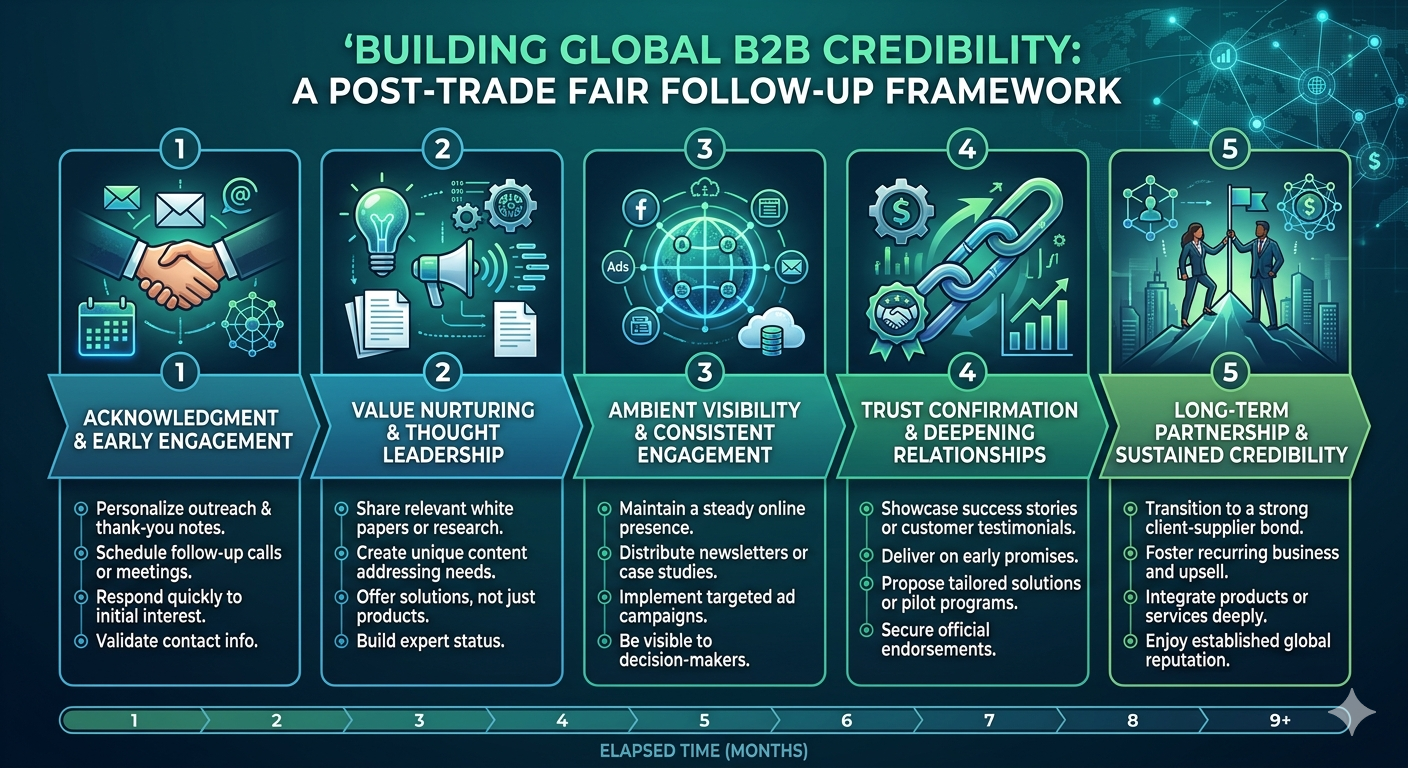
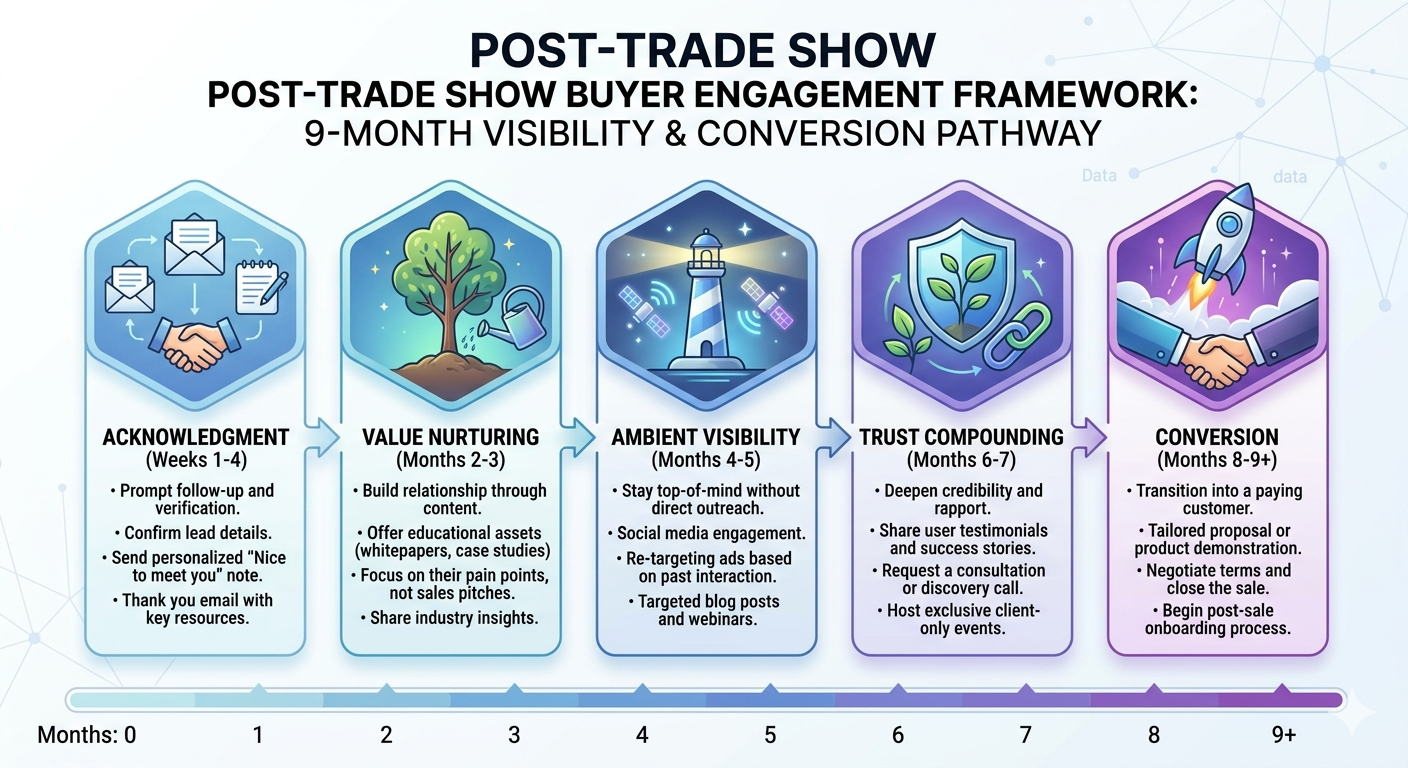
The 4-Phase Framework for Converting Trade Fair Leads
Based on observation of exhibitors who successfully convert trade fair leads into long-term B2B clients, here is a four-phase framework. Each phase has a different goal and different activities.
Phase 1: Acknowledgment (Days 1-7)
Goal: Establish that you listened and provide a low-pressure way to stay connected.
Send a brief, personalized message referencing a specific conversation from the trade fair. Include a link to your permanent directory profile — not a sales attachment. Keep it brief. No meeting requests. No pricing. Just acknowledgment and a way for the buyer to find you later.
What not to do: Send a generic template or attach a brochure. Buyers receive many of these and ignore them.
Phase 2: Value Nurturing (Weeks 2-8)
Goal: Demonstrate expertise without asking for anything in return.
Send short messages spaced apart. Each message should contain one useful insight: a market observation relevant to their industry, a case study from a similar company, or a tool that solves a problem they mentioned. No sales asks. No meeting requests. Just value.
What not to do: Send product brochures or pricing sheets. That is selling, not nurturing.
Phase 3: Silent Visibility (Weeks 9-24)
Goal: Remain discoverable during the buyer’s silent evaluation window.
Direct messages become less frequent. But your visibility should not decrease. Update your permanent directory listing monthly. Publish short market observations. Ensure that when buyers search for you during their internal evaluation, they find recent activity and current information.
What not to do: Stop all activity because no one is responding. Silence from buyers does not mean rejection. It often means evaluation is happening internally.
Phase 4: Contract Conversion (Months 6-12)
Goal: Be ready when the buyer’s internal process completes.
Buyers who have seen your consistent visibility over time will reach out when they are ready. Your job is to be findable and responsive when that happens. Some leads convert earlier. Some later. The key insight: exhibitors who remained visible throughout the entire timeline win the contracts. Those who disappeared early are forgotten.
What not to do: Assume that no response early on means the lead is dead. European procurement timelines vary significantly by industry and company size.
For practical guidance on maintaining visibility through all four phases, read how trade fair visibility works year-round.
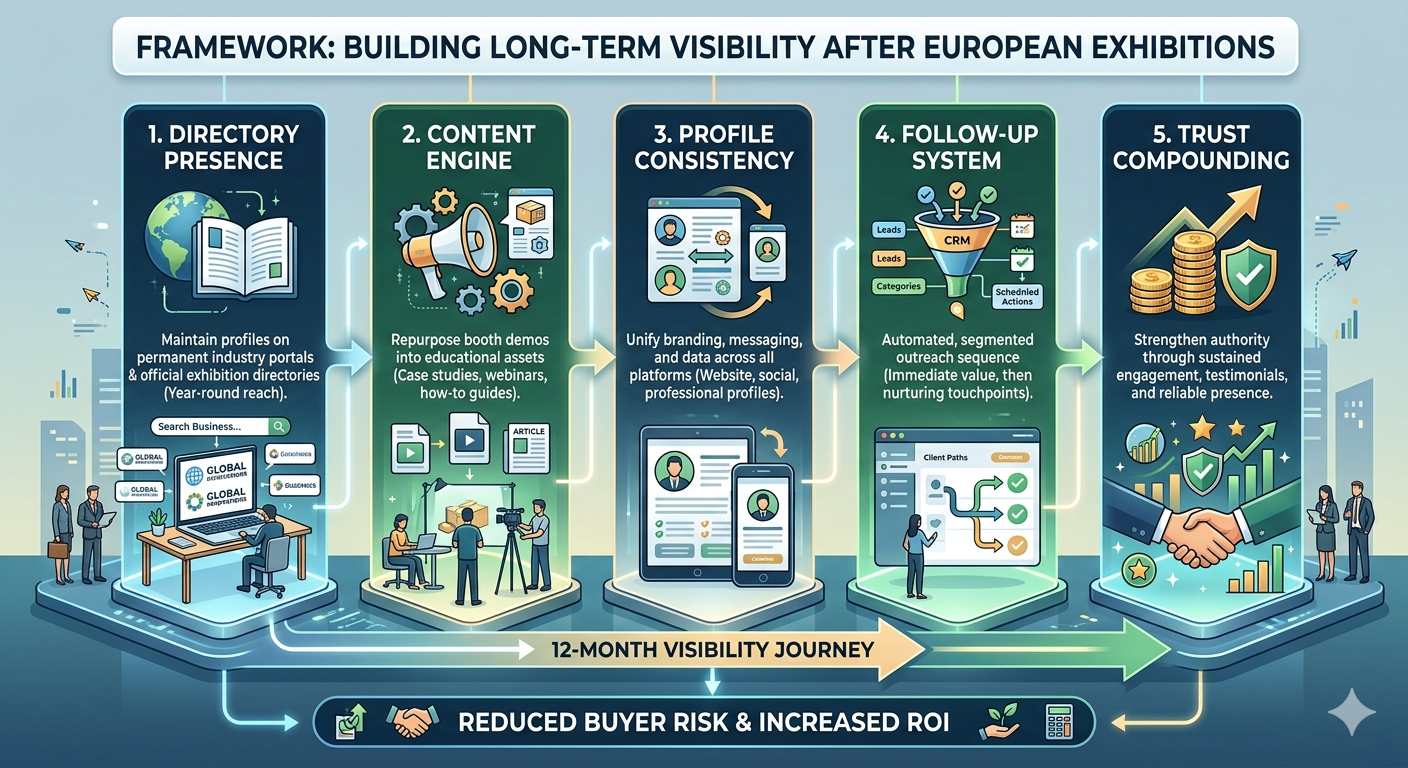
The Trust Infrastructure That Makes Conversion Possible
You cannot convert trade fair leads into long-term clients without trust infrastructure. Here is what that infrastructure includes:
- Permanent directory presence: A profile that works year-round, not just during trade fair weeks
- Regular content updates: Short market observations published regularly
- Consistent information across platforms: Your website, directory profiles, and social media must match
- Evidence of market commitment: Local partnerships, certifications, or logistics arrangements
- Patient follow-up system: Scheduled touchpoints at regular intervals
Without this infrastructure, your conversion attempts will fail — not because your sales skills are weak, but because buyers cannot verify your reliability during their silent evaluation window.
Before your next trade fair, ensure you have completed all preparation steps with the exhibitor checklist for German trade fairs.
What Long-Term Client Conversion Actually Looks Like
Here is what realistic conversion looks like for an international exhibitor. Not marketing hype. Observable reality from experienced exporters.
During the trade fair: Good conversations. Quality leads. No contracts signed.
Months 1-3: Acknowledgment and value messages sent. Most leads silent. Some unsubscribes. That is normal.
Months 4-6: First inbound inquiries from leads who were silently evaluating. Small pilot orders or technical discussions begin.
Months 7-9: Serious contract negotiations with leads who remained engaged. First long-term client relationships established.
Months 10-12: Additional contracts from leads that took longer to evaluate. Repeat conversations starting with satisfied clients.
This timeline is not slow. It is normal for cross-border B2B. Exhibitors who accept this timeline build systems that work within it. Exhibitors who fight this timeline burn out and blame the trade fair.
For help selecting which trade fairs deserve your conversion investment, read how to choose the right trade fair for your strategy.
Frequently Asked Questions
- How long does conversion take? – Varies by industry. Patience is required.
- Biggest mistake? – Stopping all activity after a few unanswered emails.
- How many follow-ups? – Multiple touchpoints over time, plus ambient visibility.
- Can small suppliers succeed? – Yes. Consistency beats budget in European B2B.
- How does BHOWCO help? – Permanent visibility during silent evaluation windows.
Conclusion: From Lead to Client Through Visibility, Not Pressure
Converting trade fair leads into long-term B2B clients is not about better sales scripts or more aggressive follow-up. It is about building trust infrastructure that works while buyers silently evaluate. It is about remaining visible during the extended period when most exhibitors have disappeared. It is about understanding that European B2B procurement is patient — and your conversion strategy must be patient too.
Trade fairs create visibility. Continuous presence creates international trust and long-term business opportunities. The exhibitors who win long-term clients are not the ones with the largest booths. They are the ones who remain visible, discoverable, and committed through the long, quiet months between the trade fair and the signature.
BHOWCO exists to provide that visibility infrastructure. Your permanent directory listing works while you wait, while buyers evaluate, and while long-term client relationships slowly take shape.
Build your client conversion infrastructure with a permanent BHOWCO directory listing