Latest Insights
Why International Suppliers Lose Momentum After Trade Shows


Why International Suppliers Lose Momentum After Trade Shows
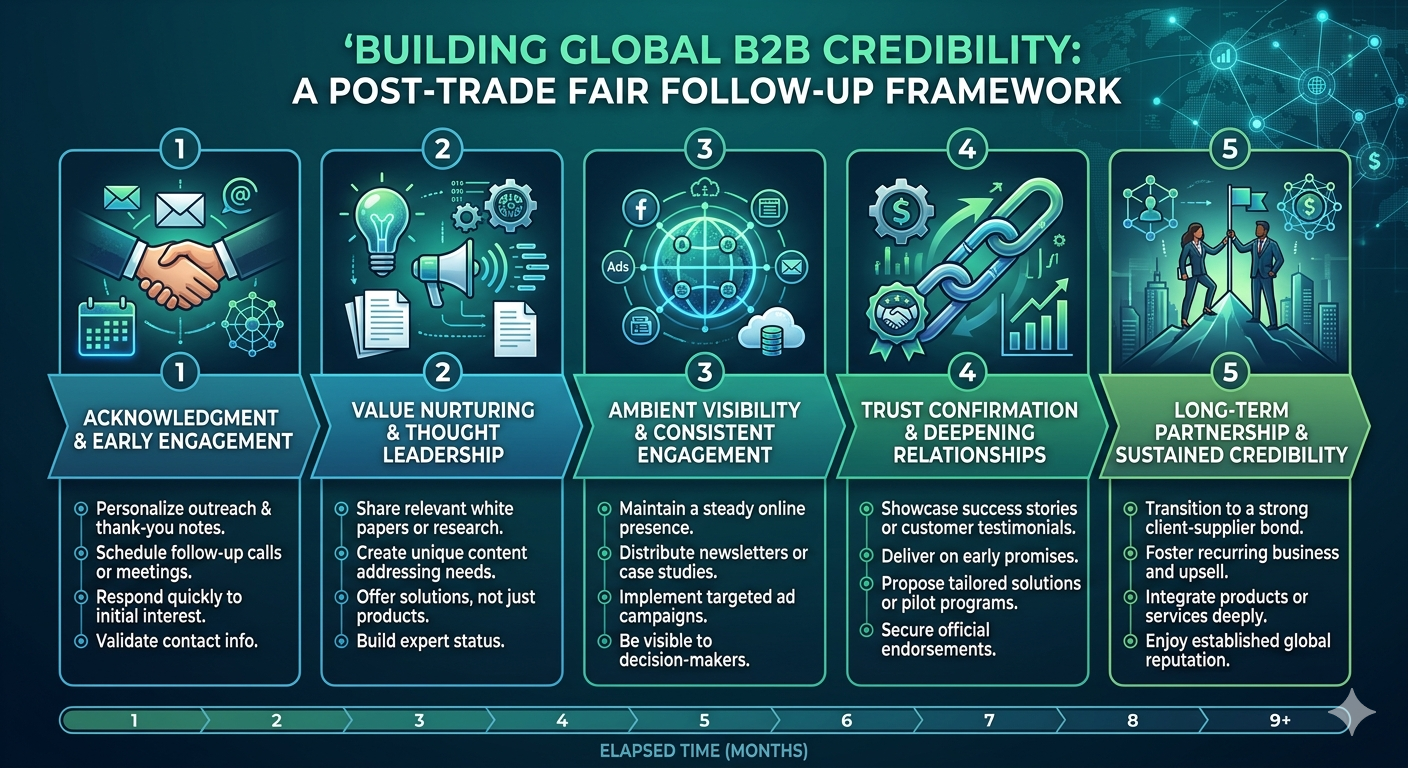
You exhibited at a major European trade fair. The booth was busy. Conversations felt promising. You returned home with hundreds of leads and genuine optimism. Then, somewhere between week two and week eight, the momentum died. Emails went unanswered. Calls were not returned. The pipeline that felt so full suddenly looked empty. International suppliers lose momentum after trade shows not because their products are wrong, but because their post-exhibition systems are missing. Trade fairs create visibility. Continuous presence creates international trust and long-term business opportunities. This article explains why momentum dies and how to preserve it.
Here is a truth experienced exporters learn over time: a trade show is not a sales event. It is a starting line. The momentum you feel during the exhibition is temporary. Preserving it requires infrastructure, not enthusiasm. Most international suppliers confuse the two.
Quick Diagnostic: Is Your Post-Trade Show Momentum Dying?
Answer these questions honestly about your last exhibition:
- ☐ Do you have a follow-up process that extends beyond 30 days? (Yes/No)
- ☐ Can European buyers find your company online between trade shows? (Yes/No)
- ☐ Do you know the typical procurement timeline for your target market? (Yes/No)
- ☐ Is your directory profile updated at least monthly? (Yes/No)
- ☐ Do you have a way to stay visible to buyers who don’t respond? (Yes/No)
If you answered “No” to three or more questions, your momentum loss is predictable — and preventable.
The Pattern: How Momentum Dies
Based on observation of hundreds of international suppliers exhibiting at European trade fairs, momentum follows a predictable decay curve. Understanding this pattern is the first step to preserving it.
Weeks 1-2: Peak Energy
The team is motivated. Leads are fresh. Initial follow-up emails go out. Most international suppliers feel successful at this stage. But this energy is deceptive because it requires no infrastructure — only enthusiasm.
Weeks 3-6: First Silence
Buyers do not respond. The team sends a second email. Still no replies. Doubt creeps in. Were the leads bad? Was the booth in the wrong location? This is where many international suppliers start to lose confidence — and momentum.
Weeks 7-12: Visibility Collapse
Follow-up stops. Directory profiles remain untouched. No new content is published. The company becomes invisible online exactly when buyers are beginning their silent evaluation. The supplier assumes the trade show failed. In reality, their visibility failed.
Weeks 13-24: Lost Opportunity
Buyers who were silently evaluating finally reach decision stage. They search for suppliers who remained visible. Your company is not there. Competitors who maintained presence win the contracts. The trade show investment is written off as low ROI.
A recurring pattern across European procurement is that buyers consistently value year-round discoverability in final supplier selection. The booth opens the door. Continuous presence closes it.
For a deeper understanding of how buyers behave during this window, read this guide to buyer behavior at trade fairs.
The Four Gaps That Kill Momentum
Why do international suppliers lose momentum after trade shows? Based on observation, four specific gaps separate those who sustain momentum from those who lose it.
1. The Timeline Gap
European procurement teams operate on evaluation cycles that often extend over months. Most international suppliers expect decisions in weeks. When those decisions do not arrive, they assume failure and stop all activity. The buyer has not rejected them. The buyer is simply not ready yet. Momentum dies not from rejection, but from mismatched expectations.
What works: Map your expected procurement timeline before the trade show. Align your follow-up plan to that timeline, not your sales urgency.
2. The Visibility Gap
Many international suppliers have excellent visibility during the trade show week and limited visibility at other times. When European buyers search for them between exhibitions — which they do during silent evaluation — they find outdated profiles, no recent activity, and no evidence of ongoing market commitment. Trust erodes silently. Momentum dies invisibly.
What works: Maintain a permanent directory listing that stays updated year-round. Update it monthly, even with small changes.
3. The Trust Gap
Cross-border buyers face real risks: language barriers, time zone differences, customs delays, and post-sale support questions. A single trade show conversation rarely overcomes these concerns. Trust requires repeated exposure over time. International suppliers who disappear after the trade show never build the repetition needed to earn trust.
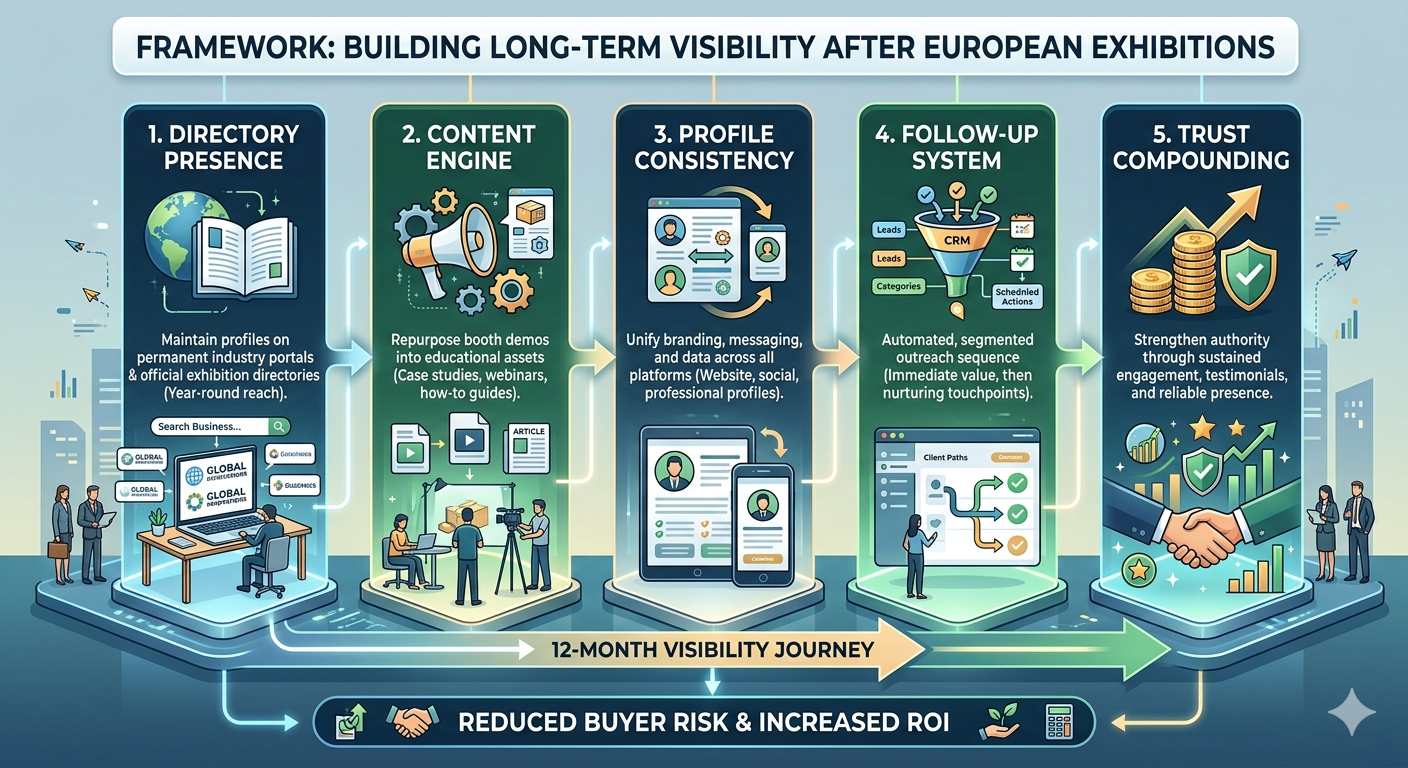
What works: Stay visible between trade shows through content, directory updates, and ecosystem participation. Each visibility touchpoint compounds trust gradually. See how year-round visibility builds trust.
4. The Process Gap
Most international suppliers treat trade show follow-up as a short-term campaign rather than a long-term process. They have no system for tracking which leads are in active evaluation versus dormant. They have no way to remain visible to buyers who are not ready to respond. They rely entirely on email, which fails when buyers do not reply.
What works: Build systems that do not require buyer replies. Permanent directory profiles, regular content updates, and consistent ecosystem presence ensure visibility even when buyers are silent.
For practical guidance on maintaining visibility, read how trade fair visibility works year-round.
What Successful International Suppliers Do Differently
The difference between losing momentum and sustaining it is not budget or booth size. It is behavior after the trade show ends. Here is what successful international suppliers actually do:
- They expect silence and have a plan for it
- They maintain visibility between follow-up messages
- They update their directory profiles monthly, not annually
- They publish short market observations regularly
- They remain discoverable throughout the procurement cycle
- They understand that trust compounds slowly through repeated exposure
- They measure success over the long term, not immediately
Before your next trade show, ensure you have completed all preparation steps with the exhibitor checklist for German trade fairs.
The Cost of Lost Momentum
When international suppliers lose momentum after trade shows, the cost is not just the wasted exhibition budget. It is the opportunity cost of markets that could have been entered, relationships that could have been built, and revenue that could have been generated. The trade show itself was an investment. Losing momentum is failing to protect that investment with post-show visibility.
Visibility fades without continuity. Buyer trust depreciates without reinforcement. International suppliers who understand this succeed. Those who do not repeat the same expensive pattern year after year.
For help selecting which trade shows deserve your investment, read how to choose the right trade fair for your strategy.
Frequently Asked Questions
- Why do international suppliers lose momentum? – Four gaps: timeline mismatch, visibility collapse, trust gap, and process gap.
- How long should visibility last? – Year-round. Procurement cycles take time.
- Biggest mistake? – Stopping all activity after a few unanswered emails.
- Can small suppliers compete? – Yes. Consistency beats budget in European B2B.
- How does BHOWCO help? – Permanent visibility during silent evaluation windows.
Conclusion: Momentum Is Preserved, Not Created at the Booth
International suppliers lose momentum after trade shows not because their products are wrong or their booths are weak. They lose momentum because their post-exhibition visibility collapses. They disappear exactly when buyers are silently evaluating. They mistake patience for disinterest. They stop being findable at the moment they need to be most visible.
Trade fairs create visibility. Continuous presence creates international trust and long-term business opportunities. The international suppliers who sustain momentum are not the ones with the largest booths. They are the ones who remain visible, relevant, and discoverable throughout the year — including the months when nothing seems to be happening.
BHOWCO exists to bridge that gap. Your next trade show investment deserves protection. Year-round visibility is how you protect it.
Preserve your post-trade show momentum with a permanent BHOWCO directory listing