Latest Insights
How to Build Long-Term Visibility After European Exhibitions


How to Build Long-Term Visibility After European Exhibitions
Your exhibition in Europe was successful. The booth was busy. Conversations were promising. But when you return home, something shifts. Within weeks, the visibility you worked so hard to create begins to fade. This is not failure. It is the natural decay of short-term attention. Long-term visibility after European exhibitions does not happen by accident. It requires deliberate infrastructure, consistent activity, and patient alignment with procurement timelines. Trade fairs create visibility. Continuous presence creates international trust and long-term business opportunities. This article provides a practical framework for building long-term visibility that lasts through the entire procurement cycle.
Here is a truth that experienced international exporters learn over time: short-term visibility wins conversations. Long-term visibility wins contracts. Most exhibitors invest heavily in the first and almost nothing in the second. The result is predictable: excellent booths, disappointing ROI.
Quick Visibility Audit: Is Your Visibility Built for the Long Term?
Answer these questions honestly about your current approach:
- ☐ Does your visibility infrastructure work 365 days per year, not just during exhibitions? (Yes/No)
- ☐ Is your directory profile updated at least monthly with current information? (Yes/No)
- ☐ Do you publish content consistently between exhibitions, not just before them? (Yes/No)
- ☐ Does your follow-up system extend beyond the immediate post-exhibition period? (Yes/No)
- ☐ Can buyers find your updated information when they search months after the exhibition? (Yes/No)
If you answered “No” to three or more questions, your visibility is short-term by design. The framework below rebuilds it for the long term.
The Difference Between Short-Term and Long-Term Visibility
Long-term visibility differs from short-term visibility in fundamental ways. Understanding these differences is the first step to building a system that lasts.
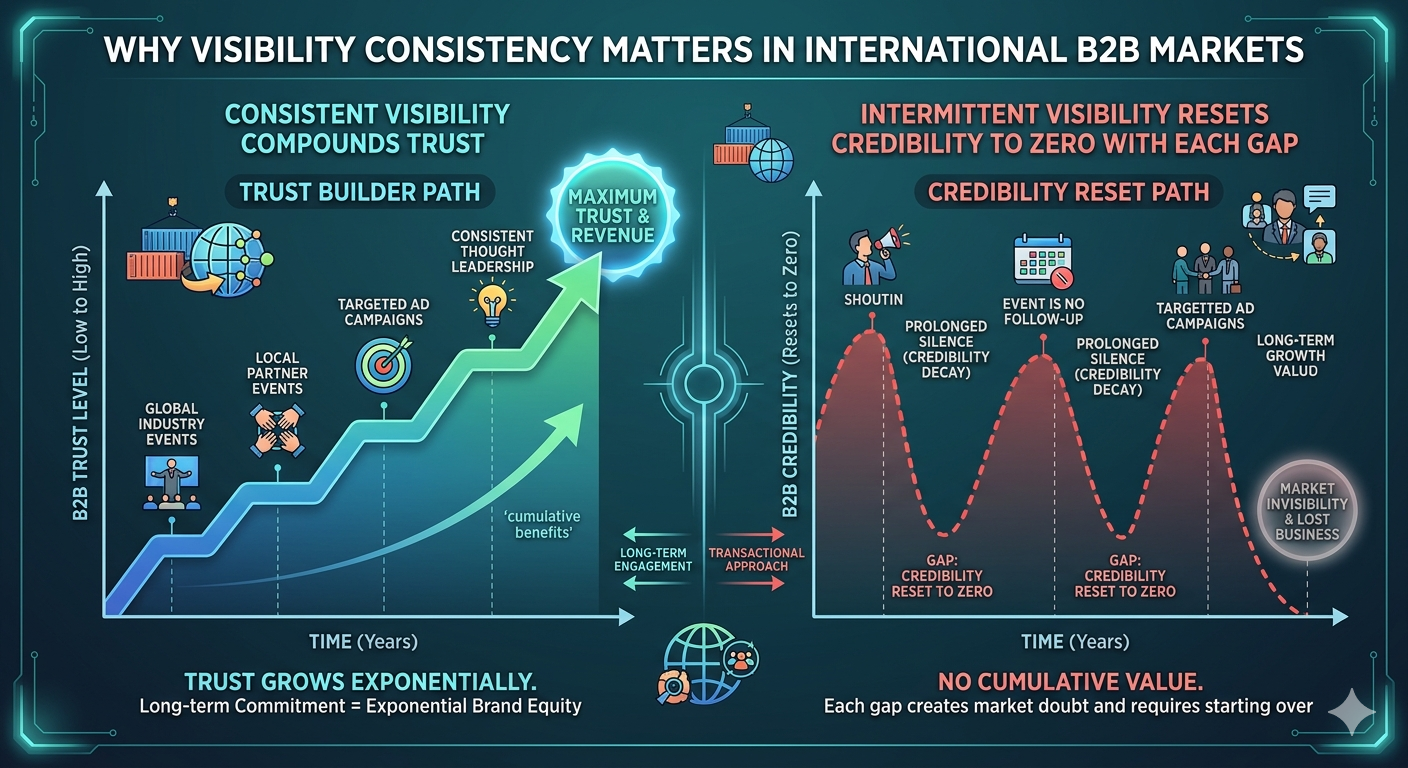
Short-Term Visibility: Spikes during exhibition weeks. Relies on booth presence and face-to-face conversations. Requires constant new events to maintain. Collapses between exhibitions. Depends on direct outreach (emails, calls). Measured by leads collected.
Long-Term Visibility: Consistent throughout the year. Relies on permanent directory presence and content. Builds compounding value over time. Works during silent evaluation. Depends on passive discoverability (profiles, content). Measured by inbound inquiries and contracts.
Most exhibitors build short-term visibility because it feels productive. Booth design, travel, meetings — these are tangible activities. Long-term visibility requires different investments: directory listings, content calendars, patient follow-up systems. These feel less urgent but create far more value over time.
A recurring pattern across international trade fairs is that exhibitors who maintain year-round visibility tend to achieve stronger results than those who focus only on exhibition-week presence. The difference is not booth quality. It is visibility duration.
For a deeper understanding of how buyers behave during the evaluation window, read this guide to buyer behavior at trade fairs.
The 5-Pillar Framework for Long-Term Visibility
Based on observation of successful international exhibitors, here is a five-pillar framework for building long-term visibility after European exhibitions:
Pillar 1: Permanent Directory Presence
Your visibility infrastructure needs a permanent home. A directory listing that works 365 days per year is the foundation. Buyers search between exhibitions. Your profile must be there when they look.
What to do: Maintain a permanent BHOWCO directory listing with complete company information, European references, and regular updates.
Pillar 2: Consistent Content Engine
Content signals ongoing engagement. Buyers check for recent updates as a proxy for supplier activity. A company that publishes nothing for months appears inactive. A company with regular content appears committed and knowledgeable.
What to do: Publish one short market observation every 30-45 days. It does not need to be long. It just needs to be recent and relevant.
Pillar 3: Patient Follow-Up System
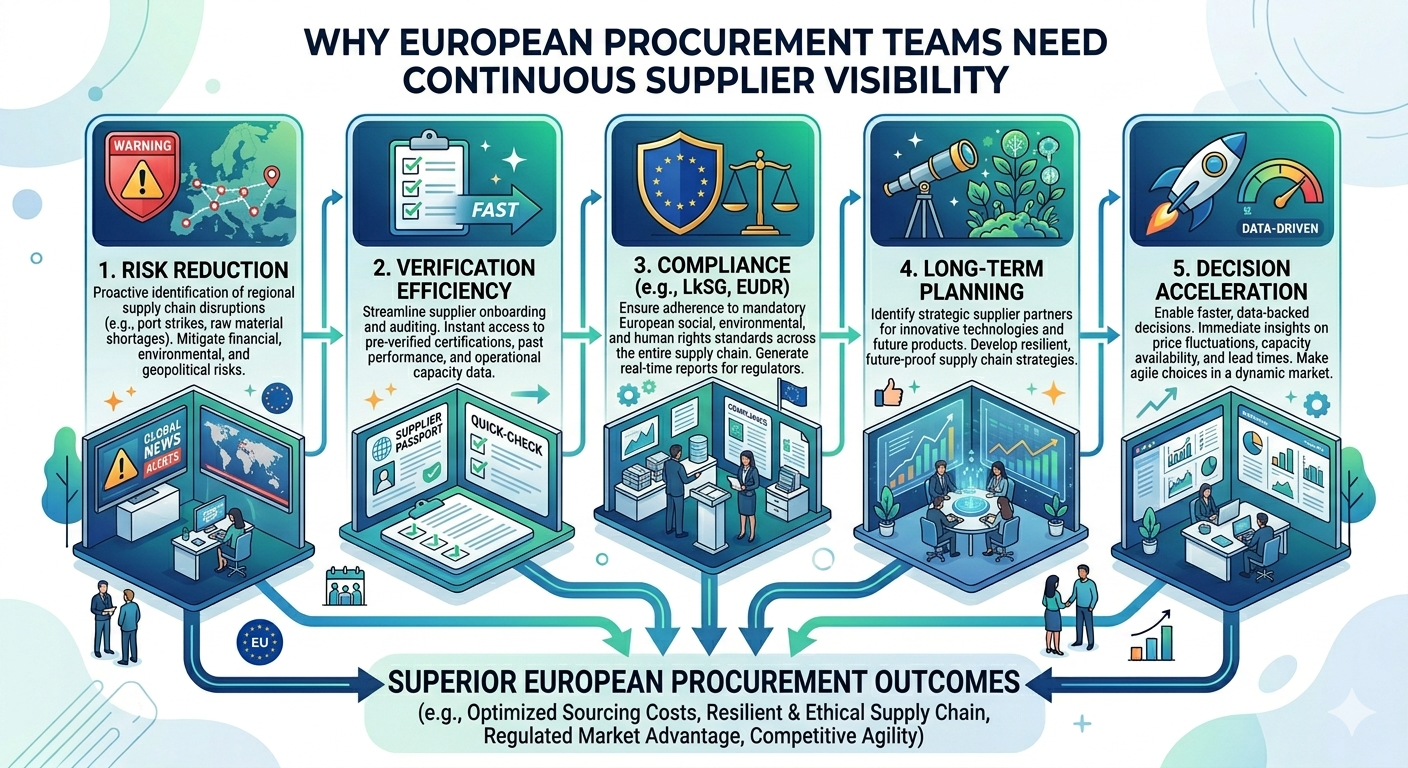
Long-term visibility requires patient follow-up that outlasts buyer evaluation timelines. Most exhibitors stop after a few emails. European procurement often takes several months. Your follow-up must match their timeline.
What to do: Schedule touchpoints over an extended period. Remove sales pressure. Focus on value. For a complete framework, read how to turn trade fair leads into long-term B2B clients.
Pillar 4: Consistent Information Architecture
Inconsistent information destroys long-term visibility. Your website, directory profiles, and social media must match. Company descriptions, contact information, and service claims should be identical everywhere. Inconsistencies signal carelessness or temporary presence.
What to do: Audit your online presence quarterly. Update all platforms simultaneously when information changes. For guidance, read how trade fair visibility works year-round.
Pillar 5: Trust Compounding System
Long-term visibility transforms into trust through repetition. Each time a buyer sees your brand — in a directory, through content, at an exhibition — trust compounds. This compounding effect is what turns an unknown supplier into a trusted partner.
What to do: Maintain visibility consistently over an extended period. Trust cannot be rushed. It accumulates through repeated positive exposure. For guidance, read how continuous visibility improves international buyer trust.
What Long-Term Visibility Looks Like in Practice
Based on observation of successful international suppliers, here is what effective long-term visibility actually looks like on a month-by-month basis:
Month 1 (Post-Exhibition): Directory profile updated with post-show context. First follow-up messages sent. First post-show content published.
Months 2-3: Second and third follow-up messages. Directory profile refreshed. Second content piece published.
Months 4-6: Patient follow-up continues. Directory profile updated monthly. Regular content maintains visibility. Buyer evaluation happening silently.
Months 7-9: Follow-up shifts to check-in mode. Directory presence remains active. Content continues. First inbound inquiries from silent evaluators begin.
Months 10-12: Trust has compounded. Your brand is now known. Buyers reach out when ready. Contracts begin to close.
Before your next exhibition, ensure you have completed all preparation steps with the exhibitor checklist for German trade fairs.
The Cost of Short-Term Visibility
Short-term visibility is expensive in ways that are not always obvious. Each exhibition requires new investment to rebuild visibility from zero. There is no compounding value. Previous visibility does not reduce future costs. Buyers must discover you anew at each event. Miss one exhibition, and you disappear completely. Procurement cycles that do not align with exhibition schedules miss you entirely. The cumulative cost of starting over repeatedly is far higher than maintaining continuous visibility.
Long-term visibility, by contrast, builds equity. Each month of consistent presence reduces the cost of future visibility. Your directory profile works continuously. Content compounds in search results. Trust accumulates with buyers. The system pays for itself over time.
For help selecting which exhibitions fit into your long-term visibility strategy, read how to choose the right trade fair for your strategy.
Frequently Asked Questions
- How long to build long-term visibility? – 6-12 months to establish, 12-24 months for full compounding.
- Most important pillar? – Permanent directory presence as the foundation.
- Cost compared to exhibitions? – A fraction of a single exhibition annually.
- Can I build visibility without exhibiting? – Yes, but slower. Exhibitions accelerate the process.
- How does BHOWCO help? – Permanent directory presence anchoring long-term visibility.
Conclusion: Visibility Is a System, Not an Event
Building long-term visibility after European exhibitions requires shifting from event-based thinking to system-based thinking. Short-term visibility spikes during exhibition weeks and collapses between them. Long-term visibility maintains consistent presence through permanent directory listings, regular content, patient follow-up, consistent information, and trust compounding. The short-term approach wins conversations. The long-term approach wins contracts.
Trade fairs create visibility. Continuous presence creates international trust and long-term business opportunities. The exhibitors who succeed in European markets are not the ones with the largest booths or the most aggressive follow-up. They are the ones who build visibility systems that work 365 days per year — turning episodic exhibition presence into lasting market authority.
BHOWCO exists to provide that system. Your permanent directory listing is the foundation of long-term visibility. It works while you prepare for the next exhibition, while buyers silently evaluate, and while trust compounds into contracts.
Build long-term visibility with a permanent BHOWCO directory listing